
Loading, please wait...




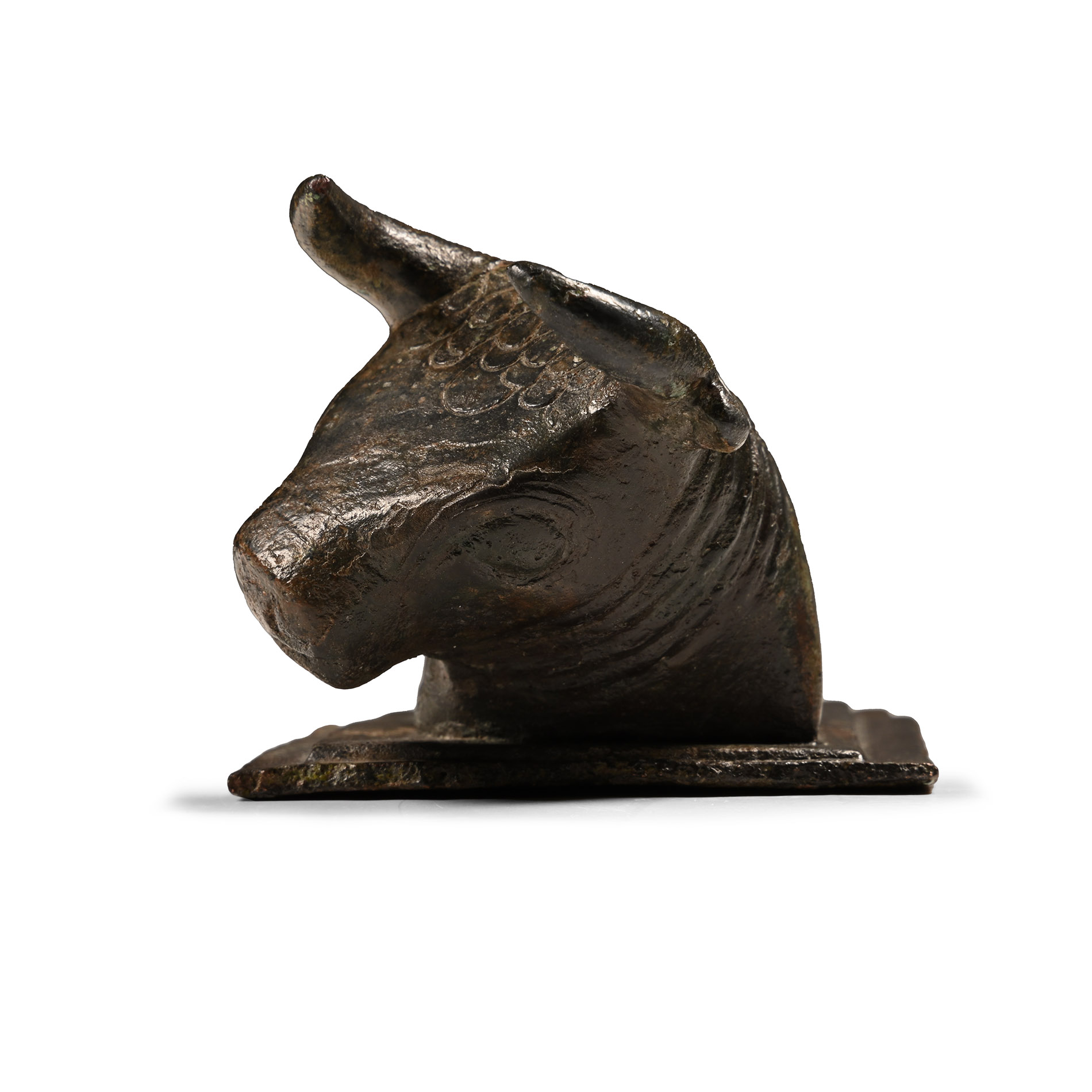
LOT 0247
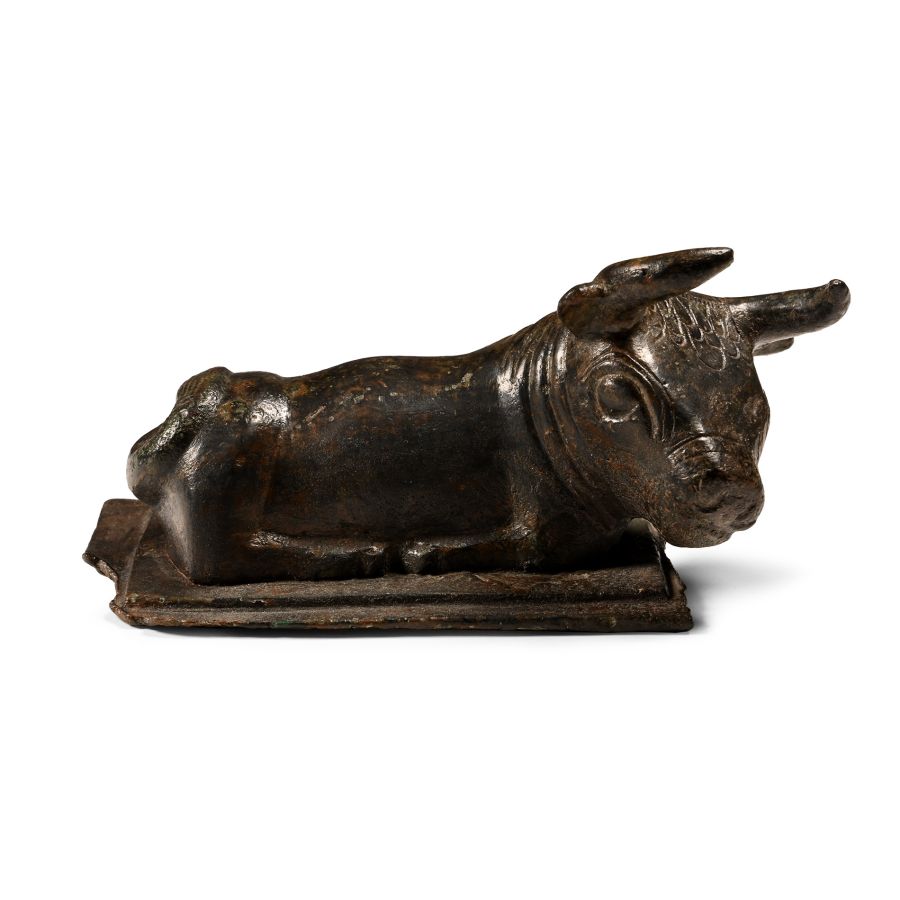
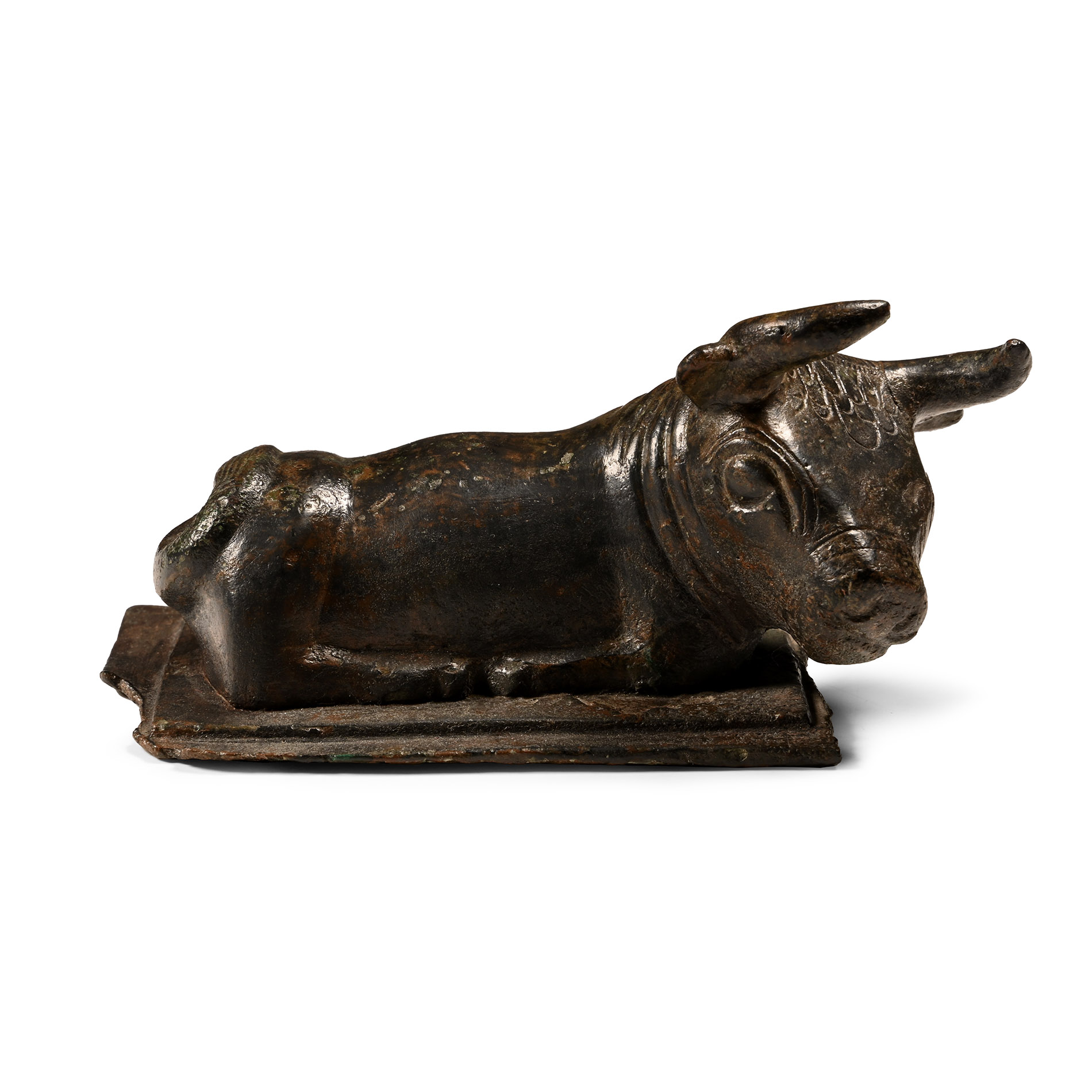
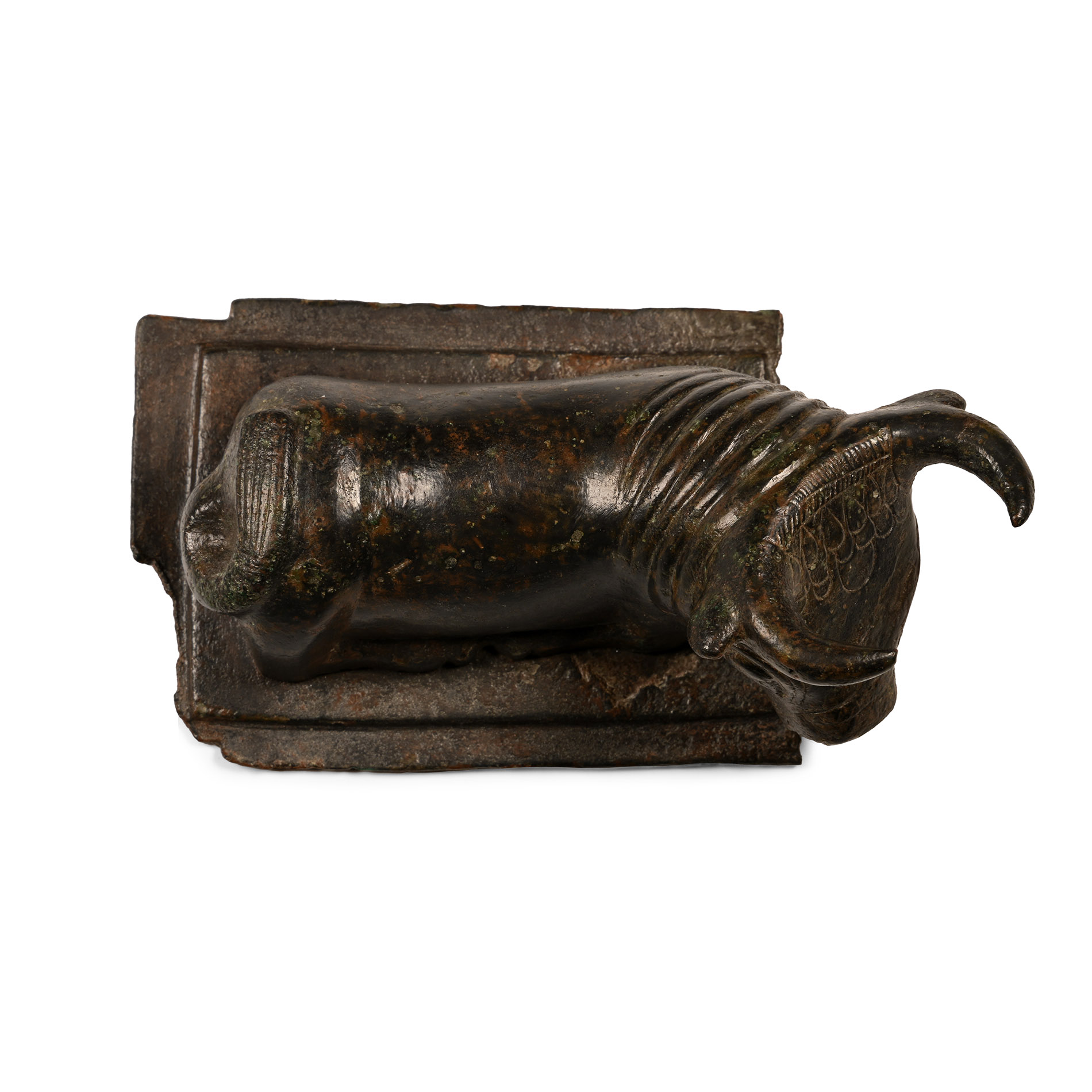
Urartian Bronze Recumbent Bull
8TH-7TH CENTURY B.C.
4 1/2 in. (485 grams, 11.4 cm).
Hollow-formed figure of a bull resting with its legs folded beneath its body, head turned; on a stepped rectangular base.
ProvenanceNicolas Koutoulakis (1910-1996), thence by descent.
Ex Galerie Dominique Thirion, Brussels, Belgium.
Private collection of Mr K.A.
This lot has been checked against the Interpol Database of stolen works of art and is accompanied by a search certificate number no.12411-225769.
This lot has been cleared against the Art Loss Register database, and is accompanied by an illustrated lot declaration signed by the Head of the Antiquities Department, Dr Raffaele D'Amato.
Cf. von Bothmer, D. (ed.), Glories of the Past. Ancient Art from the Shelby White and Leon Levy Collection, New York, 1990, pp. 52-3, no. 37; for similar bull-head protomes on cauldrons from Urartu, circa 8th-7th century B.C., Merhav, R., Urartu - A Metalworking Center in the First Millennium BCE, pp. 238-41; cf. also Cleveland Museum of Art, online collections, no. 1942.204.
CONDITIONTimeLine Auctions follows a vetting process to ensure the authenticity and legality of all items, reinforcing our commitment to integrity and responsible trading. Each antiquity, antique, and coin lot undergoes thorough examination by a vetting committee of at least ten external specialists, professional trade association members, scientists, and archaeologists: Our Vetting Process
AUCTIONS:
TimeLine is a leading auction house specialising in antiquities, ancient art, collectables, natural history, coins, medals, and books. Our auctions offer museums, collectors, historians, and enthusiasts the opportunity to acquire unique and historically significant pieces.
LOT 0247
Urartian Bronze Recumbent Bull
Estimate £1,500 - 2,000€1,740 - 2,320 (for guidance only)$2,030 - 2,700 (for guidance only)
-
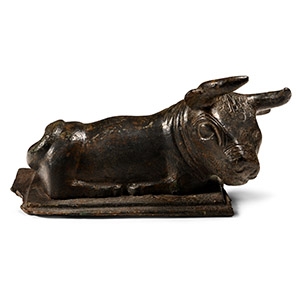
Urartian Bronze Recumbent Bull
8th-7th century B.C.Estimate: £1,500 - 2,000 (+bp*)
Opening Bid: £750
Hollow-formed figure of a bull resting with its legs folded beneath its body, head turned; on a stepped rectangular base. 485 grams, 11.4 cm
Nicolas Koutoulakis (1910-1996), thence by descent. Ex Galerie Dominique Thirion, Brussels, Belgium. Private collection of Mr K.A. This lot has been checked against the Interpol Database of stolen works of art and is accompanied by a search certificate number no.12411-225769. This lot has been cleared against the Art Loss Register database, and is accompanied by an illustrated lot declaration signed by the Head of the Antiquities Department, Dr Raffaele D'Amato. -
Mesopotamian Bronze Javelin Head
3rd-2nd millennium B.CSold for (Inc. bp): £117
With foliate blade, rhomboidal in section, raised mid-rib, medium length stem widening at its base and forming a small discoid stop, rectangular-section tang with bent terminal. 224 grams, 46.5 cm
Acquired in the 1990s. Ex Abelita family collection. This lot has been cleared against the Art Loss Register database, and is accompanied by an illustrated lot declaration signed by the Head of the Antiquities Department, Dr Raffaele D'Amato.
The specimen belongs to the category of tripartite spears with long pointed biconvex blade and single bevelled tang. They seem to be a Mesopotamian and Susian (Elamite) variant, and this type also includes decorated blades, like the spear from Tello with the inscription 'King of Kish'. -
Tell Halaf Painted Terracotta Vessel
2900-2500 B.C.Estimate: £1,500 - 2,000 (‡+bp*)
Opening Bid: £833
Biconical in profile with narrow base, broad shoulder and everted flared rim; painted concentric herringbone band to the shoulder and swags beneath. 712 grams, 18 cm wide
Acquired in the mid 1980s-1990s. Private collection, Switzerland, thence by descent. Private collection, since the late 1990s. This lot has been checked against the Interpol Database of stolen works of art and is accompanied by search certificate number no.12258-222363. This lot has been cleared against the Art Loss Register database, and is accompanied by an illustrated lot declaration signed by the Head of the Antiquities Department, Dr Raffaele D'Amato.
