
Loading, please wait...




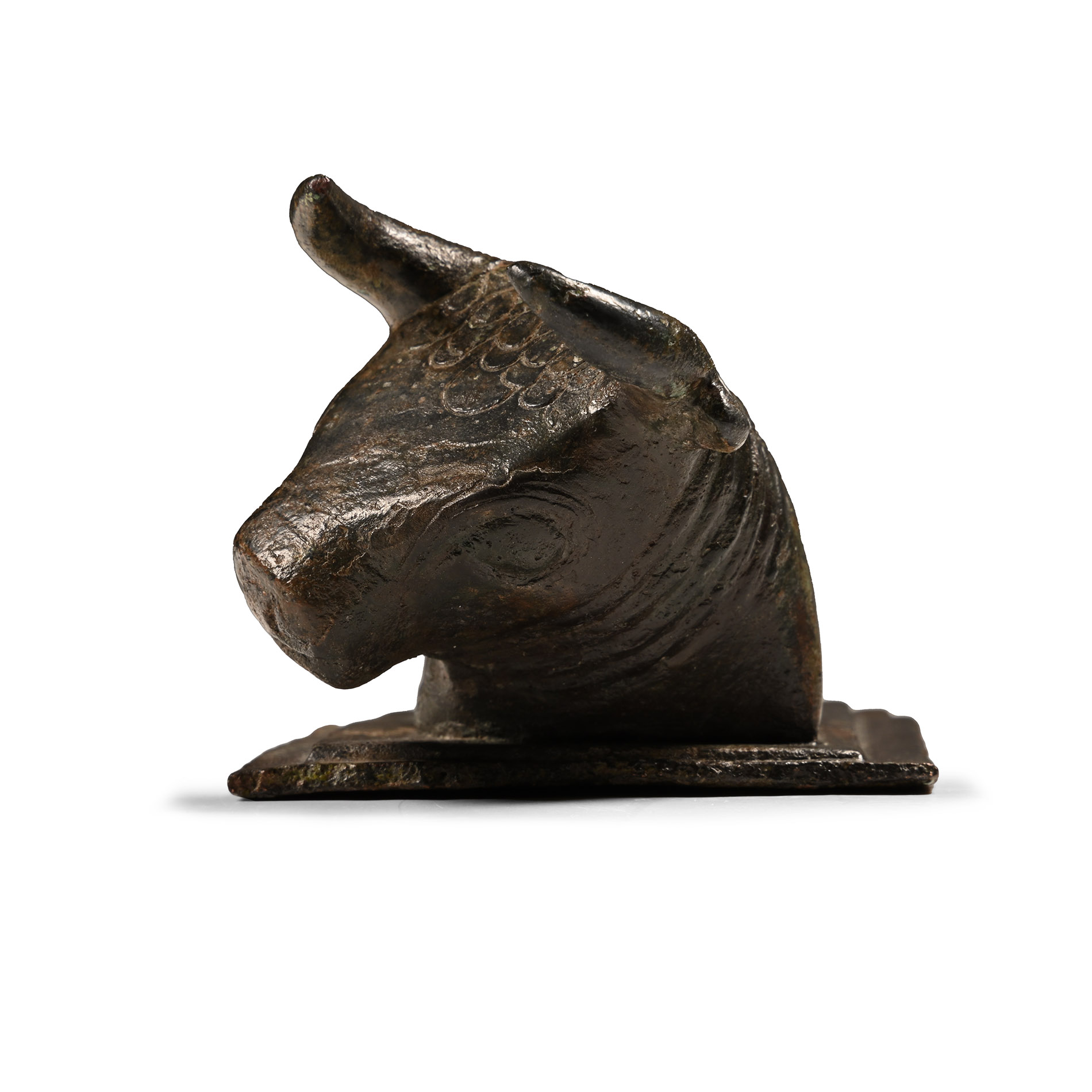
LOT 0249
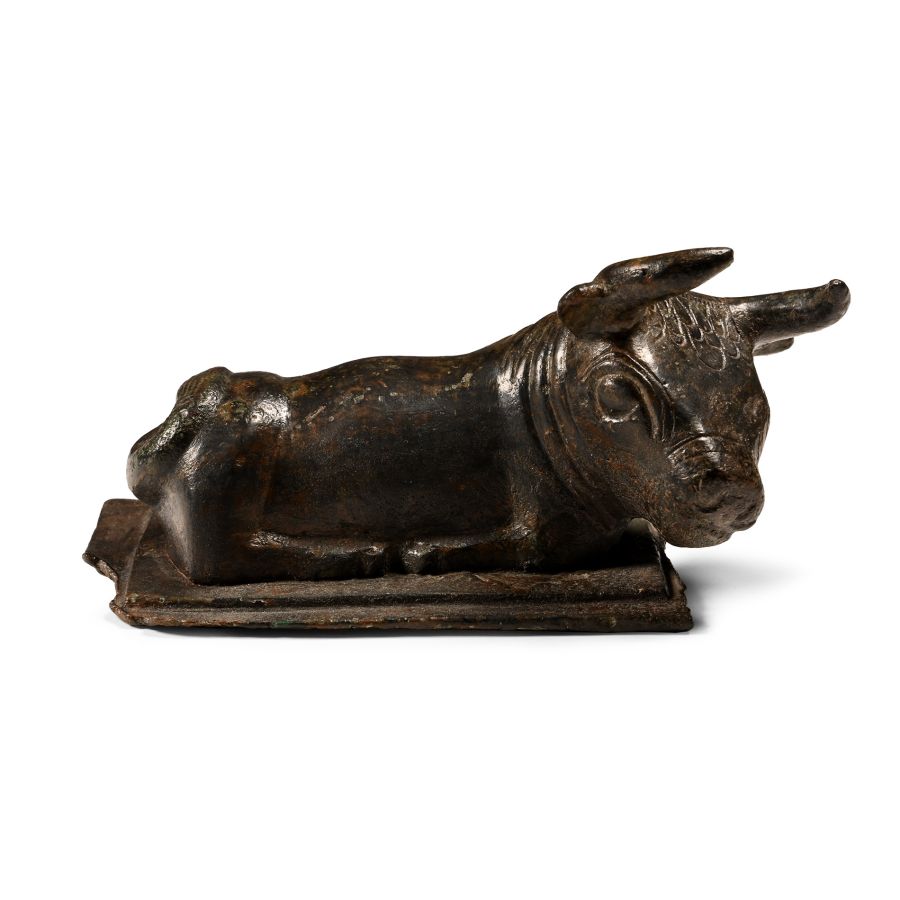
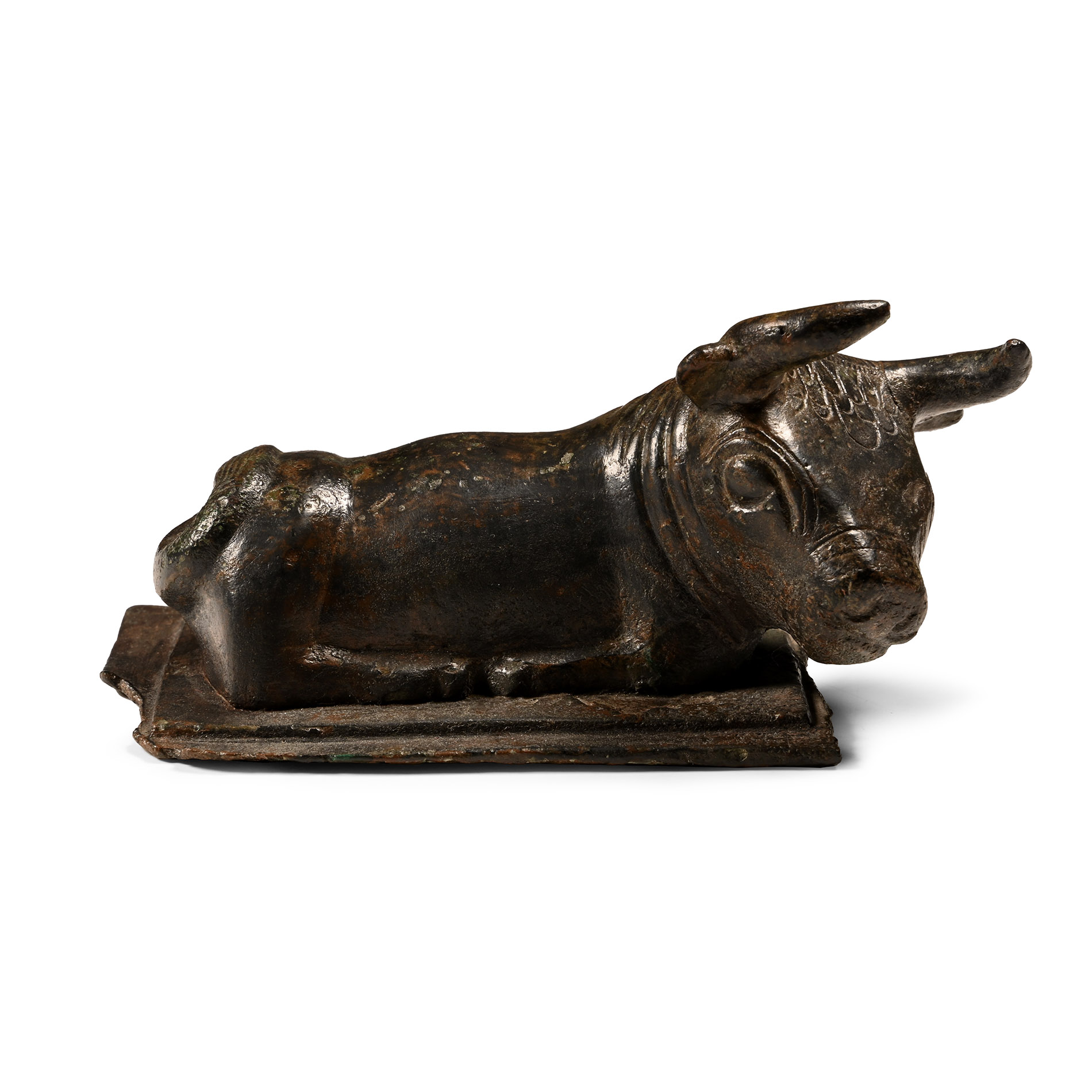
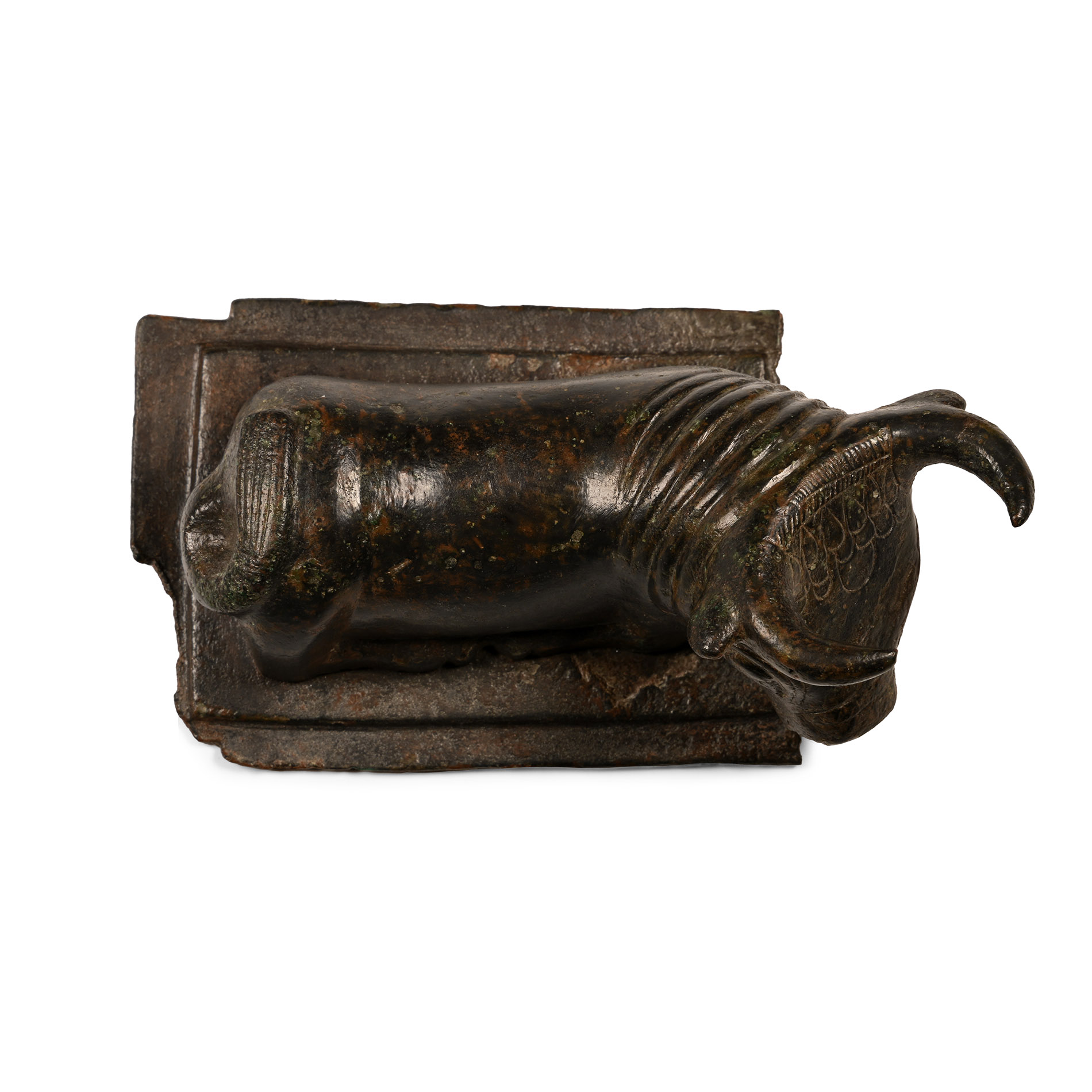
Urartian Bronze Recumbent Bull
8TH-7TH CENTURY B.C.
4 1/2 in. (485 grams, 11.4 cm).
Hollow-formed figure of a bull resting with its legs folded beneath its body, head turned; on a stepped rectangular base.
ProvenanceNicolas Koutoulakis (1910-1996), thence by descent.
Ex Galerie Dominique Thirion, Brussels, Belgium.
Private collection of Mr K.A.
This lot has been checked against the Interpol Database of stolen works of art and is accompanied by a search certificate number no.12411-225769.
Cf. D. von Bothmer (ed.), Glories of the Past. Ancient Art from the Shelby White and Leon Levy Collection, New York, 1990, pp. 52-3, no. 37.
For similar bull-head protomes on cauldrons from Urartu, circa 8th-7th Century B.C., cf. R. Merhav, Urartu - A Metalworking Center in the First Millennium BCE pp. 238-41; Cf. Cleveland Museum of Art, online collections, no. 1942.204.
TimeLine Auctions follows a vetting process to ensure the authenticity and legality of all items, reinforcing our commitment to integrity and responsible trading. Each antiquity, antique, and coin lot undergoes thorough examination by a vetting committee of at least ten external specialists, professional trade association members, scientists, and archaeologists: Our Vetting Process
AUCTIONS:
TimeLine is a leading auction house specialising in antiquities, ancient art, collectables, natural history, coins, medals, and books. Our auctions offer museums, collectors, historians, and enthusiasts the opportunity to acquire unique and historically significant pieces.
LOT 0249
Urartian Bronze Recumbent Bull
Estimate £3,500 - 4,500€4,060 - 5,220 (for guidance only)$4,730 - 6,080 (for guidance only)
-
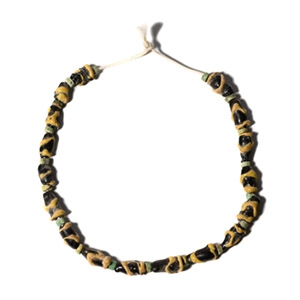
Western Asiatic Multi-Coloured Glass Bead String
1st millennium A.D.Sold for (Inc. bp): £98
Restrung group of tubular beads with applied yellow glass trails. 9.15 grams, 22 cm
Acquired in London, 1985. Private collection, London. -
.jpg)
Sumerian Limestone Bull Head Protome
3rd millennium B.C.Estimate: £40,000 - 60,000 (‡+bp*)
Opening Bid: £20,000
With large eyes, the pupils inlaid in black chlorite, bone insert for the sclerae, three arching grooved brows, the wide muzzle with a horizontal incision between the nostrils, closed mouth; sockets to the sides of the head to accept separately made horns and ears; the edge of the neck contoured for attachment; mounted on a custom-made display stand. 1.24 kg total, 14.5 cm high including stand
Private European collection, 1985. with Christie’s, New York, 3 June 2009, no.35. Private collection, Europe. Accompanied by an academic report by Dr Raffaele D’Amato. This lot has been checked against the Interpol Database of stolen works of art and is accompanied by search certificate number no.12358-226703.
In Sumerian mythology, the bull was associated with the storm and rain god Hadad (Iškur), and is widely represented on artworks (Woolley, 1961, pp.46, 52; Kramer, 1979, figs.17, 18, 22). The round inlaid eyes are typical of Sumerian art of Early Dynastic Period, as well as the three eyebrows. -
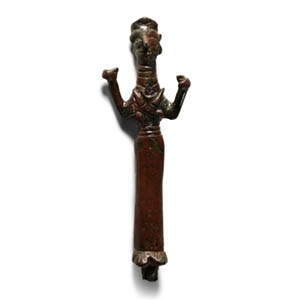
Elamite Bronze Statuette of a Priest
2nd-1st millennium B.C.Sold for (Inc. bp): £546
Columnar in form with pinched facial features, bisected headdress, horns to the collar and belt to the waist, arms bent and raised with fingers hooked to hold implements. 46 grams, 10.7 cm
From an important North London collection formed before 1980. From a private collection of an Exeter gentleman since 2015.
