
Loading, please wait...
LOT 1415
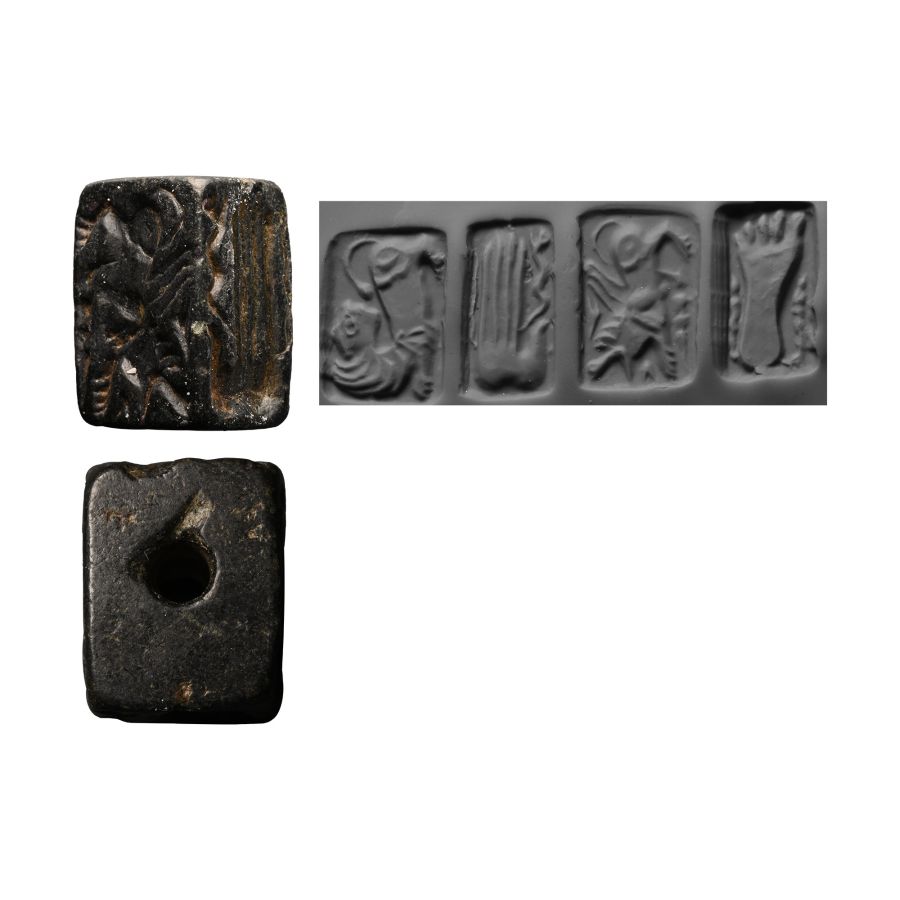
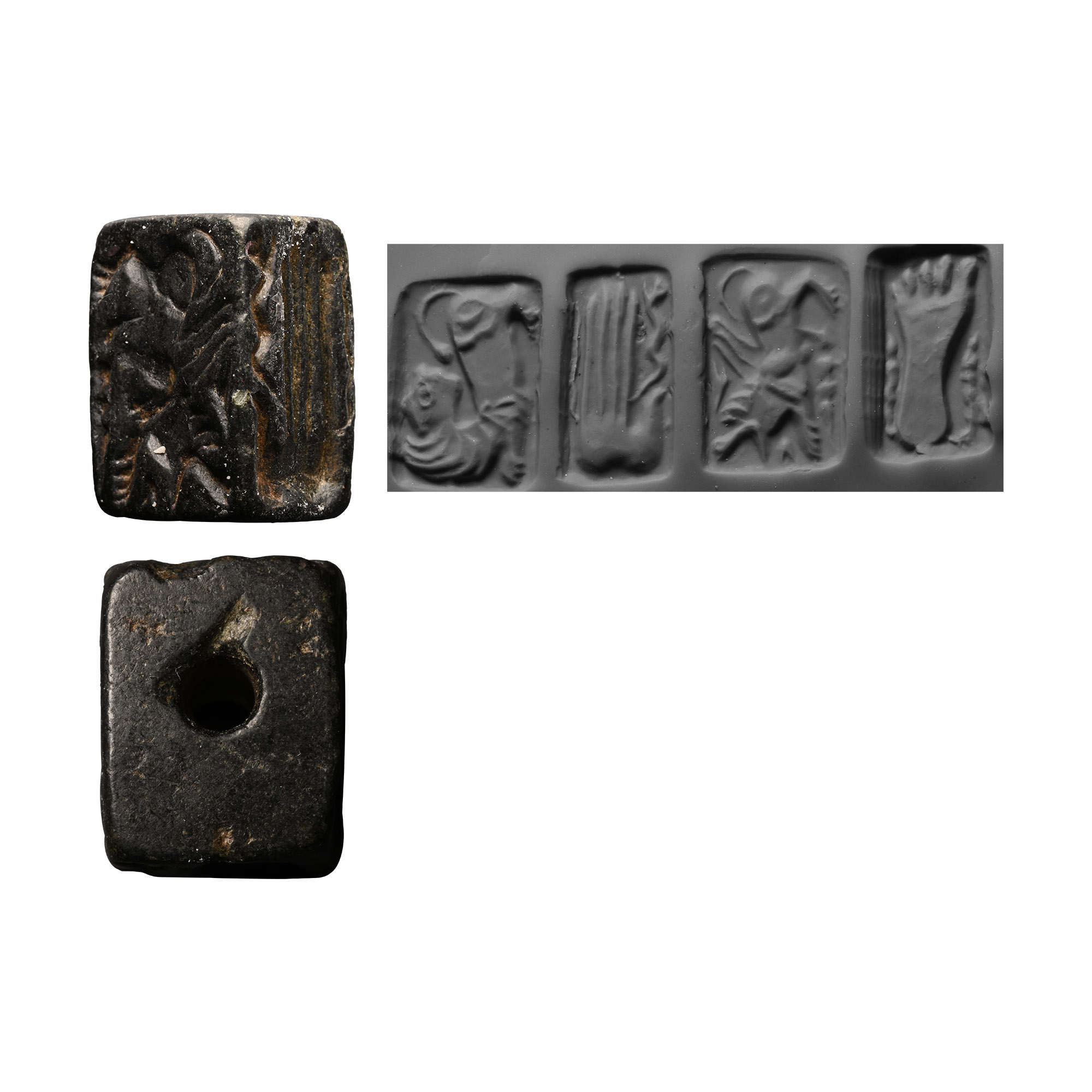
Urartian Black Stone Four-Sided Stamp Seal
CIRCA 8TH-7TH CENTURY B.C.
1 in. (17.9 grams, 26 mm).
A cuboid seal with longitudinal piercing, each side with a different motif: a roaring lion(?), a foot imprint, a crouching lion, and a hand with snake to the side; accompanied by a museum-quality impression.
ProvenanceFrom the 'S' collection, acquired 1970-1990s.
The collection was seen and studied by W.G. Lambert, late Professor of Assyriology at the University of Birmingham, 1970-1993.
Accompanied by a copy of a report from Peter Gert Van der Veen, senior lecturer of Levantine Archaeology Johannes Gutenberg-Universität Mainz.
This lot has been cleared against the Art Loss Register database, and is accompanied by an illustrated lot declaration signed by the Head of the Antiquities Department, Dr Raffaele D'Amato.
TimeLine Auctions follows a vetting process to ensure the authenticity and legality of all items, reinforcing our commitment to integrity and responsible trading. Each antiquity, antique, and coin lot undergoes thorough examination by a vetting committee of at least ten external specialists, professional trade association members, scientists, and archaeologists: Our Vetting Process
AUCTIONS:
TimeLine is a leading auction house specialising in antiquities, ancient art, collectables, natural history, coins, medals, and books. Our auctions offer museums, collectors, historians, and enthusiasts the opportunity to acquire unique and historically significant pieces.
-
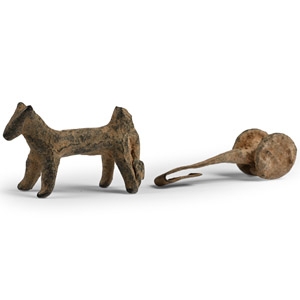
Luristan Bronze Animal and Cart
13th-7th century B.C.Sold for (Inc. bp): £598
Modelled in the round standing beast with flange to the rump, two-wheeled vehicle with flat-section yoke curved over and returned at the narrow end. 26.8 grams total, 40-45 mm
Acquired 1980-2015. Ex Abelita family collection. This lot has been cleared against the Art Loss Register database, and is accompanied by an illustrated lot declaration signed by the Head of the Antiquities Department, Dr Raffaele D'Amato. -
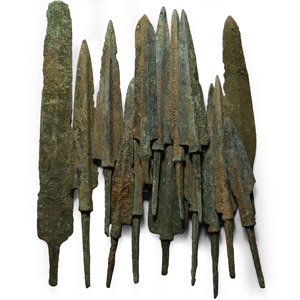
Luristan Bronze Arrowhead Group
13th-6th century B.C.Sold for (Inc. bp): £247
Including leaf-shaped, round-tipped, barbed, triangular and other tanged types. 396 grams total, 10.6-19 cm
Acquired 1980-2015. Ex Abelita family collection. This lot has been cleared against the Art Loss Register database, and is accompanied by an illustrated lot declaration signed by the Head of the Antiquities Department, Dr Raffaele D'Amato. -
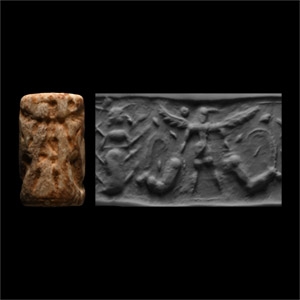
Western Asiatic White Marble Cylinder Seal with Standing Goddess
2900-2500 B.C.Sold for (Inc. bp): £624
Cylinder with cord and bead handles; accompanied by a copy of an old scholarly note, typed and signed by W.G. Lambert, late Professor of Assyriology, University of Birmingham, 1970-1993, which states: 'Cylinder seal of white marble, 32 x 19.5 mm., condition fair. Standing goddess with hand at waist, shoots growing from both sides of her body and her head; standing deity with head and wings of a bird, otherwise a human body, and holding in each hand the tail of a long-horned quadruped. From south-east Iran, c. 2900-2500 B.C. Little is known of the religion of this area, since no written information about it exists.'; accompanied by a museum-quality impression. 21.8 grams total, 8.1-32 mm
UK private collection, acquired 1980-1983. Accompanied by a copy of a scholarly note, typed and signed by Professor Wilfrid George Lambert in September 1990. This lot has been cleared against the Art Loss Register database, and is accompanied by an illustrated lot declaration signed by the Head of the Antiquities Department, Dr Raffaele D'Amato.
