
Loading, please wait...
LOT 1479
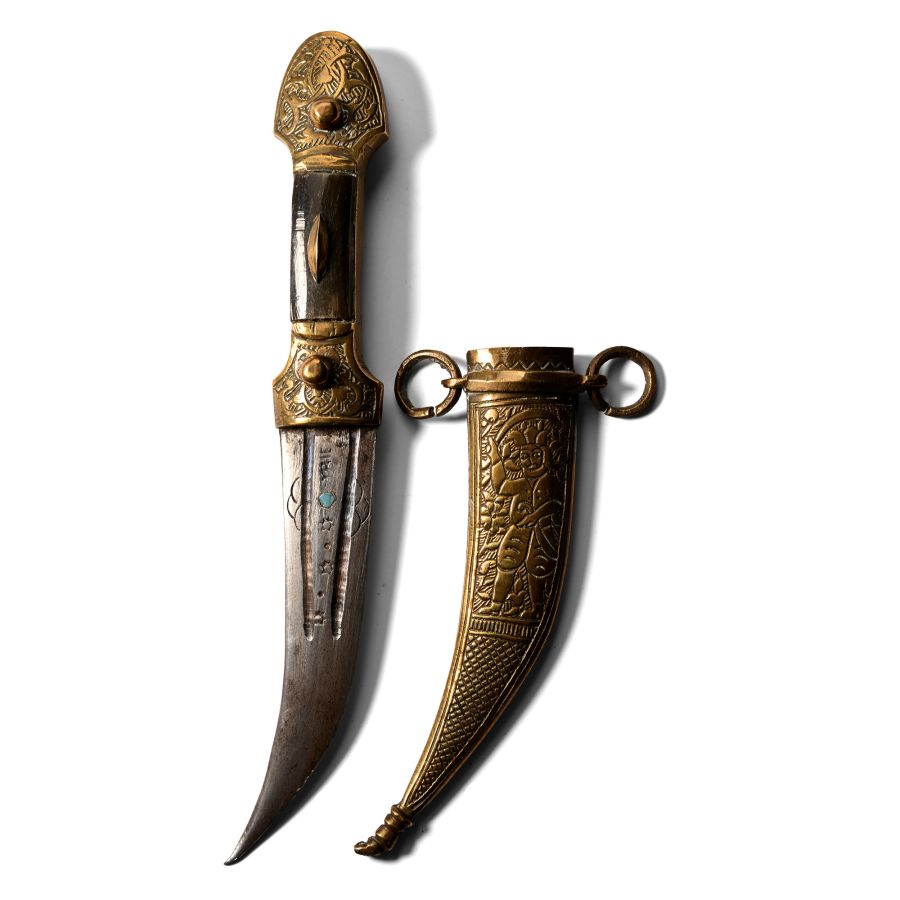
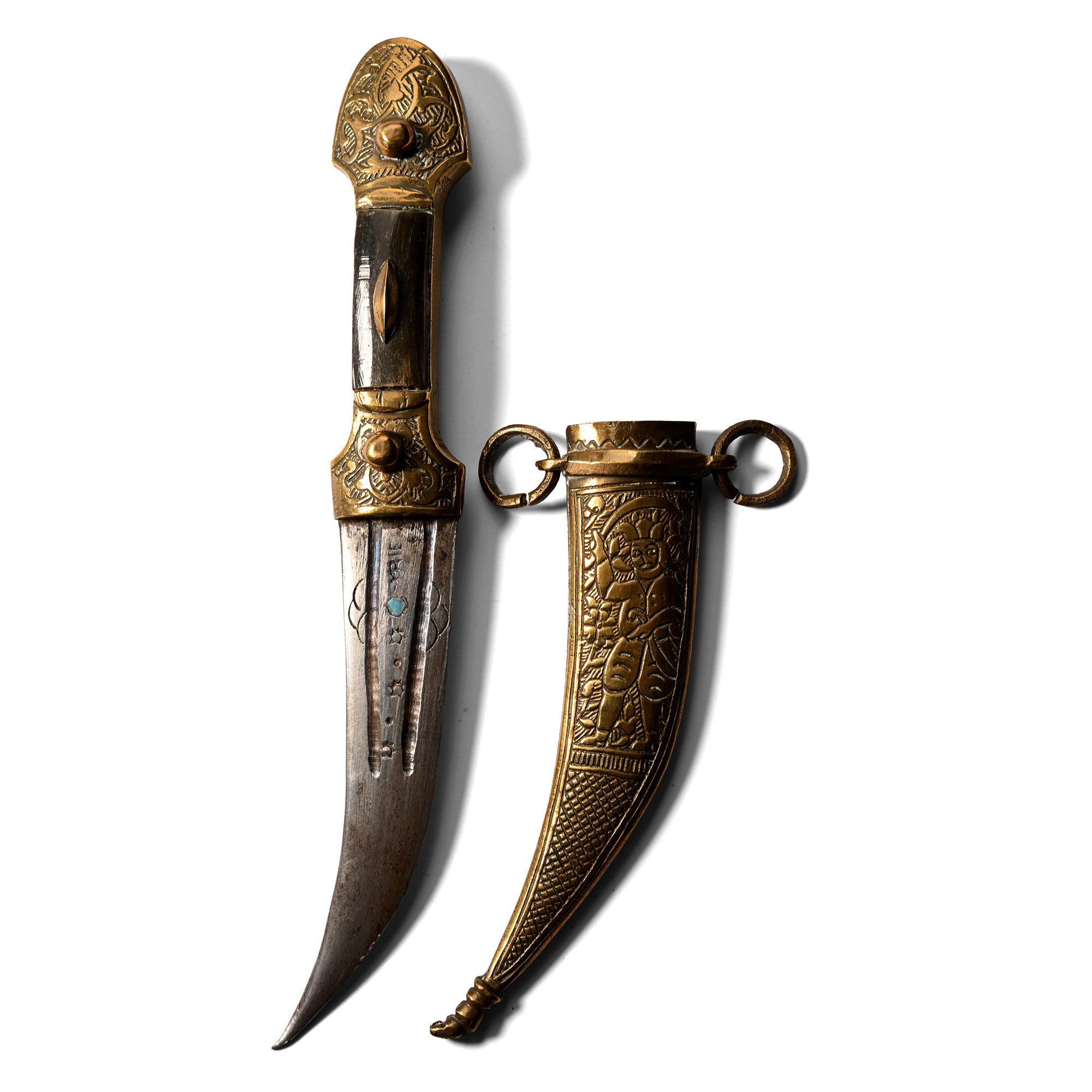
Turkish Iron Dagger with Brass Hilt and Scabbard
MID 20TH CENTURY A.D.
9 1/8 in. (211 grams, 23.2 cm).
Two-edged jambiya with narrow curved blade, two deep fullers and punched detailing with inset turquoise-coloured pellet; brass bolster and applied bone panels to the grip, silver facing to pommel; brass sheath with low-relief foliage and figural ornament, suspension rings. [No Reserve]
ProvenanceAcquired on the UK art market in the early 2000s.
CONDITIONTimeLine Auctions follows a vetting process to ensure the authenticity and legality of all items, reinforcing our commitment to integrity and responsible trading. Each antiquity, antique, and coin lot undergoes thorough examination by a vetting committee of at least ten external specialists, professional trade association members, scientists, and archaeologists: Our Vetting Process
AUCTIONS:
TimeLine is a leading auction house specialising in antiquities, ancient art, collectables, natural history, coins, medals, and books. Our auctions offer museums, collectors, historians, and enthusiasts the opportunity to acquire unique and historically significant pieces.
-
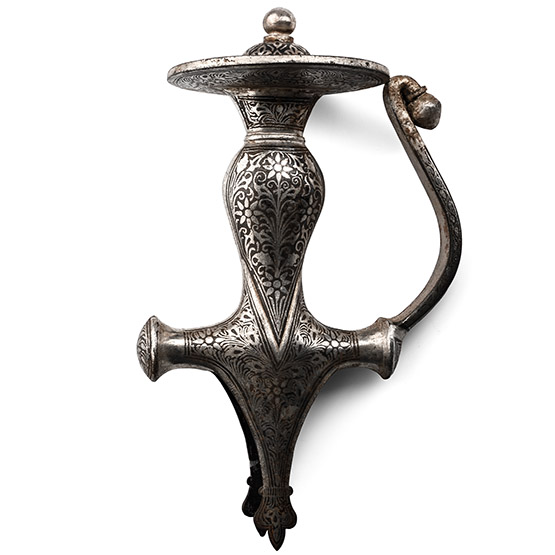
Indian Silvered Bronze Sabre Handle
20th century A.D.Sold for (Inc. bp): £195
Comprising a lentoid-section bulbous grip with lateral stub quilloons and carinated spur to both faces ending in a trefoil, dished disc pommel with dome and knop; curved knuckle-guard with returned knop finial; reserved panels of arabesque foliage ornament, rosettes and linear detailing. 447 grams, 19.1 cm
Private collection, UK. -
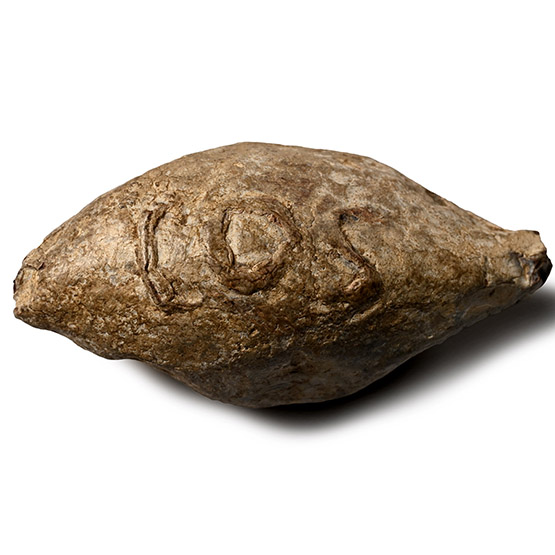
Roman 'Consular' Lead Slingshot
1st century B.C.Sold for (Inc. bp): £143
Fusiform shot with casting nipple at each end, low-relief legend 'COS' to one face and traces of letters on the other. 38 grams, 36 mm
From the collection of a London antiquarian, formed since the 1980s.
The shot (Völling type 1C) is marked with the abbreviation COS, meaning CO(N)S(UL), the highest military magistrate of the Roman Res Publica. The projectiles were made of different materials: lead (glandes) or pottery or stone (lapides missiles). -
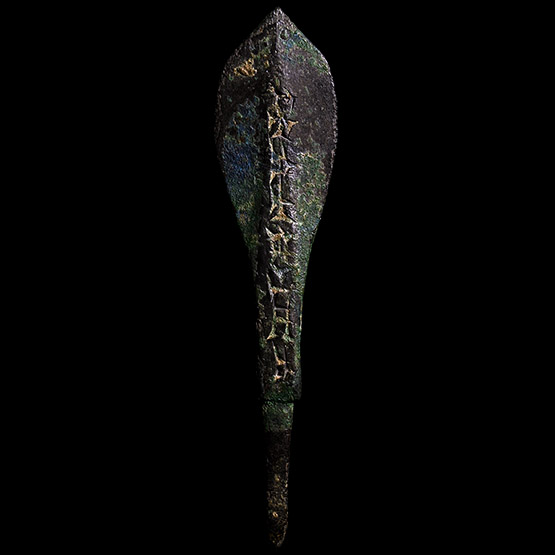
Babylonian Bronze Arrow Owned by Eulmas-sakin-sumi, King of Babylon
Late Middle Babylonian Period, 1004-988 B.C.Sold for (Inc. bp): £9,100
A two-edged leaf-shaped blade and square-section tapering tang, on one side inscribed in Akkadian cuneiform text: 'Eulmaš-šākin-šumi'; and the other side inscribed in Akkadian cuneiform text: 'É-ul-maš-GAR-MU'; reading (property) 'Of Eulmash-shakin-shumi, king of the world'; there are now seventeen known examples compared to fourteen known in 1968. 9.37 grams, 66 mm
UK private collection before 2000. Acquired on the UK art market. Private collection, London, UK. This lot has been checked against the Interpol Database of stolen works of art and is accompanied by search certificate number no.13145-248307.
King Eulmash-shakin-shumi was the founder of the 6th Dynasty of Babylon, named the Bῑt-Bazi Dynasty after the Kassite tribal group from which its leaders were drawn. They were possibly situated near the juncture of the Diyala River and the Tigris River. There are discrepancies in the information surviving about his reign; whilst the Dynastic Chronicle states that he ruled for fourteen years, the King List A suggests a rule of seventeen years. The events leading to the king's rise to power unfolded in the context of the chaotic close of the Second Sealand Dynasty, and in the midst of the turmoil inflicted by the famine-induced Aramean migrations. During this period, Eulmaš-šākin-šumi appears to have seized the throne and possibly moved his capital to Kar-Marduk, a hitherto unknown location, and easily defensible. Upon his death, King Eulmash-shakin-shumi was buried in the Palace of Kar-Marduk, the dynastic capital. A 9th century stele relating to temple endowments at Sippar relates that the king restored food offerings to Shamash, and entrusted a garden plot in a part of Babylon known as the 'New City' to the then high priest there. The weapons unearthed with inscriptions such as the one offered here were likely votive, as opposed to military pieces.
