
Loading, please wait...
LOT 1847
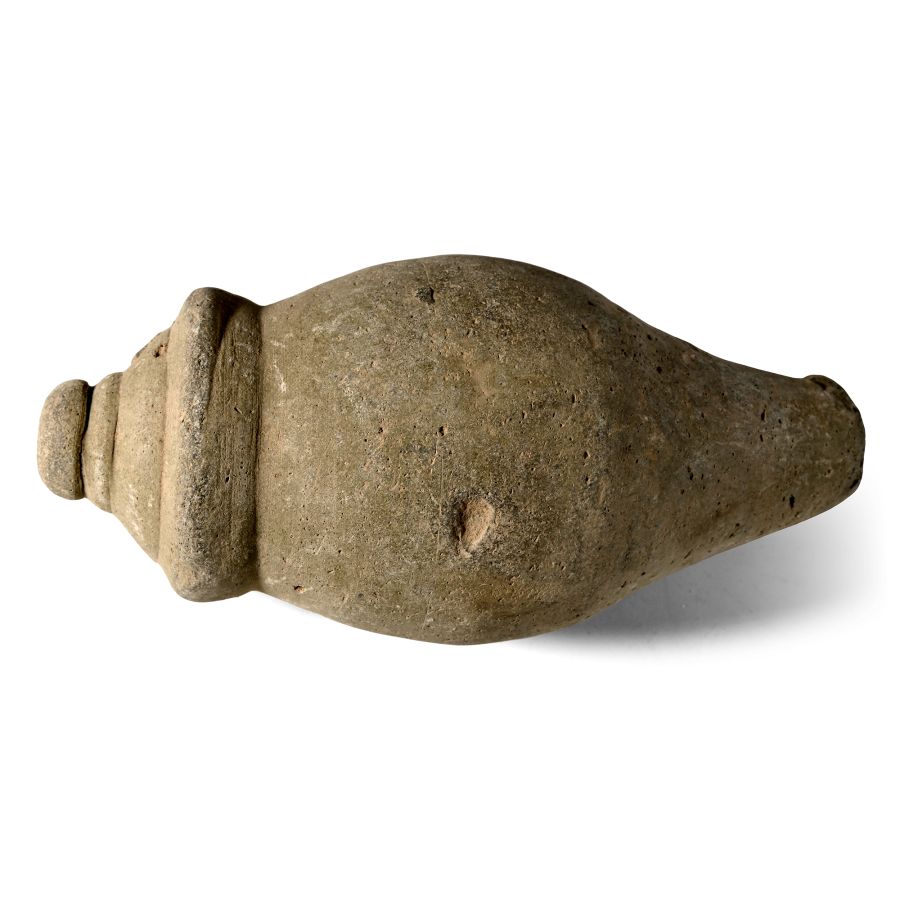
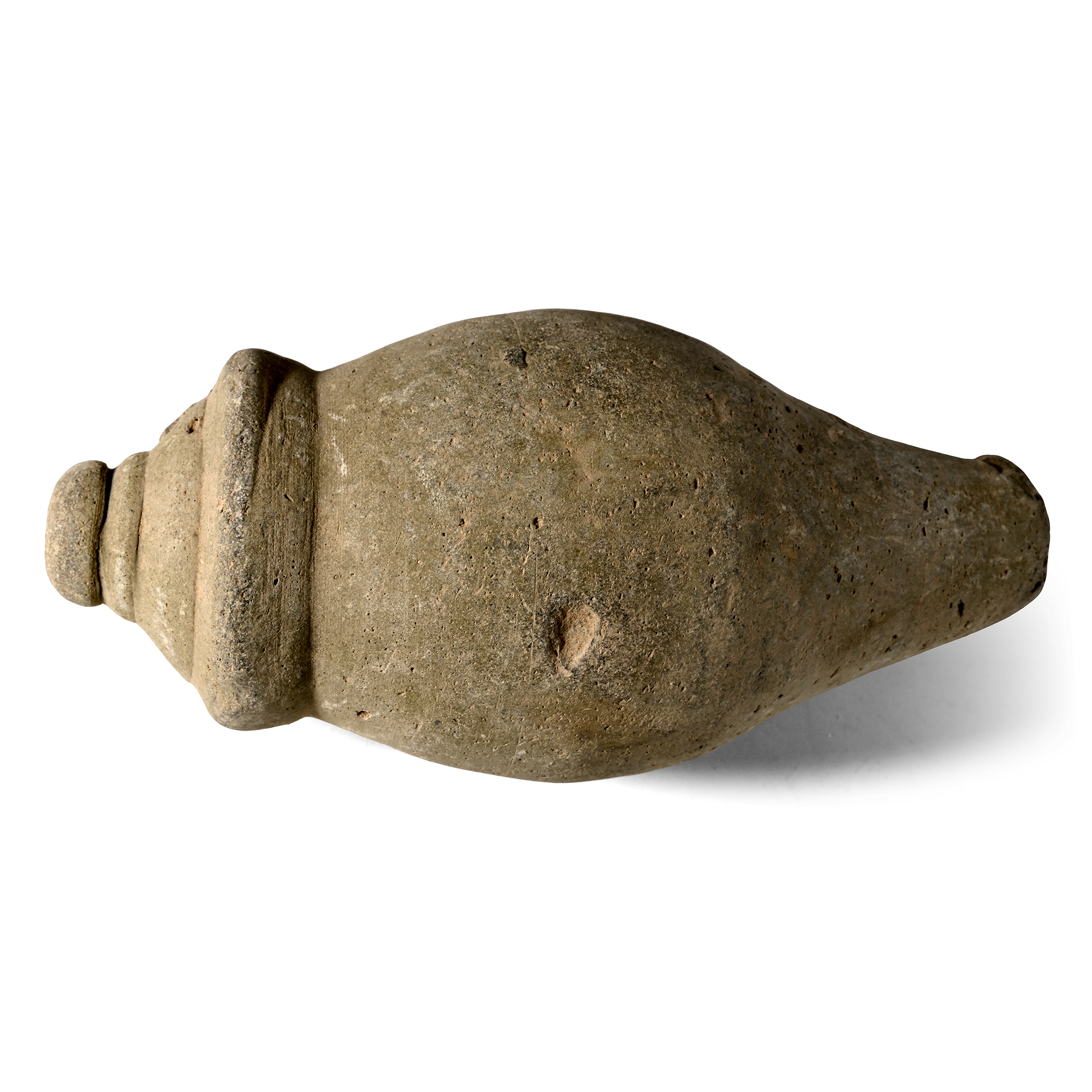
Turco-Mongol 'Greek Fire' Ceramic Fire Bomb or Hand Grenade
14TH-15TH CENTURY A.D.
6 1/8 in. (505 grams, 15.7 cm).
Piriform in profile with a domed mouth and a stepped neck; intended to be filled with explosive liquid and a wick, and used as a hand grenade. [No Reserve]
ProvenanceFrom an important specialist collection, London, UK, 1990s.
LiteratureCf. Arendt, W. I., Granaten des 13-14. Jahrhunderts, die an der Wolga gefunden sind, Zeitschrift fur Historische Waffen-und Kostumkunde, 11 (1926-8), p.42; cf. Arendt, W., Die Spharisch-konischen Gefäße aus Gebranntem Ton, ibid; cf. Ayalon, D., Gunpowder and Firearms in the Mamluk Kingdom, London, 1956, p.16.
FootnotesApart from the use of siphons or manual flame-throwers called cheirosiphona, special corps of Roman soldiers employed terracotta grenades, in the form of small jars, abundantly evidenced in archaeological excavations. They were called μεσαία kακαβιά or κυτροκακάβια, where the former had a bulbous shape and the latter a more cylindrical form.
CONDITIONTimeLine Auctions follows a vetting process to ensure the authenticity and legality of all items, reinforcing our commitment to integrity and responsible trading. Each antiquity, antique, and coin lot undergoes thorough examination by a vetting committee of at least ten external specialists, professional trade association members, scientists, and archaeologists: Our Vetting Process
AUCTIONS:
TimeLine is a leading auction house specialising in antiquities, ancient art, collectables, natural history, coins, medals, and books. Our auctions offer museums, collectors, historians, and enthusiasts the opportunity to acquire unique and historically significant pieces.
LOT 1847
Turco-Mongol 'Greek Fire' Ceramic Fire Bomb or Hand Grenade
Sold for (Inc. bp): £98
-
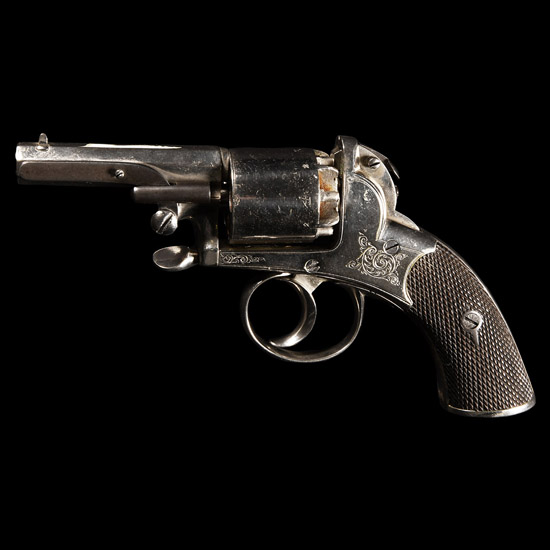
London Proofed Percussion Revolver
19th century A.D.Sold for (Inc. bp): £338
A double-action nickel-plated 5-shot percussion revolver with numbered chambers; the chambers and barrel bearing London proofmarks and the barrel numbered '2'; the frame with foliate engraving and fitted with chequered wood grip scales with hinged steel loading lever; action in working order. 480 grams, 18 cm
Acquired Peter Wilson Auction, 2020, lot 10. Ex property of a Kent collector. Accompanied by lot ticket. This lot is for UK buyers only.
Sold as an exempt item under Section 58 (2) of the Firearms Act, 1968, to be held as a curiosity or ornament. No license required but buyer must be over 18 years of age. -
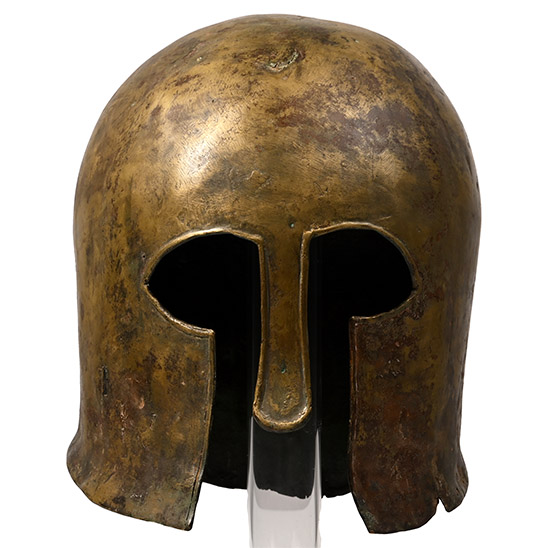
Greek Corinthian Style Helmet in Perspex Display Case
20th century A.D.Sold for (Inc. bp): £442
A bronze reproduction of a Corinthian helmet with a deep nasal and cheek guards; supplied with a custom-made perspex display case. 10.05 kg total, 40.5 cm high including stand (helmet: 26.5 cm high)
Private collection, UK. -
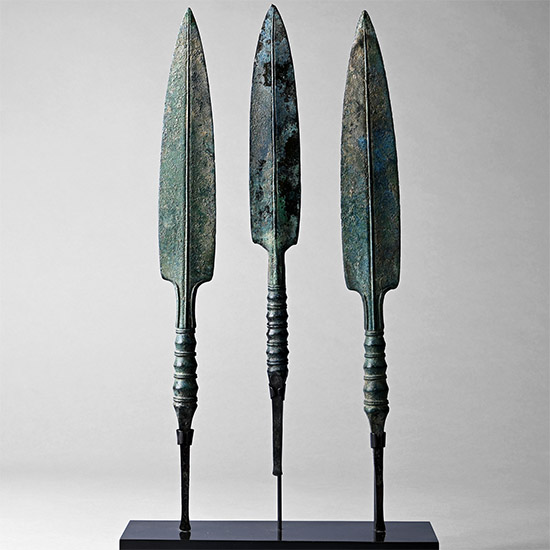
Luristan Bronze Spearhead Collection
Circa 1000-700 B.C.Sold for (Inc. bp): £6,500
Group of three tanged spearheads, each with a slender leaf-shaped two-edged blade and midrib, tiered ribbing to the neck, square-section tang with chisel tip; mounted on a custom-made stand. 1.65 kg total, blades: 34.5-38.6 cm
Ex London, UK, gallery, 1971-early 2000s. London, UK, collection. This lot has been checked against the Interpol Database of stolen works of art and is accompanied by search certificate number no.13245-252972.
Spearheads of this kind were realised by mould casting. They were of different lengths and used by Luristan, Hamadan, early Median and Achaemenid warriors.
