
Loading, please wait...
LOT 1834
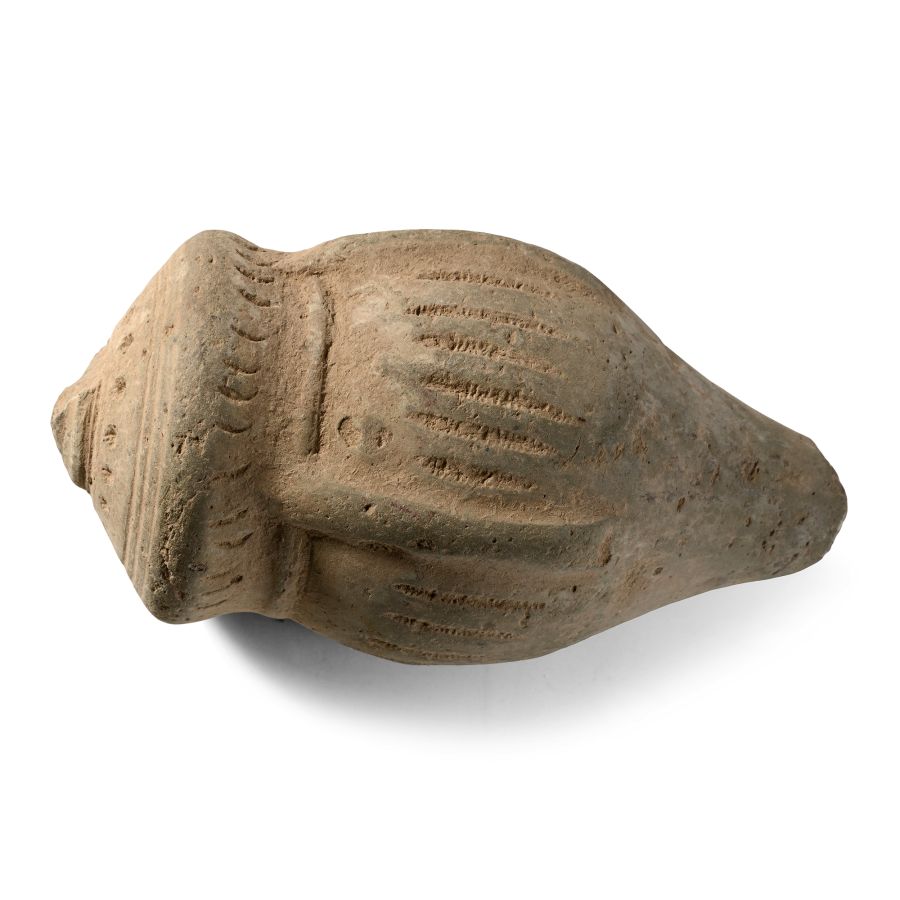
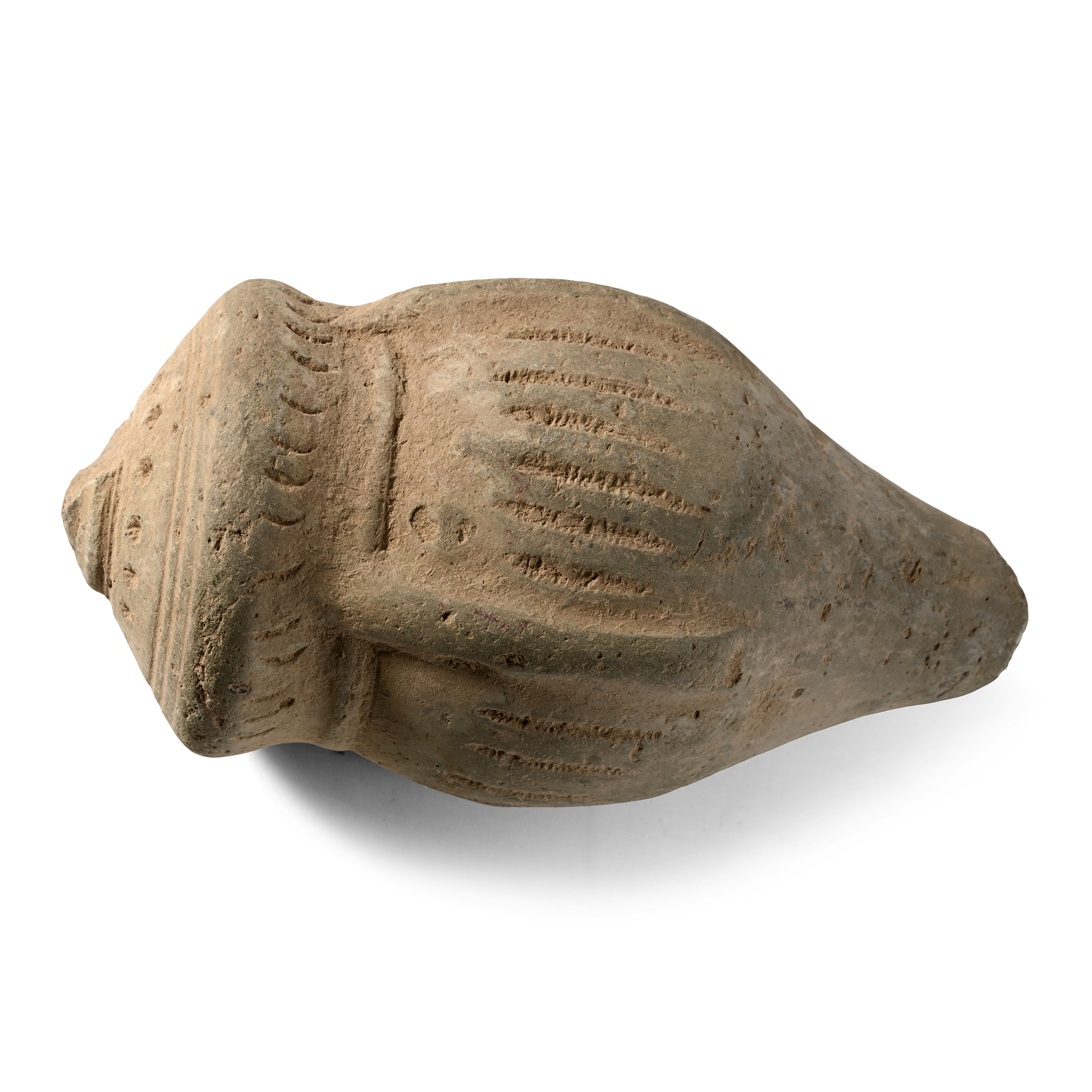
Turco-Mongol 'Greek Fire' Ceramic Fire Bomb or Hand Grenade
9TH-11TH CENTURY A.D.
5 1/2 in. (534 grams, 14 cm).
Piriform in profile with a stepped neck, incised decoration and three raised lugs; intended to be filled with explosive liquid and a wick, and used as a hand grenade. [No Reserve]
ProvenanceFrom an important specialist collection, London, UK, 1990s.
LiteratureCf. Arendt, W. I., Granaten des 13-14. Jahrhunderts, die an der Wolga gefunden sind, Zeitschrift fur Historische Waffen-und Kostumkunde, 11 (1926-8), p.42; cf. Arendt, W., Die Spharisch-konischen Gefäße aus Gebranntem Ton, ibid; cf. Ayalon, D., Gunpowder and Firearms in the Mamluk Kingdom, London, 1956, p.16.
FootnotesApart from the use of siphons or manual flame-throwers called cheirosiphona, special corps of Roman soldiers employed terracotta grenades, in the form of small jars, abundantly evidenced in archaeological excavations. They were called μεσαία kακαβιά or κυτροκακάβια, where the former had a bulbous shape and the latter a more cylindrical form.
CONDITIONTimeLine Auctions follows a vetting process to ensure the authenticity and legality of all items, reinforcing our commitment to integrity and responsible trading. Each antiquity, antique, and coin lot undergoes thorough examination by a vetting committee of at least ten external specialists, professional trade association members, scientists, and archaeologists: Our Vetting Process
AUCTIONS:
TimeLine is a leading auction house specialising in antiquities, ancient art, collectables, natural history, coins, medals, and books. Our auctions offer museums, collectors, historians, and enthusiasts the opportunity to acquire unique and historically significant pieces.
LOT 1834
Turco-Mongol 'Greek Fire' Ceramic Fire Bomb or Hand Grenade
Sold for (Inc. bp): £221
-
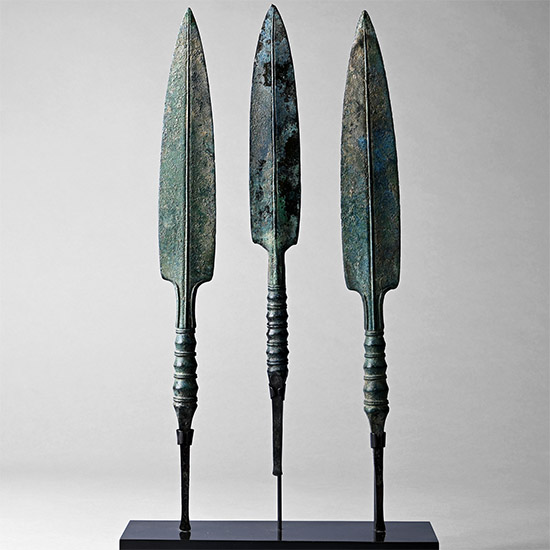
Luristan Bronze Spearhead Collection
Circa 1000-700 B.C.Sold for (Inc. bp): £6,500
Group of three tanged spearheads, each with a slender leaf-shaped two-edged blade and midrib, tiered ribbing to the neck, square-section tang with chisel tip; mounted on a custom-made stand. 1.65 kg total, blades: 34.5-38.6 cm
Ex London, UK, gallery, 1971-early 2000s. London, UK, collection. This lot has been checked against the Interpol Database of stolen works of art and is accompanied by search certificate number no.13245-252972.
Spearheads of this kind were realised by mould casting. They were of different lengths and used by Luristan, Hamadan, early Median and Achaemenid warriors. -
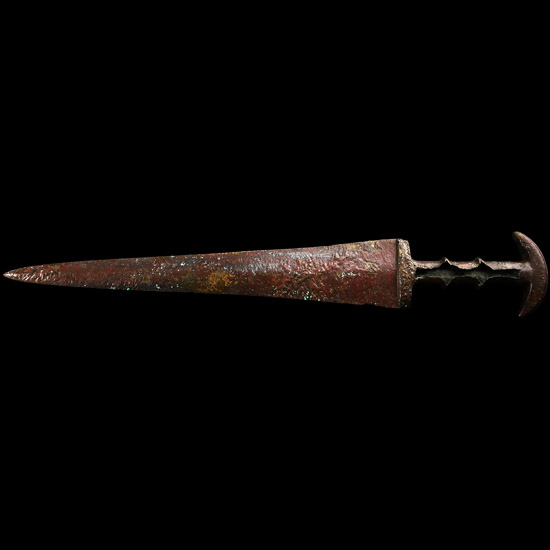
Luristan Bronze Short Sword with Crescent-Shaped Pommel
10th century B.C.Estimate: £500 - 700 (+bp*)
Opening Bid: £250
Comprising a triangular blade with integral ribbed handle and a crescentic pommel. 450 grams, 40 cm
Ex Abelita family collection, 1980s-2000s.
These kinds of bronze daggers or dirks, typical of Marlik culture, were cast in a one piece mould according to Negahban, although in some specimens the guard was later cast into the blade. The separate sets of encircling ribs on the grips are again typical of swords from the Marlik area. In our specimen the grip is opened on one side to receive organic filling. -
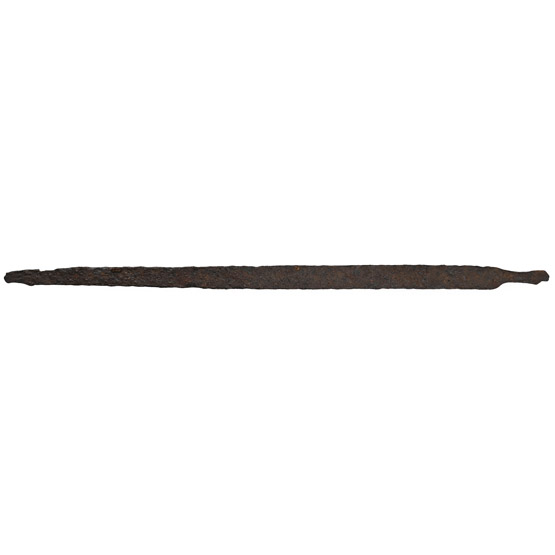
'Bourton-on-the-Water' Celtic Sword-Shaped Iron Currency Ingot
Iron Age, circa 200 B.C.-1st century A.D.Sold for (Inc. bp): £338
A substantial long iron bar in the shape of a sword with the original short folded-over handle to one end. 561 grams, 82 cm
Found Bourton-on-the-Water, Gloucestershire, UK, during the period between WWI and WWII. Property of the finder's family until sold by regional auction house, Tayler & Fletcher in Bourton-On-The-Water. From the private collection of a Stratford-upon-Avon, UK, gentleman.
Currency bars were standardised units used to trade in Iron Age Britain between circa 200 B.C.-1st century A.D. They were often sword-shaped and were used as a form of early currency or trade commodity in Iron Age Britain before coinage became widespread, serving as a store of wealth and medium of exchange. These high-status objects, requiring significant labour (25 man-days/kg), often featured a socket or hilt, possibly to show quality. Types including spit, sword, plough, and bay-leaf shapes have been found in hoards at hillforts like Hod Hill and Danebury.
