
Loading, please wait...
LOT 1551
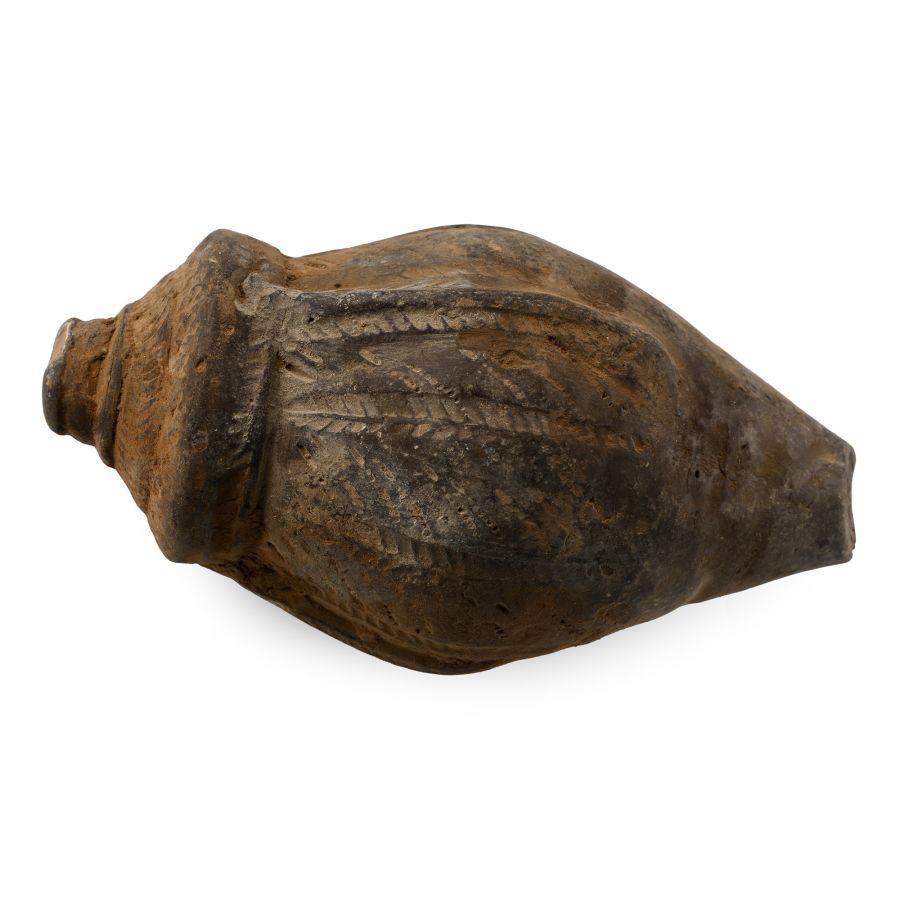
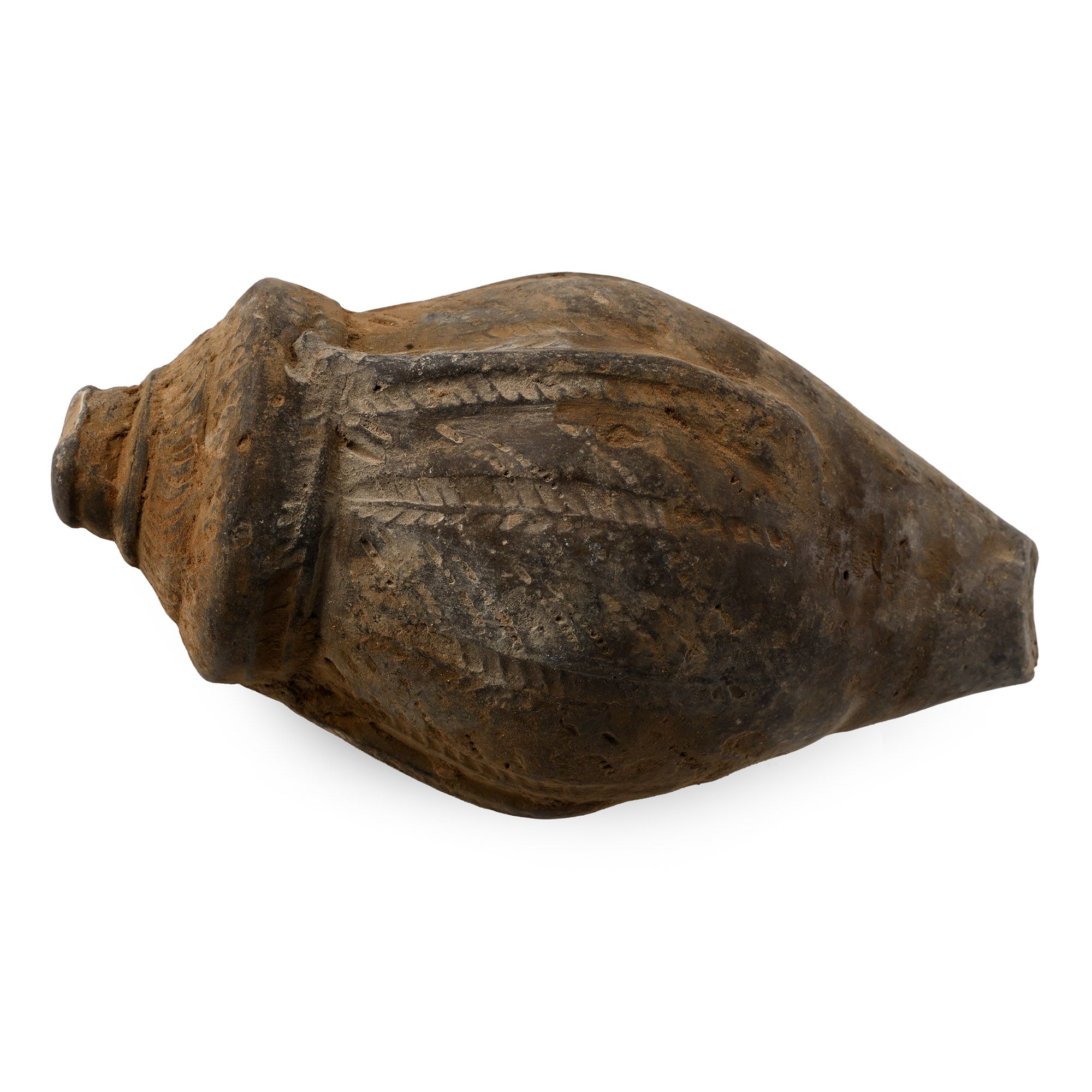
Turco-Mongol 'Greek Fire' Ceramic Fire Bomb or Hand Grenade
13TH-15TH CENTURY A.D.
6 1/2 in. (587 grams, 16.5 cm).
A hollow vessel with cylindrical body and short neck, raised vertical lugs on the upper body; intended to be filled with explosive liquid and a wick, and used as a hand grenade. [No Reserve]
ProvenanceFrom an important specialist collection, London, UK, 1990s onwards.
This lot is accompanied by an illustrated lot declaration signed by the Head of the Antiquities Department, Dr Raffaele D'Amato.
Cf. Arendt, W. I., Granaten des 13-14. Jahrhunderts, die an der Wolga gefunden sind, Zeitschrift fur Historische Waffen-und Kostumkunde, 11 (1926-8), p.42; cf. Arendt, W., Die Spharisch-konischen Gefäße aus Gebranntem Ton, ibid; cf. Ayalon, D., Gunpowder and Firearms in the Mamluk Kingdom, London, 1956, p.16.
CONDITIONTimeLine Auctions follows a vetting process to ensure the authenticity and legality of all items, reinforcing our commitment to integrity and responsible trading. Each antiquity, antique, and coin lot undergoes thorough examination by a vetting committee of at least ten external specialists, professional trade association members, scientists, and archaeologists: Our Vetting Process
AUCTIONS:
TimeLine is a leading auction house specialising in antiquities, ancient art, collectables, natural history, coins, medals, and books. Our auctions offer museums, collectors, historians, and enthusiasts the opportunity to acquire unique and historically significant pieces.
LOT 1551
Turco-Mongol 'Greek Fire' Ceramic Fire Bomb or Hand Grenade
Sold for (Inc. bp): £78
-
.jpg)
Luristan Bronze Arrowhead Group
13th-6th century B.C.Sold for (Inc. bp): £234
Comprising triangular types with thick midrib, leaf-shaped and other types. 400 grams total, 9.7-16.2 cm
Acquired 1980-2015. Ex Abelita family collection. This lot is accompanied by an illustrated lot declaration signed by the Head of the Antiquities Department, Dr Raffaele D’Amato. This lot is accompanied by an illustrated lot declaration signed by the Head of the Antiquities Department, Dr Raffaele D'Amato. -
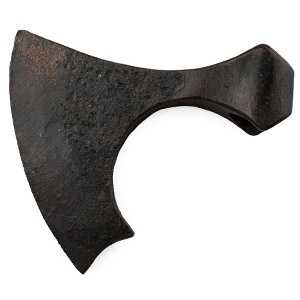
Viking Age Iron Bearded Axehead
9th-11th century A.D.Sold for (Inc. bp): £416
With curved blade and chin to the lower edge, round socket with lateral triangular flanges and flattened rear-edge. 252 grams, 11.2 cm
Fine condition.
Private collection, 1990s. Property of a Sussex, UK, teacher. This lot is accompanied by an illustrated lot declaration signed by the Head of the Antiquities Department, Dr Raffaele D'Amato.
This type of bearded axe seems to correspond to the E2 category of the Viking axe classification. Usually these bearded axeheads (skeggöks) had a longer edge, designed to split tree trunks into planks and beams. Some of the bearded axes were known as halfÞynna öx; the neck on such 'half thin axe' was thinly forged, to make it lighter. Bearded axes of this type appear also in the weaponry of people from the Baltic. -
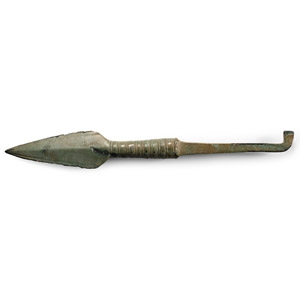
Luristan Decorated Bronze Spearhead
13th-6th century B.C.Sold for (Inc. bp): £176
With broad leaf-shaped blade and tapering square-section tang, ribbed neck. 147 grams, 21.5 cm
From the private collection of Mr K.A., acquired in the 1990s-early 2000s. This lot is accompanied by an illustrated lot declaration signed by the Head of the Antiquities Department, Dr Raffaele D'Amato.
