
Loading, please wait...

LOT 1659
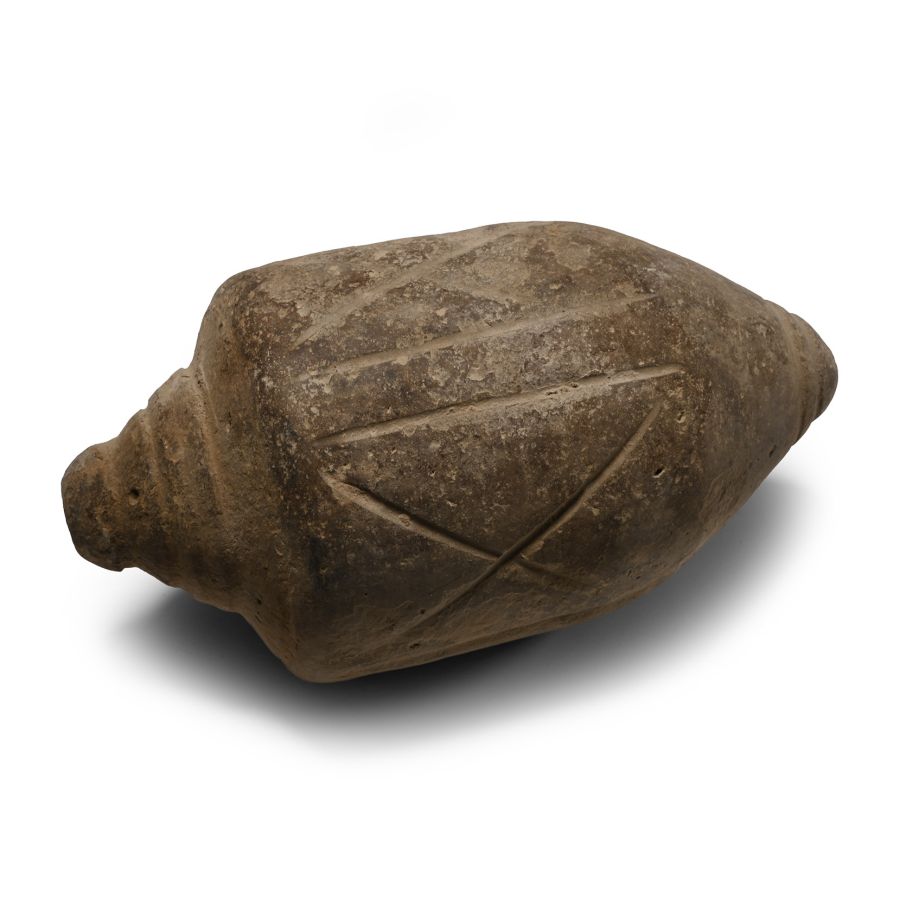
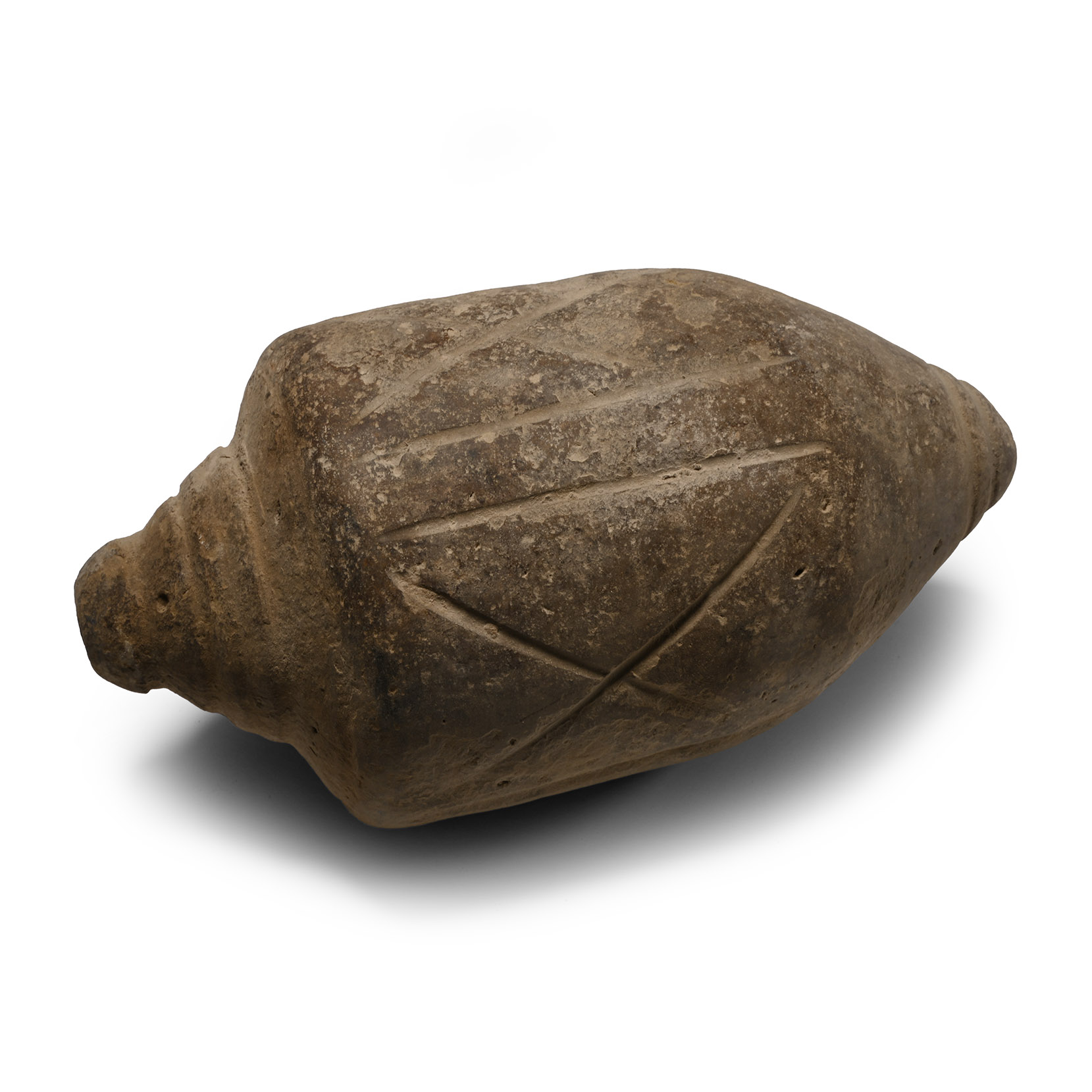
Turco-Mongol 'Greek Fire' Ceramic Fire Bomb or Hand Grenade
14TH-15TH CENTURY A.D.
7 1/8 in. (1.05 kg, 18 cm).
A hollow vessel with cylindrical body, short neck and domed mouth, band of X-motifs and vertical lines to the body; intended to be filled with explosive liquid and a wick, and used as a hand grenade. [No Reserve]
ProvenanceFrom an important specialist collection, London, UK, 1990s onwards.
This lot is accompanied by an illustrated lot declaration signed by the Head of the Antiquities Department, Dr Raffaele D’Amato.
Cf. Arendt, W. I., Granaten des 13-14. Jahrhunderts, die an der Wolga gefunden sind, Zeitschrift fur Historische Waffen-und Kostumkunde, 11 (1926-8), p.42; cf. Arendt, W., Die Spharisch-konischen Gefäße aus Gebranntem Ton, ibid; cf. Ayalon, D., Gunpowder and Firearms in the Mamluk Kingdom, London, 1956, p.16. Apart from the use of siphons or manual flame-throwers called cheirosiphona, special corps of Roman soldiers employed terracotta grenades, in the form of small jars, abundantly evidenced in archaeological excavations. They were called μεσαία kακαβιά or κυτροκακάβια where the former had a bulbous shape and the latter a more cylindrical form.
CONDITIONTimeLine Auctions follows a vetting process to ensure the authenticity and legality of all items, reinforcing our commitment to integrity and responsible trading. Each antiquity, antique, and coin lot undergoes thorough examination by a vetting committee of at least ten external specialists, professional trade association members, scientists, and archaeologists: Our Vetting Process
AUCTIONS:
TimeLine is a leading auction house specialising in antiquities, ancient art, collectables, natural history, coins, medals, and books. Our auctions offer museums, collectors, historians, and enthusiasts the opportunity to acquire unique and historically significant pieces.
LOT 1659
Turco-Mongol 'Greek Fire' Ceramic Fire Bomb or Hand Grenade
Sold for (Inc. bp): £59
-
Luristan Bronze Spearhead
13th-7th century B.C.Estimate: £250 - 350 (+bp*)
Opening Bid: £130
Composed of a leaf-shaped blade with tapering socket. 355 grams, 44 cm
Acquired 1980-2015. Ex Abelita family collection. This lot is accompanied by an illustrated lot declaration signed by the Head of the Antiquities Department, Dr Raffaele D’Amato. -
Luristan Bronze Blade
12th century B.C.Sold for (Inc. bp): £260
With lentoid-section blade, tongue-shaped in plan, with integral tapering hilt with flared finial, lateral flanges to accept an organic panel forming the grip. 245 grams, 41 cm
Acquired 1980-2015. Ex Abelita family collection. This lot is accompanied by an illustrated lot declaration signed by the Head of the Antiquities Department, Dr Raffaele D’Amato.
The art of Luristan can be described as the art of nomadic herdsmen and horsemen with an emphasis on the crafting of small, easily portable objects, among these a great number of bronze weapons. The rich and noble aristocrats of the Luristan, Elamites, Hurrians, Lullubians, Kutians, and Kassites, went to battle splendidly equipped and wore magnificent bronze armour, using maces, spears and daggers as offensive weapons, alongside spears, bows and arrows. -
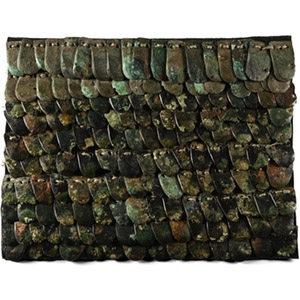
Scythian Bronze Scale Armour Section
6th-5th century B.C.Sold for (Inc. bp): £1,040
A section of scale armour coat composed of 162 overlapping tongue-shaped scales mounted onto a cloth panel, each with three holes to the top and some with one or two holes to the right for fastening onto the original leather backing. 165 grams, 16 x 12 cm
From the private collection of a London gentleman, from his grandfather's collection formed before the early 1970s. Accompanied by an academic report by Dr Raffaele D’Amato. This lot has been checked against the Interpol Database of stolen works of art and is accompanied by search certificate number no.12469-231236. This lot is accompanied by an illustrated lot declaration signed by the Head of the Antiquities Department, Dr Raffaele D’Amato.
The favourite armour of the Scythian noblemen was composed of scales, usually protecting the torso, sometimes the entire body (kataphraktoi). The Scythians found that the most efficient method was to arrange the overlapping ‘fish-scales’ as a corselet made of a number of bronze and iron plates, which then protected the wearer against sword and spear thrusts. Our scales correspond well to bronze scales found in May 1961 in an accidentally destroyed burial in a barrow, near the village of Nadezhda Sovetsky district. They were discovered together with iron scales, a Greek Corinthian helmet, fragments of an amphora, five arrowheads and fragments of an iron sword. Most of these bronze scales were oblong in shape, with a sub-rectangular upper end and a rounded lower end, but slightly bigger than our scales.
