
Loading, please wait...
LOT 1405
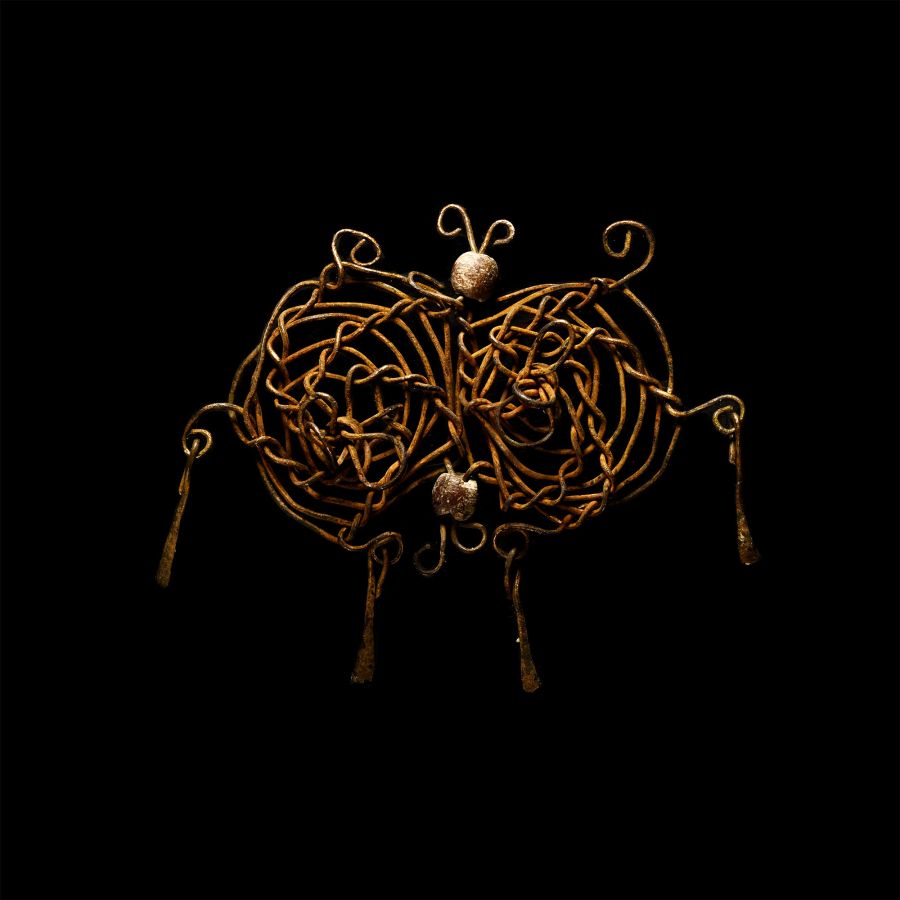
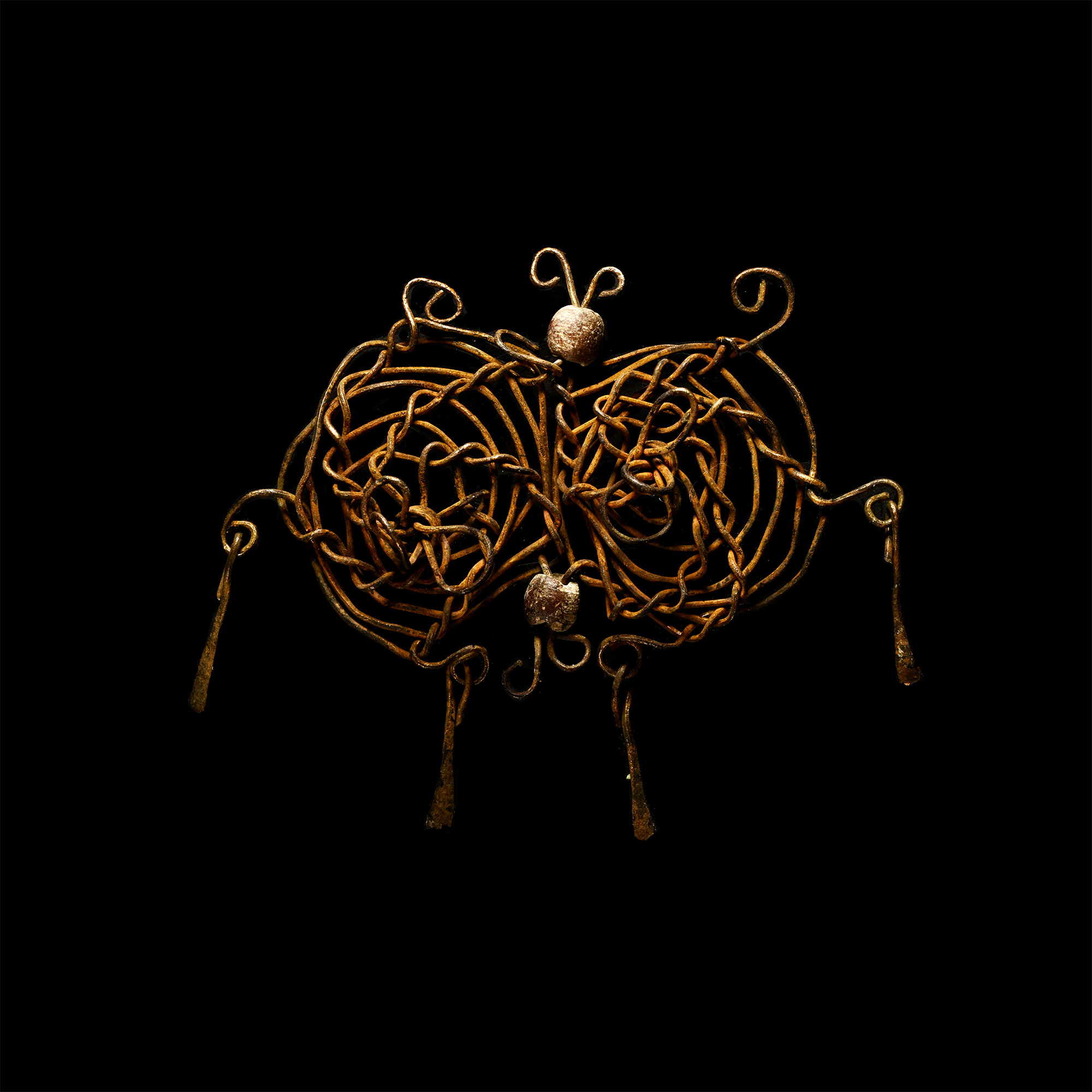
Tudor 'Thames' Wire Butterfly Brooch with Dangles
CIRCA 16TH CENTURY A.D.
2 1/8 in. (3.42 grams, 56 mm wide).
A coiled wire 'butterfly' brooch or other jewellery piece, with beads representing the head and 'tail', four articulate dangles to the mid and lower body. [No Reserve]
ProvenanceFound on the Thames foreshore, London, UK.
Acquired on the UK antiques market between 1974-1985.
Albert Ward collection, Essex, UK.
TimeLine Auctions follows a vetting process to ensure the authenticity and legality of all items, reinforcing our commitment to integrity and responsible trading. Each antiquity, antique, and coin lot undergoes thorough examination by a vetting committee of at least ten external specialists, professional trade association members, scientists, and archaeologists: Our Vetting Process
AUCTIONS:
TimeLine is a leading auction house specialising in antiquities, ancient art, collectables, natural history, coins, medals, and books. Our auctions offer museums, collectors, historians, and enthusiasts the opportunity to acquire unique and historically significant pieces.
-
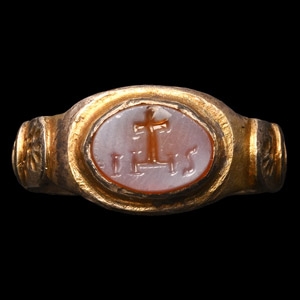
Post Byzantine Gilt Silver Ring with Cross Gemstone
17th century A.D. or earlierEstimate: £400 - 600 (+bp*)
Opening Bid: £200
A silver-gilt finger ring with tiered scales to the hoop, ellipsoid bezel with inset ellipsoid carnelian intaglio of a cross over 'IHS' Christogram. 4.26 grams, 21.70 mm overall, 18.96 mm internal diameter (approximate size British O, USA 7, Europe 14.98, Japan 14)
From a collection formed between 1990-2000. Ex East London collection. English private collection. -
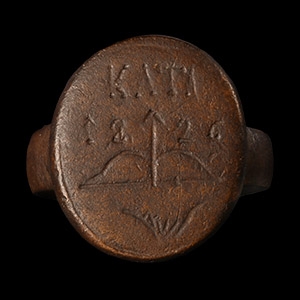
Post Medieval Ring with Bow and Arrow
1226 h. (1811 A.D.)Sold for (Inc. bp): £26
A copper-alloy ring composed of a broad hoop with slightly convex outer face, large oval-shaped bezel engraved with an archer's bow with nocked arrow, separating the numbers '12 / 26' and aimed towards the letters 'KΛTΛ'. 8.88 grams, 24.70 mm overall, 21.66 mm internal diameter (approximate size British V 1/2, USA 10 3/4, Europe 24.4, Japan 23)
Private collection formed since the 1940s. UK art market. Property of an Essex gentleman. -
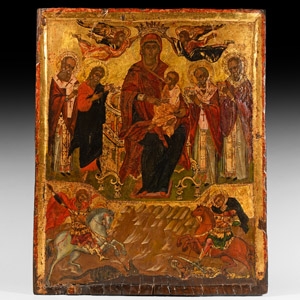
Greek Icon with Virgin and Saints George and Demetrius on Horseback
17th century A.D.Sold for (Inc. bp): £2,860
An exquisite tempera with gold ground on wood icon depicting Mary surrounded by saints and holding the Divine Child in her arms; Mary seated on an elaborate throne and crowned as the Queen of the Universe with two angels supporting her crown, Greek inscription 'MP' and 'ΘΥ' for Mother of God to each side of the crown, wearing a scarlet red maphorion embroidered with gold and a long dark blue tunica talaris; Jesus dressed in a linen tunic and a yellow cloak, affectionately gazing up and making the sign of blessing with his right hand; four saints flanking the throne, three of whom dressed in Bishop's attire, far left Saint Basil with his name written in Greek, and the others possibly saints Elias, Nicholas and Gregorius Nazianzus; the lower part of the icon with Saint George on horseback killing the dragon and Saint Demetrius on horseback killing the king of Avars, both saints dressed in pseudo-Roman armour and armed with a spear. 2.4 kg, 44 x 35 cm
Property of a London lady, part of her family's collection. Accompanied by an academic report by Dr Raffaele D’Amato. This lot has been checked against the Interpol Database of stolen works of art and is accompanied by search certificate number no.11570-198597.
The representation of the icon is centred on the image of the Mother of God as ‘The Sovereign’ (Vasilissa, Queen of the Universe). Here, Mary assumes the function of the protector of the believers, reinforced by the presence of the angels. Due to her earthly origin, Mary always maintained an intermediary position in the heavenly realms, becoming an indispensable intercessor on behalf of humans before the Lord. The protection offered by her is reinforced by the presence of the two major protectors of the humans against evil: Saint George and Saint Demetrius.
