
Loading, please wait...


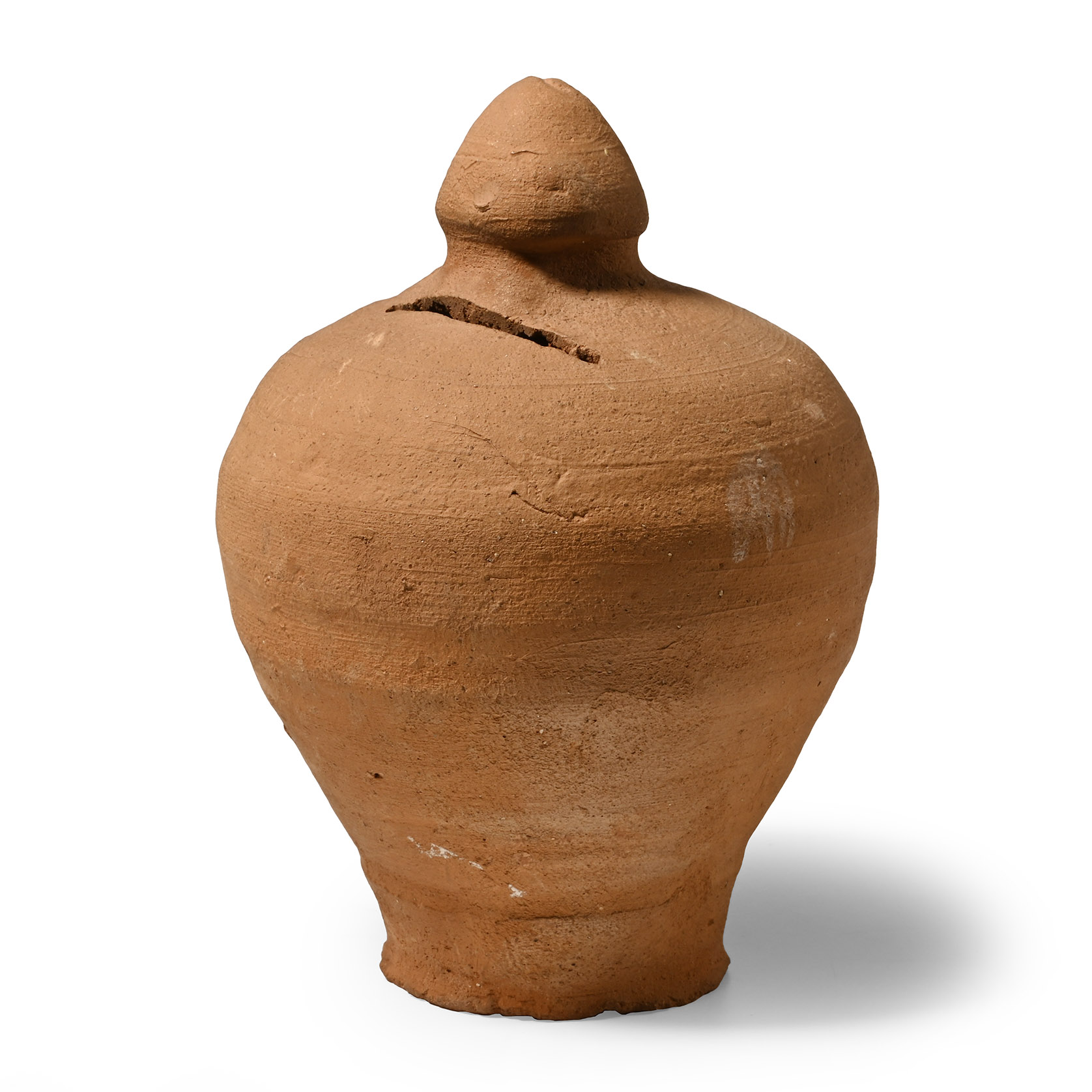
LOT 2054
Tudor Terracotta Money Box
CIRCA 16TH CENTURY A.D. OR LATER
5 3/8 in. (387 grams, 13.8 cm).
Onion-shaped container with knop handle, slot to the upper face. [No Reserve]
ProvenanceAcquired prior to 2000.
Ex private collection, Cambridgeshire, UK.
TimeLine Auctions follows a vetting process to ensure the authenticity and legality of all items, reinforcing our commitment to integrity and responsible trading. Each antiquity, antique, and coin lot undergoes thorough examination by a vetting committee of at least ten external specialists, professional trade association members, scientists, and archaeologists: Our Vetting Process
AUCTIONS:
TimeLine is a leading auction house specialising in antiquities, ancient art, collectables, natural history, coins, medals, and books. Our auctions offer museums, collectors, historians, and enthusiasts the opportunity to acquire unique and historically significant pieces.
-
.jpg)
Silver Bowl Fragment in Neo Classical Style with Indo-Greek Portraits
18th-19th century A.D.Sold for (Inc. bp): £65
Portion of the rim and body from a silver bowl; with scalloped rim, high-relief detailing of bunches of grapes, leaves and tendrils; inner band of profile portrait busts in beaded circular frames. 133 grams, 17.5 cm
From the property of late Mr SM, London, UK, 1969-1999. -
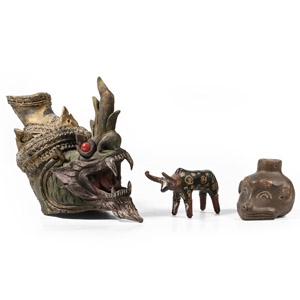
Reproduction Artefact Group
20th century A.D.Sold for (Inc. bp): £39
Including a ceramic monster-head with cabochon eyes and gilt detailing. 1 kg total, 8.8-23.2 cm
From a family collection mostly formed in the 1940s-1950s, thence by descent. -
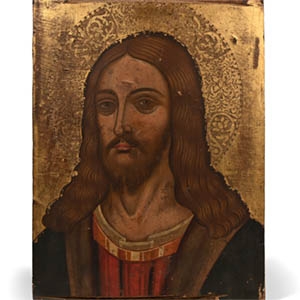
Cretan Wooden Icon of Christ Ecce Homo
Venetian, early 17th century A.D.Estimate: £2,000 - 3,000 (+bp*)
Opening Bid: £1,000
Curved in section with mounting slots to reverse; gessoed board with gilt surface, reserved portrait bust in three-quarter view on a textured field with tendrils, scrolls and other ornament; nimbate Christ shown with shoulder-length auburn hair and short beard wearing layered robes. 1 kg, 29.7 x 40.8 cm
Ex Lucas Auctions, Milano, Italy. From an important collection of icons. Accompanied by an academic report by Dr Raffaele D’Amato. This lot has been checked against the Interpol Database of stolen works of art and is accompanied by search certificate number no.12344-224611.
