
Loading, please wait...
LOT 1452
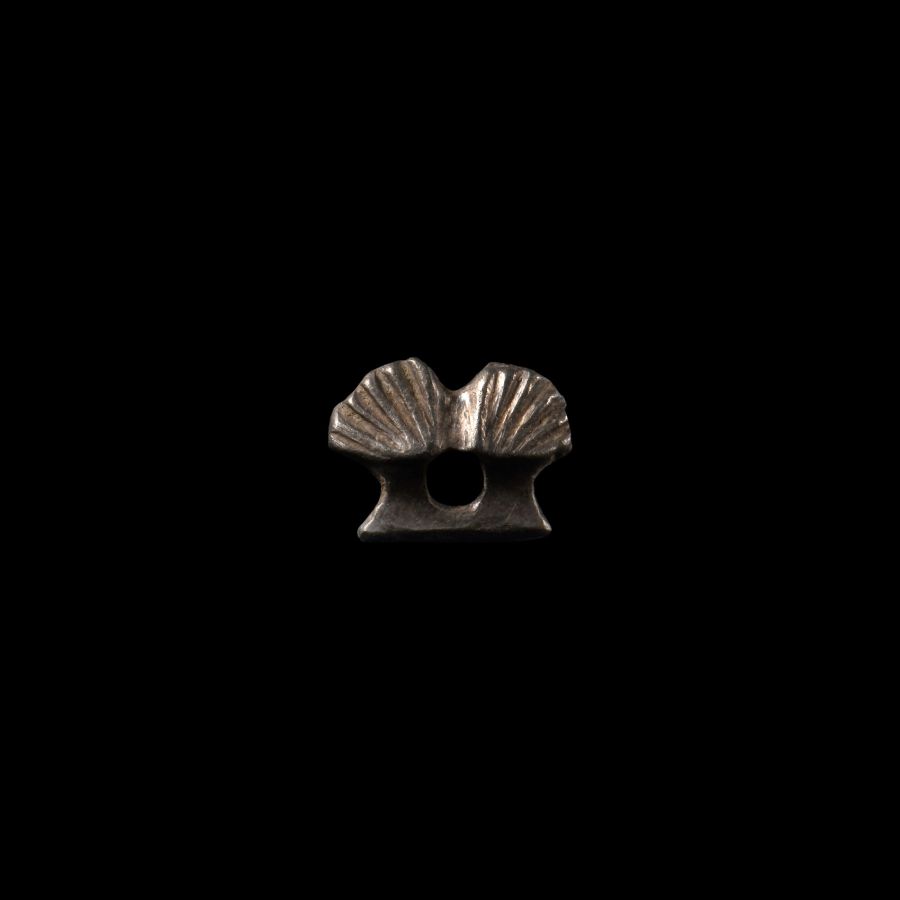
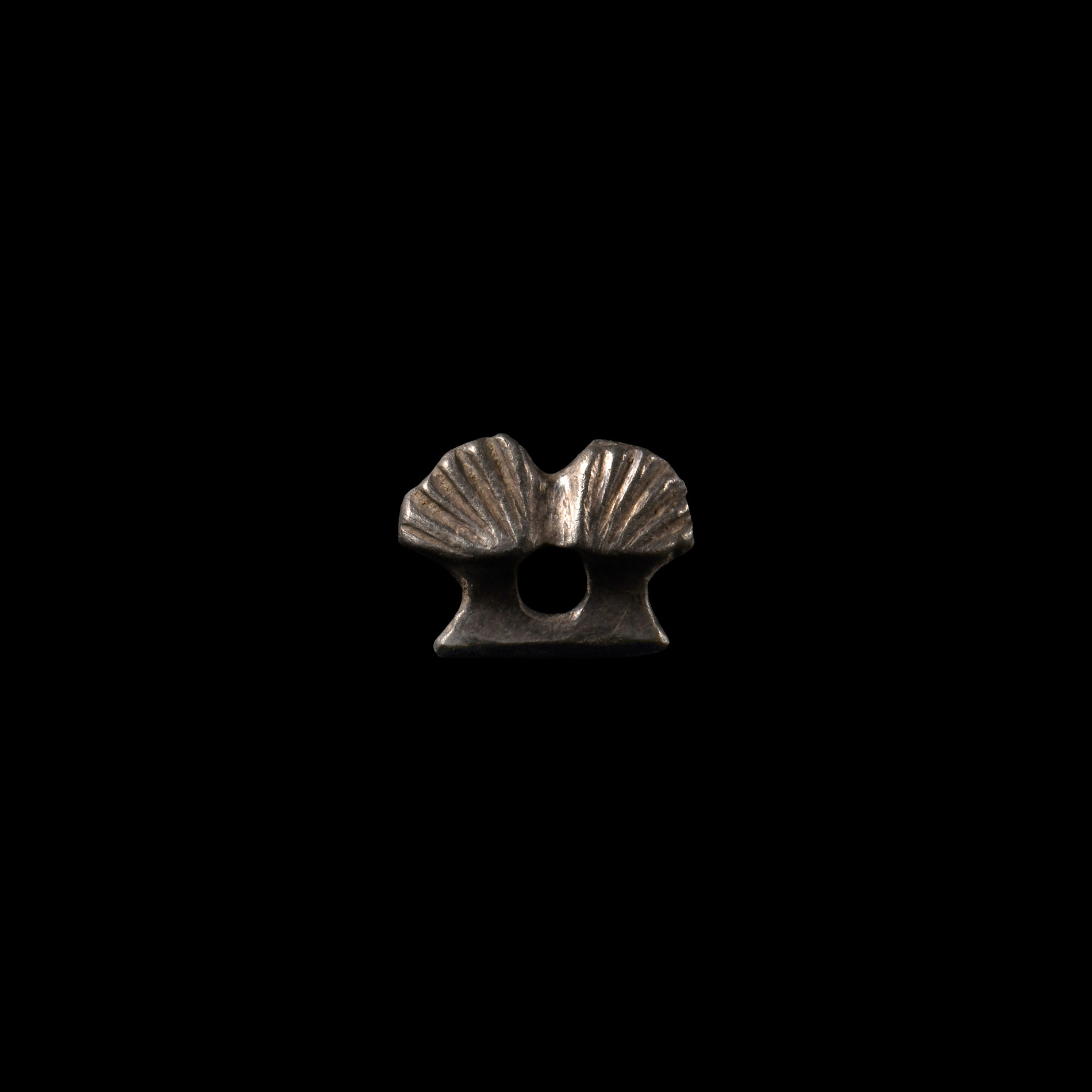
Tudor Silver Saint James Double Scallop Shell Dress Mount
16TH CENTURY A.D.
1/2 in. (1.24 grams, 12 mm).
A complete silver dress fitting or strap mount in the form of two conjoined scallop shells along one edge of a sub rectangular bar with sloping sides, the fitting with central perforation and two slender mounting lugs to reverse.
ProvenanceFound whilst searching with a metal detector by Kevin Ford on 1st March 2019 in Chinnor, South Oxfordshire, UK.
Accompanied by a copy of the British Museum's Portable Antiquities Scheme Report (PAS) number OXON-86C7C3.
Accompanied by a letter to HM Coroner for Oxfordshire from the Oxfordshire Finds Liaison Officer (FLO) with treasure reference number 2019 T648.
British Museum's Portable Antiquities Scheme Database, record id. OXON-86C7C3.
FootnotesThe scallop shell was associated with St. James and the pilgrimage site of Santiago de Compostela in Spain, one of the most important pilgrimage centres in medieval Europe. The scallop shell became the symbol for pilgrimage more generally in this period. It is an overtly Catholic symbol which could have been worn with freedom before c. 1540, or in the period of the Marian revival of Catholicism from 1553-1558. Pilgrimage to the shrine at Compostela from England would have been interrupted by the English Reformation.
The PAS report notes that similar examples have been declared as treasure, including: KENT-FEE744 (2014 T641) and NLM-538148 (2010 T539), both dating to the 16th century A.D.
TimeLine Auctions follows a vetting process to ensure the authenticity and legality of all items, reinforcing our commitment to integrity and responsible trading. Each antiquity, antique, and coin lot undergoes thorough examination by a vetting committee of at least ten external specialists, professional trade association members, scientists, and archaeologists: Our Vetting Process
AUCTIONS:
TimeLine is a leading auction house specialising in antiquities, ancient art, collectables, natural history, coins, medals, and books. Our auctions offer museums, collectors, historians, and enthusiasts the opportunity to acquire unique and historically significant pieces.
LOT 1452
Tudor Silver Saint James Double Scallop Shell Dress Mount
Sold for (Inc. bp): £59
-
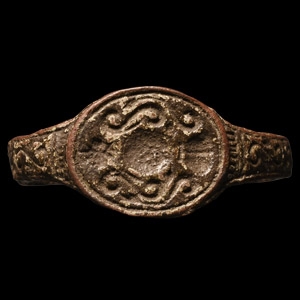
Post Medieval Armorial Ring
16th-17th century A.D.Sold for (Inc. bp): £59
A copper-alloy ring with armorial design to the oval bezel, the shoulders engraved with scrolls and other simple geometric forms; hoop repaired. 2.42 grams, 22.55 mm overall, 19.74 mm internal diameter (approximate size British R 1/2, USA 8 3/4, Europe 19.38, Japan 18)
Acquired circa 2010. From an old Essex, UK, collection. -
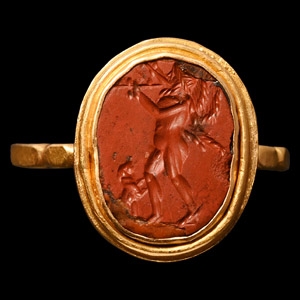
Post Medieval Gold Ring with Jester Gemstone
20th century A.D. or earlierSold for (Inc. bp): £936
A gold finger ring with segmented hoop, cupped bezel with rosette to the underside, inset jasper cloison with intaglio advancing balatro jester playing pan-pipes while a dog jumps at his lower legs. 8.27 grams, 30.52 mm overall, 18.80 mm internal diameter (approximate size British Q 1/2, USA 8 1/4, Europe 18.12, Japan 17)
English private collection. -
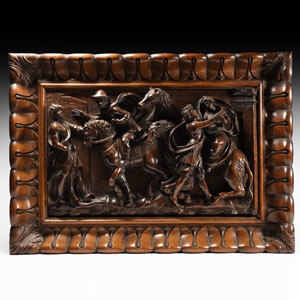
Renaissance Wooden Panel with Horse and Figures
Italian, circa 18th century A.D.Estimate: £1,500 - 2,000 (+bp*)
Opening Bid: £750
A carved wooden panel depicting a dynamic figural scene composed of mounted horse rider together with a rider mounted on a mythical creature with two heads, the body and hindlegs of a horse and head and forelegs of a lion or other creature, two standing figures beside them; egg-and-dart style frame with leaves to each corner. 4 kg, 54.5 x 38.5 cm
English private collection.
The timber shows some old insect flight holes and we are advised that this piece has been recently treated with Permethrin, as a precaution.
