
Loading, please wait...
LOT 2031
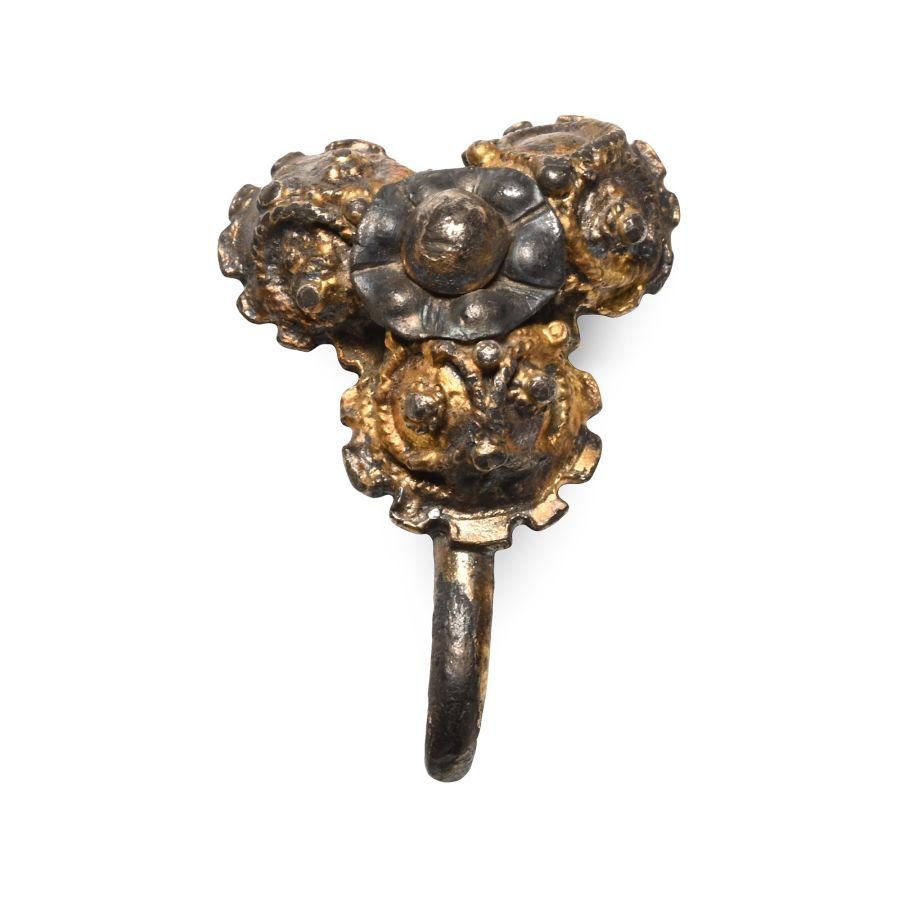
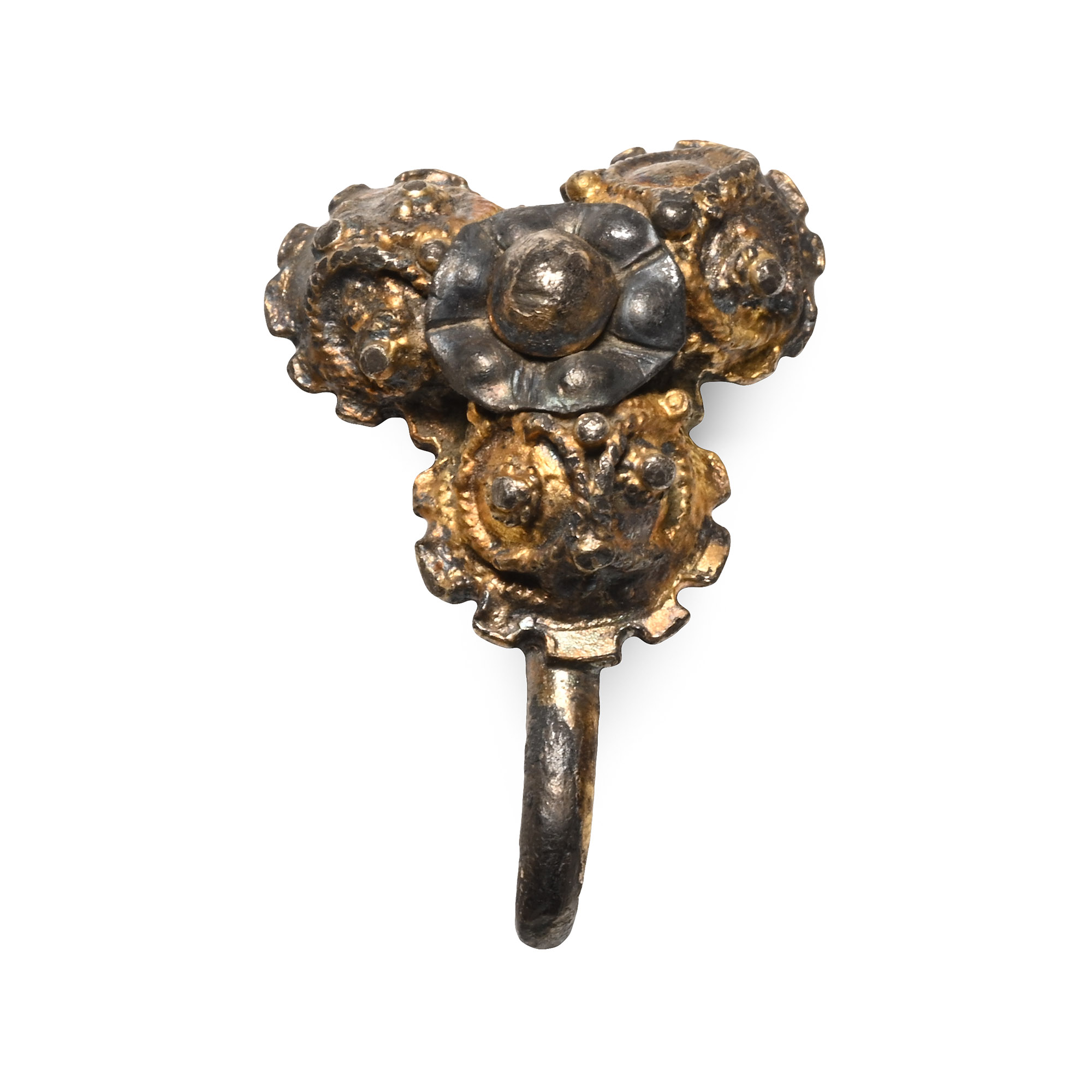
Tudor Silver-Gilt Clothes Hook Fastener
16TH CENTURY A.D.
7/8 in. (3.06 grams, 22 mm).
Comprising three domes decorated with filigree surrounding a central pellet, hook to the reverse. [No Reserve]
ProvenanceFrom the private collection of the late Graham Slater (1927-2024), Cambridge, UK, acquired 1980s-1990s.
CONDITIONTimeLine Auctions follows a vetting process to ensure the authenticity and legality of all items, reinforcing our commitment to integrity and responsible trading. Each antiquity, antique, and coin lot undergoes thorough examination by a vetting committee of at least ten external specialists, professional trade association members, scientists, and archaeologists: Our Vetting Process
AUCTIONS:
TimeLine is a leading auction house specialising in antiquities, ancient art, collectables, natural history, coins, medals, and books. Our auctions offer museums, collectors, historians, and enthusiasts the opportunity to acquire unique and historically significant pieces.
-
.jpg)
Post Byzantine Adoration of the Magi Shell Plaque
17th-18th century A.D.Estimate: £150 - 200 (‡+bp*)
Opening Bid: £75
Octagonal in plan with carved scene of the Adoration of the Magi with star above; stepped border, pierced for attachment. 30.2 grams, 68 mm
Acquired in the mid 1980s-1990s. Private collection, Switzerland, thence by descent. Private collection, since the late 1990s.
The flat relief and the stylistic refinement of the images place the execution of the plaque towards the end of the 17th century, with some artistic parallels with the Romanian silversmiths of Chiprovatzi. -
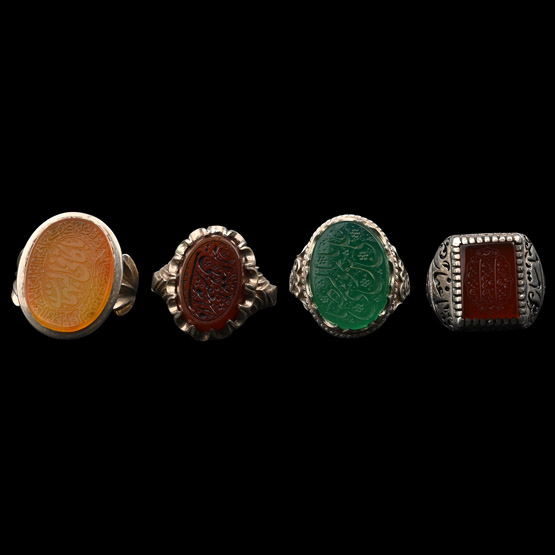
Silver-Coloured Metal Rings with Calligraphic Gems
Late 20th-21st century A.D.Sold for (Inc. bp): £416
Each with an inset cloison engraved with dense calligraphic text on a field of rosettes. 65 grams total, 29-32 mm
Private collection, UK. -
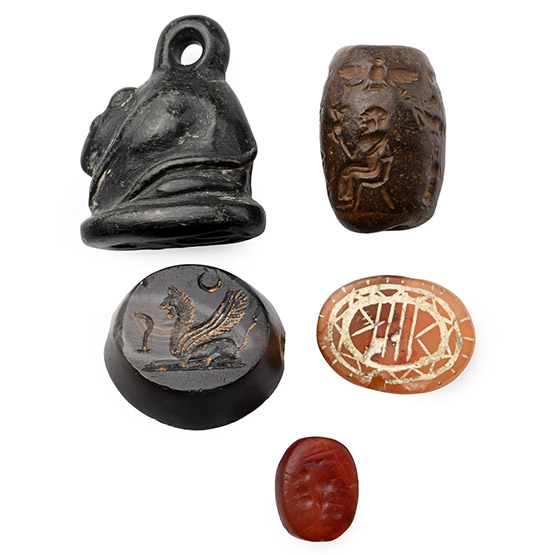
Group of Seals and Scaraboids
20th century A.D.Estimate: £100 - 140 (+bp*)
Opening Bid: £50
Including fusiform, plano-convex and other types; after the antique. 46 grams total, 14-31 mm
From the late S M collection, London, UK, 1969-1999.
