
Loading, please wait...
LOT 2074
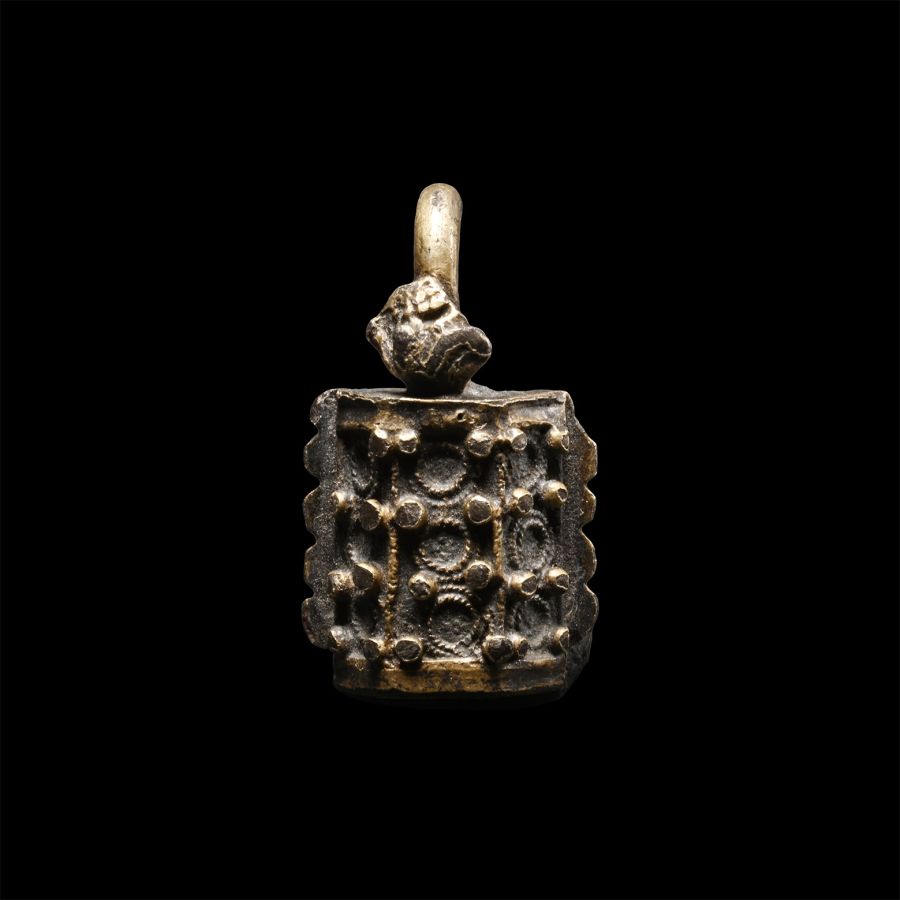
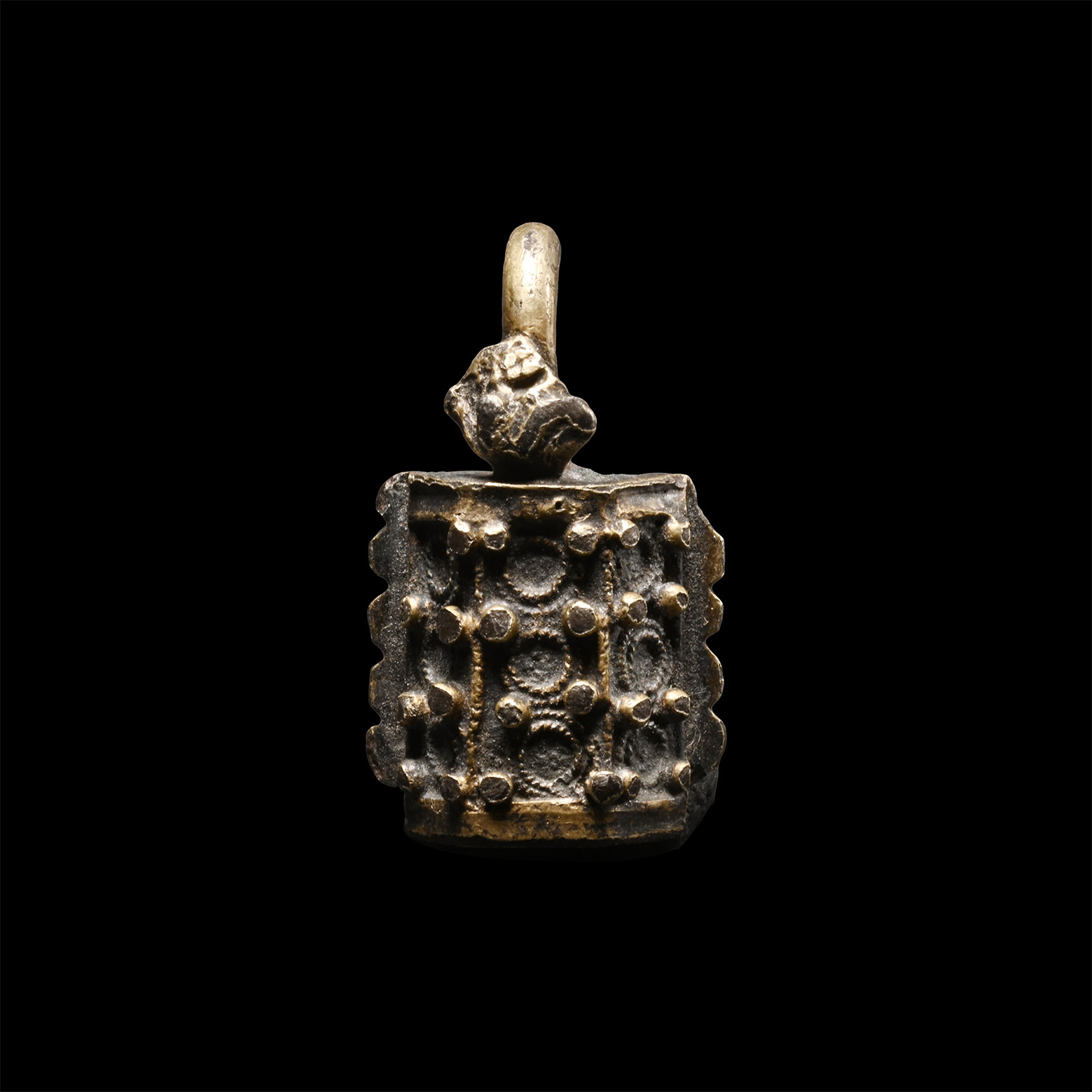
Tudor Silver-Gilt Clothes Fastener
16TH CENTURY A.D.
1 in. (4.75 grams, 26 mm).
With a hollow D-section body applied with filigree and granules. [No Reserve]
ProvenanceAcquired on the UK art market.
Property of a Somerset collector, UK, since at least the early 2000s.
TimeLine Auctions follows a vetting process to ensure the authenticity and legality of all items, reinforcing our commitment to integrity and responsible trading. Each antiquity, antique, and coin lot undergoes thorough examination by a vetting committee of at least ten external specialists, professional trade association members, scientists, and archaeologists: Our Vetting Process
AUCTIONS:
TimeLine is a leading auction house specialising in antiquities, ancient art, collectables, natural history, coins, medals, and books. Our auctions offer museums, collectors, historians, and enthusiasts the opportunity to acquire unique and historically significant pieces.
-
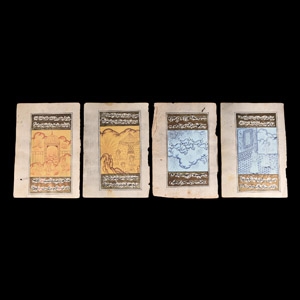
Watercolour Painting Group
India, 19th century A.D.Estimate: £80 - 100 (+bp*)
Opening Bid: £40
Four bifacial manuscript pages, each with multiple lines of text to recto and a painting between panels of text to the verso, including animal and figural scenes in architectural and landscape settings. 5 grams total, 15 x 10 cm
Fine condition.
Acquired on the UK art market, 1980s-1990s. The Woodbridge collection of Indo-Persian art. -
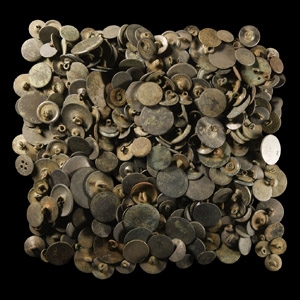
Post Medieval Bronze Button Group
18th-20th century A.D.Sold for (Inc. bp): £20
Comprising buttons of various sizes and dates, many retaining their attachment loops and including examples displaying decorative ornament and remains of gilding. 1.1 kg total, 11-34 mm
Found Berkshire, UK. -
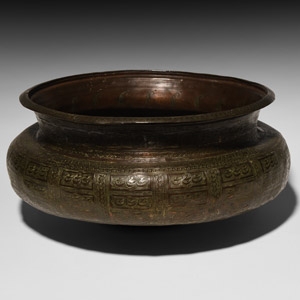
Large Copper Bowl with Script
India, 19th century A.D.Estimate: £150 - 200 (+bp*)
Opening Bid: £83
With repeating script and geometric bands to the body. 1.67 kg, 33 cm wide
Fine condition.
Acquired on the UK art market, 2000s. Property of a Suffolk gentleman.
