
Loading, please wait...
LOT 1557
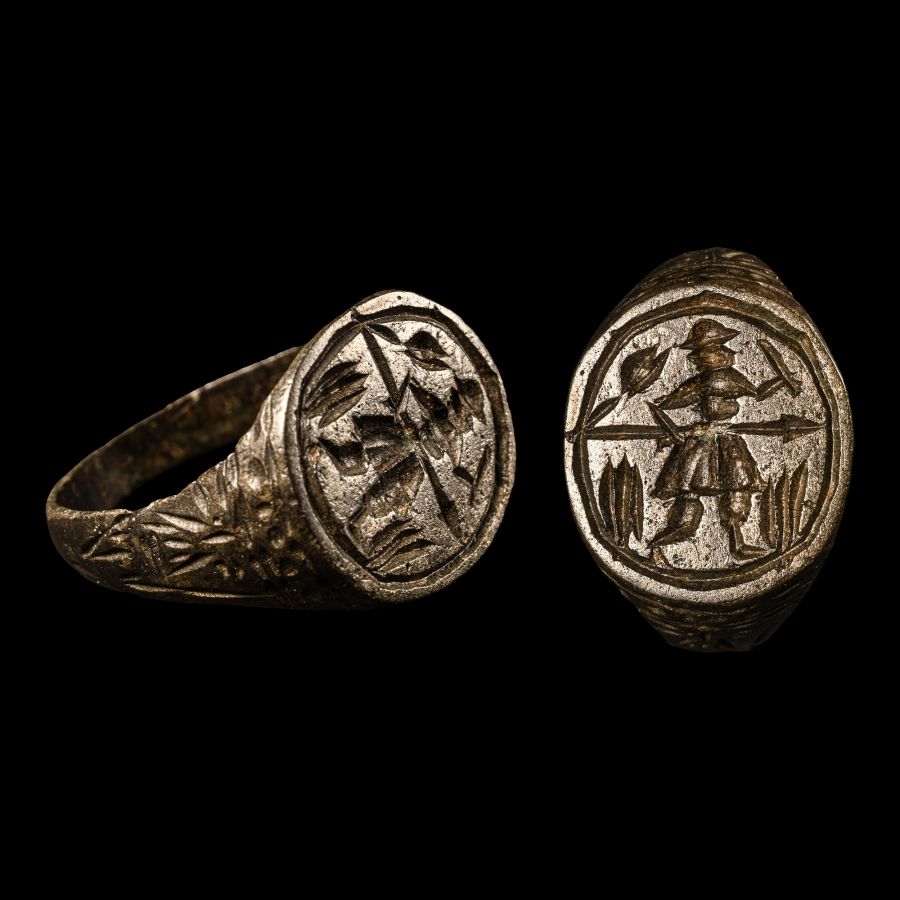
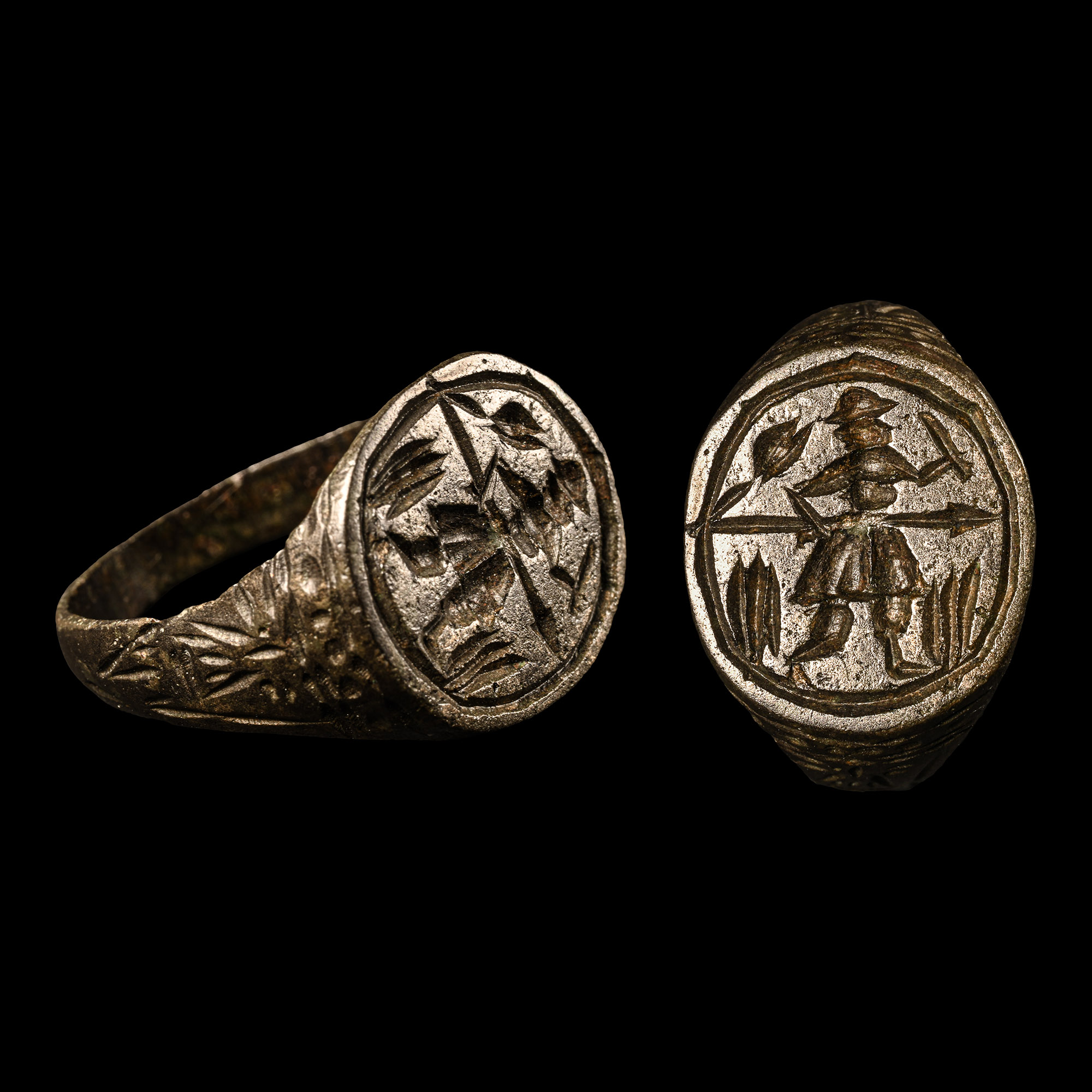
Tudor Period Tinned Bronze Signet Ring with Armed Soldier
16TH-17TH CENTURY A.D.
3/4 in. (4.18 grams, 21.94 mm overall, 19.55 mm internal diameter (approximate size British T, USA 9 1/2, Europe 21.26, Japan 20)).
With a flat-section hoop, expanding shoulders with incised motifs; oval bezel with a soldier standing amidst tall grass, holding a pike in his right hand and a short sword in his left hand. [No Reserve]
ProvenancePrivate collection formed since the 1940s.
UK art market.
Property of an Essex gentleman.
TimeLine Auctions follows a vetting process to ensure the authenticity and legality of all items, reinforcing our commitment to integrity and responsible trading. Each antiquity, antique, and coin lot undergoes thorough examination by a vetting committee of at least ten external specialists, professional trade association members, scientists, and archaeologists: Our Vetting Process
AUCTIONS:
TimeLine is a leading auction house specialising in antiquities, ancient art, collectables, natural history, coins, medals, and books. Our auctions offer museums, collectors, historians, and enthusiasts the opportunity to acquire unique and historically significant pieces.
LOT 1557
Tudor Period Tinned Bronze Signet Ring with Armed Soldier
Sold for (Inc. bp): £208
-
Post Medieval Leather Hebrew Scroll
Late 19th-early 20th century A.D.Sold for (Inc. bp): £143
Soft goatskin or leather scroll with inked Kabbalistic inscription, 'Star of David' motif and grid. 15 grams, 42 cm
From a UK private collection, before 1980. -
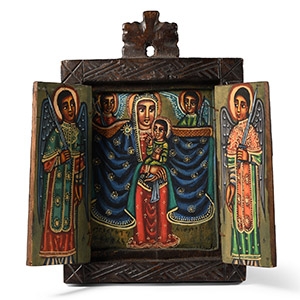
Ethiopian Wooden Painted Triptych Icon
20th century A.D.Sold for (Inc. bp): £59
With hand-painted scenes to the inner faces, the central panel with nimbate Mary holding Jesus, the child making a blessing sign with his right hand and holding a book in his left; Mary's blue himation enveloping a pair of archangels behind her, each holding a sword and having their wing extended to form a protective arch over the mother and child, text to the field; both doors with a painted archangel holding a sword and cross-topped staff. 389 grams, 27 x 18.2 cm
Acquired in South Africa in 2001. Property of a Nottinghamshire gentleman. -
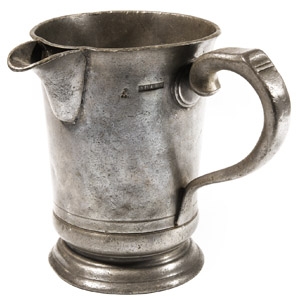
Georgian 'Coach & Horses, Plaistow' Pewter Quart Jug
Circa 19th century A.D.Sold for (Inc. bp): £42
Inscribed in copperplate script 'SG' to the body with proof marks, 'Coach & Horse, Plaistow' to the underside. 969 grams, 16.6 cm high
Property of an Essex collector.
