
Loading, please wait...
LOT 1543
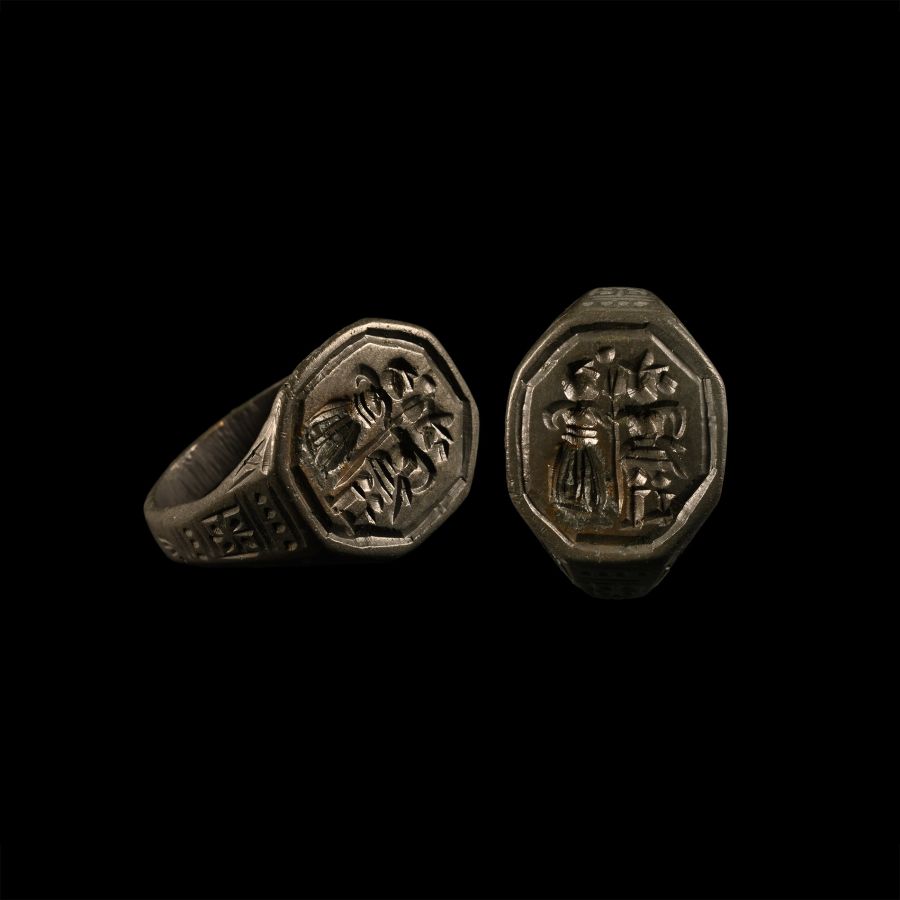
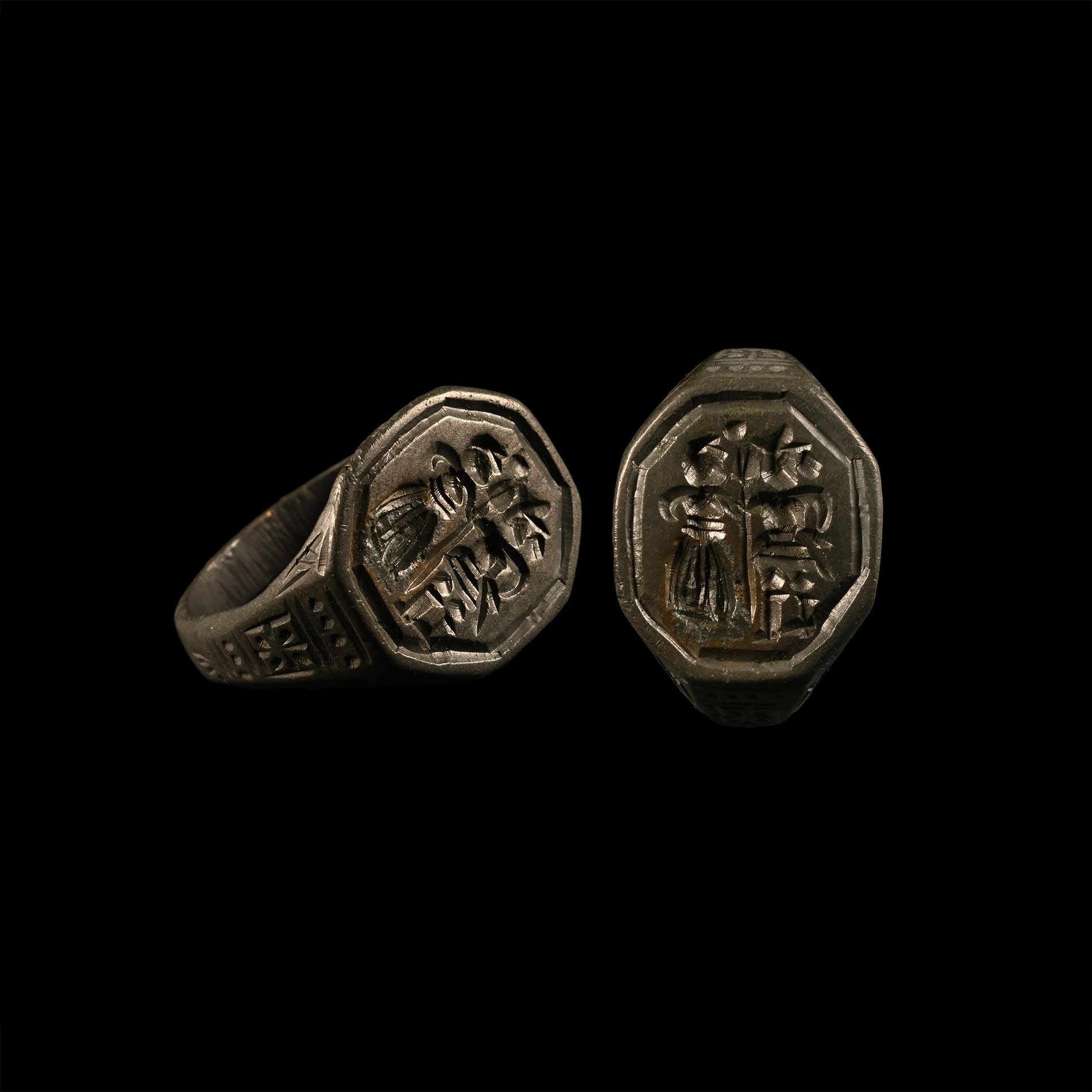
Tudor Period Tinned Bronze Marriage Ring
16TH-17TH CENTURY A.D.
1 in. (5.72 grams, 23.66 mm overall, 20.50 mm internal diameter (approximate size British V 1/2, USA 10 3/4, Europe 24.4, Japan 23)).
With a flat-section hoop, the expanding shoulders with a floral motif within bands of linear and pellet decoration; octagonal bezel with a couple facing each other, holding a long staff. [No Reserve]
ProvenancePrivate collection formed since the 1940s.
UK art market.
Property of an Essex gentleman.
TimeLine Auctions follows a vetting process to ensure the authenticity and legality of all items, reinforcing our commitment to integrity and responsible trading. Each antiquity, antique, and coin lot undergoes thorough examination by a vetting committee of at least ten external specialists, professional trade association members, scientists, and archaeologists: Our Vetting Process
AUCTIONS:
TimeLine is a leading auction house specialising in antiquities, ancient art, collectables, natural history, coins, medals, and books. Our auctions offer museums, collectors, historians, and enthusiasts the opportunity to acquire unique and historically significant pieces.
-
Large Roman Style Mosaic Panel
20th century A.D.Estimate: £1,000 - 1,400 (+bp*)
Opening Bid: £500
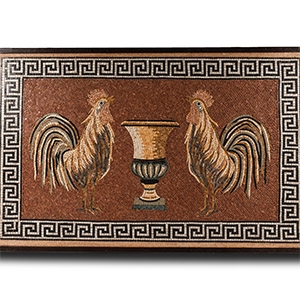
Rectangular panel with Greek-key meander border, russet field with two cockerels flanking an urn on a pedestal; embedded in matrix with ferrous frame. 17.6 kg, 108.5 cm wide
Ex Paris collection. French gallery, Paris, 1990-2000s. -
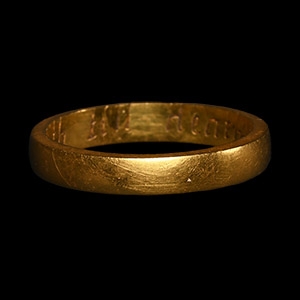
'The Darley with Menwith' Gold 'Keepe Faith Till Death' Posy Ring
Circa 1600-1750 A.D.Sold for (Inc. bp): £1,430
Substantial gold hoop with lightly incised inscription to the inner face in an italic hand: 'Keepe faith till death'. 4.42 grams, 19.65 mm overall, 16.49 mm internal diameter (approximate size British L, USA 5 3/4, Europe 11.24, Japan 10)
Found whilst searching with a metal detector near Darley with Menwith, North Yorkshire, UK, on Monday 7th March 2022 by Wesley Biddles. Accompanied by a copy of the British Museum's Portable Antiquities Scheme (PAS) report no.YORYM-BC1E78. Accompanied by a copy of the report for H M Coroner on a find of potential treasure with Treasure reference no.d2022 T419. Accompanied by a copy of a letter from the British Museum on behalf of the Secretary of State for Digital, Culture, Media and Sport, informing that the Crown's interest in this find has been disclaimed. -
.jpg)
Post Medieval Ornate Ceramic Statue Base
17th-18th century A.D.Sold for (Inc. bp): £117
Hollow formed with rectangular body, the front modelled with volute scrolls enclosing a rounded face, possibly depicting a putto. 1.6 kg, 13 cm high
Acquired 1950s-1960s. Private UK collection of Joseph Duncan Steel, Southampton, UK. Property of an East Sussex, UK, gentleman.
