
Loading, please wait...
LOT 2104
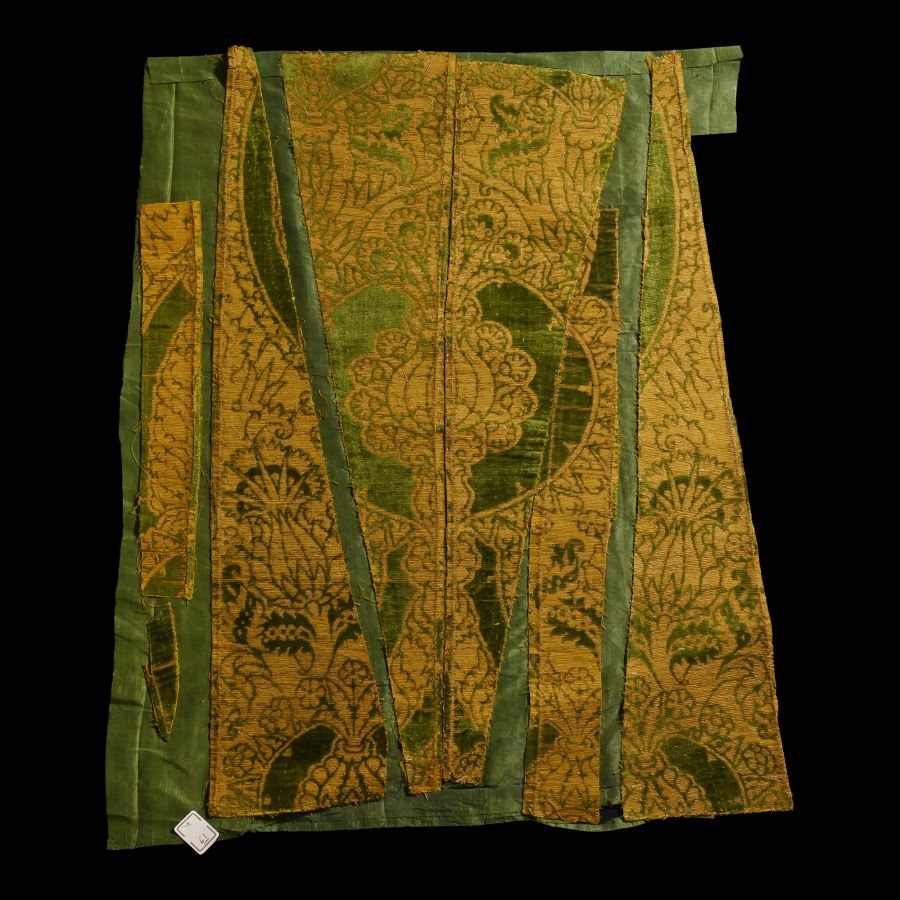
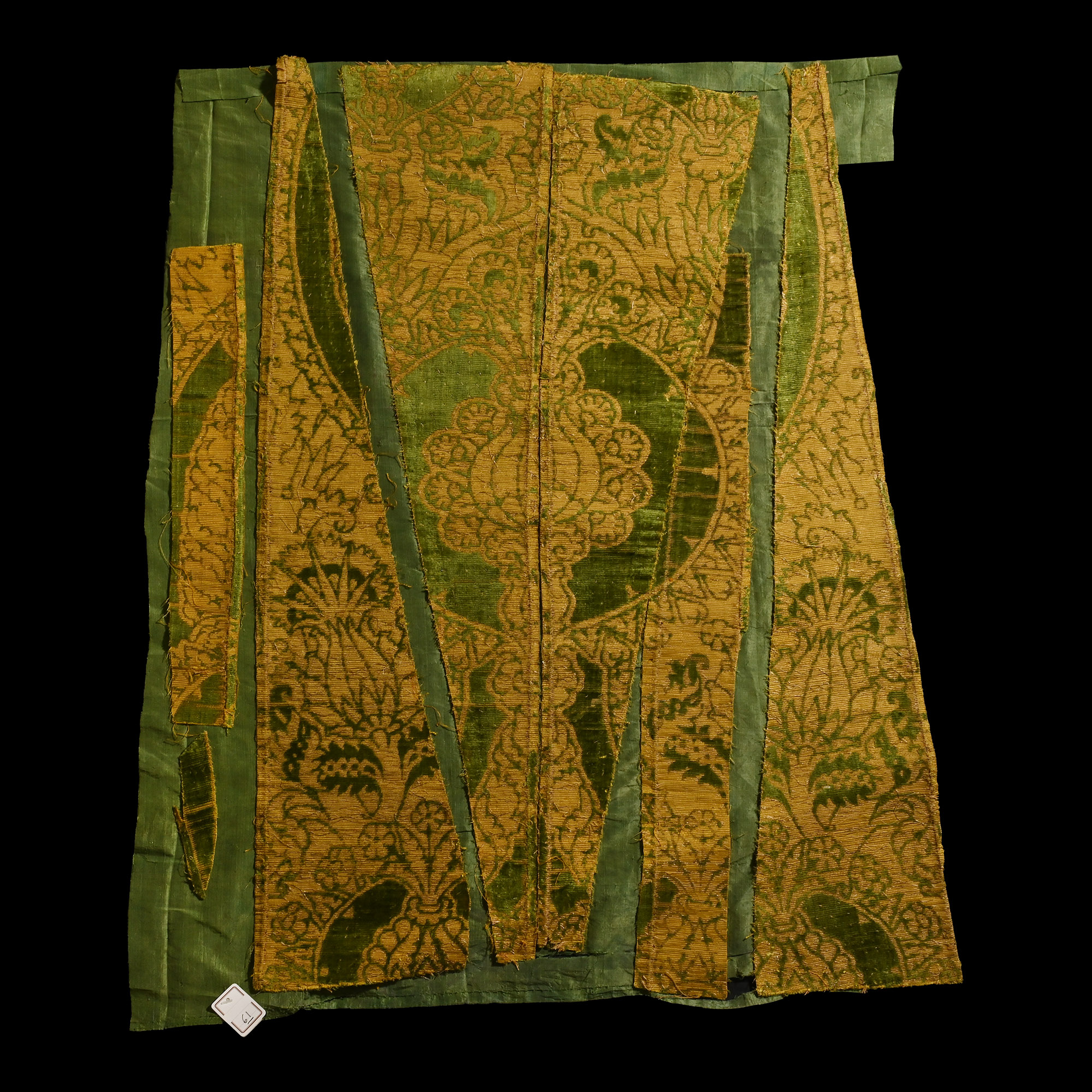
Tudor Period Textile Fragments
16TH CENTURY A.D.
31 1/2 x 25 5/8 in. (530 grams, 80 x 65 cm).
Group of rectangular and other green velvet panels and strip with gold-coloured rosettes, foliage and other ornament. [No Reserve]
ProvenancePrivate collection, Chateau de Frechou, France.
Daguerre Societe de Ventes Volontaires, 21 March 2016, no.4.
This lot is accompanied by an illustrated lot declaration signed by the Head of the Antiquities Department, Dr Raffaele D’Amato.
TimeLine Auctions follows a vetting process to ensure the authenticity and legality of all items, reinforcing our commitment to integrity and responsible trading. Each antiquity, antique, and coin lot undergoes thorough examination by a vetting committee of at least ten external specialists, professional trade association members, scientists, and archaeologists: Our Vetting Process
AUCTIONS:
TimeLine is a leading auction house specialising in antiquities, ancient art, collectables, natural history, coins, medals, and books. Our auctions offer museums, collectors, historians, and enthusiasts the opportunity to acquire unique and historically significant pieces.
-
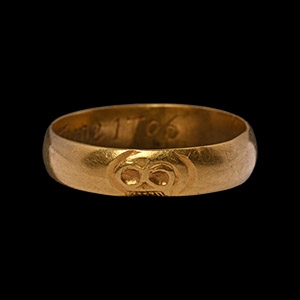
Queen Anne Engraved Gold Memento Mori Skull Ring
Dated 1706 A.D.Sold for (Inc. bp): £1,300
With stylised skull to the outer face, engraved to the inner face 'E. Judd ob. 6 June 1706 and maker's mark 'ID' for Josiah Daniel, London goldsmith of the early 18th century. 4.30 grams, 20.77 mm overall, 18.03 mm internal diameter (approximate size British P 1/2, USA 7 3/4, Europe 16.86, Japan 16)
Acquired on the UK art market. Property of an East Sussex collector. This lot is accompanied by an illustrated lot declaration signed by the Head of the Antiquities Department, Dr Raffaele D’Amato. -
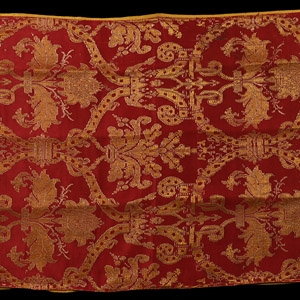
Tudor Period Embroidered Fragment
Late 16th century A.D.Sold for (Inc. bp): £247
Rectangular swatch of red and gold fabric with embroidered vegetal motifs. 188 grams, 55 x 132 cm
Private collection, Chateau de Frechou, France. Daguerre Societe de Ventes Volontaires, 21 March 2016, no.9 [Part]. This lot is accompanied by an illustrated lot declaration signed by the Head of the Antiquities Department, Dr Raffaele D’Amato. -
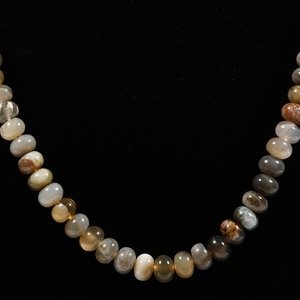
Agate Bead Necklace
20th century A.D.Sold for (Inc. bp): £91
Comprising oblate agate beads in shades of grey-blue, olive and off-white. 111 grams, 73 cm
From a London, UK, collection, 1990s. This lot is accompanied by an illustrated lot declaration signed by the Head of the Antiquities Department, Dr Raffaele D’Amato.
