
Loading, please wait...
LOT 1858
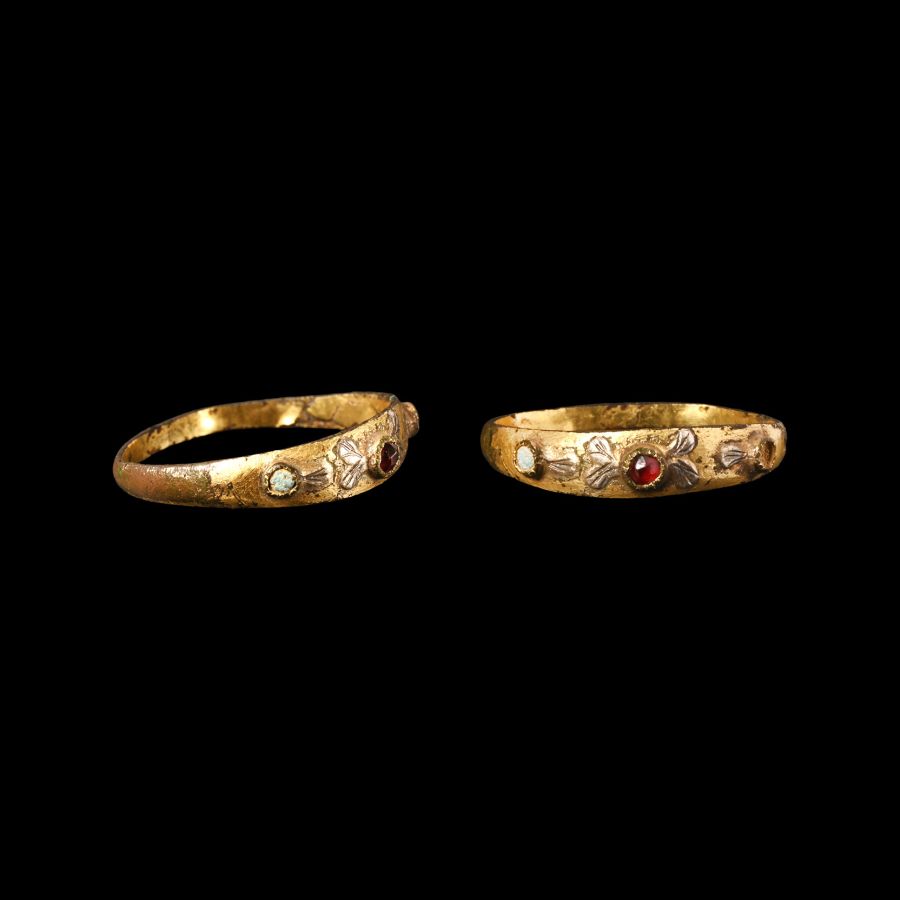
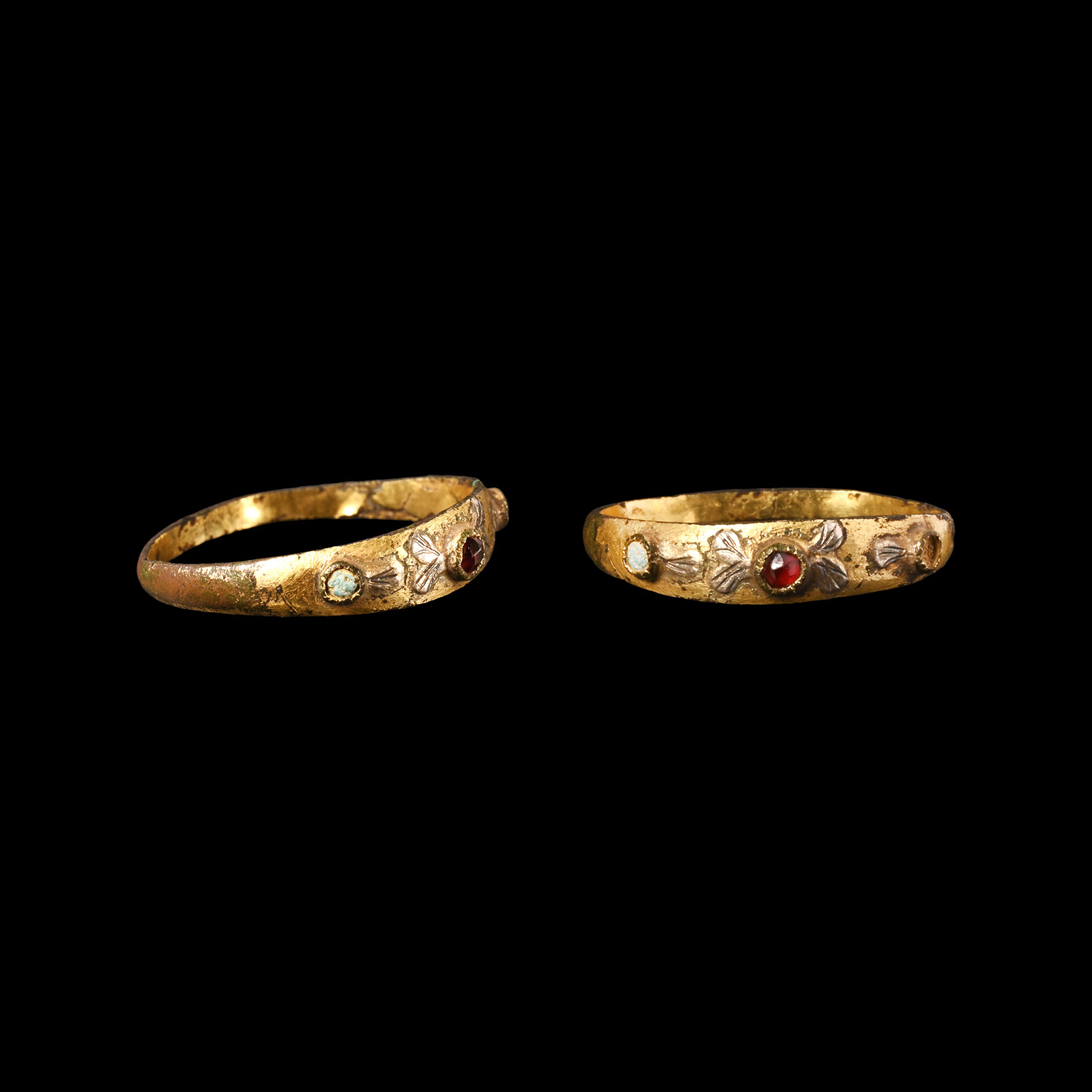
Tudor Period Silver-Gilt Ring with Cabochons
CIRCA 16TH-17TH CENTURY A.D.
3/4 in. (1.20 grams, 20.14 mm overall, 17.97 mm internal diameter (approximate size British O 1/2, USA 7 1/4 Europe 15.61, Japan 15)).
With three radiating cells and foliage detailing, inset ruby and turquoise gemstones. [No Reserve]
ProvenanceAcquired 1970s.
From the private collection of a Northern Ireland gentleman.
Ex private Merseyside, UK, collection.
Cf. Oman, C.C., British Rings 800-1914, London, 1974, pl.29(B), for type.
CONDITIONTimeLine Auctions follows a vetting process to ensure the authenticity and legality of all items, reinforcing our commitment to integrity and responsible trading. Each antiquity, antique, and coin lot undergoes thorough examination by a vetting committee of at least ten external specialists, professional trade association members, scientists, and archaeologists: Our Vetting Process
AUCTIONS:
TimeLine is a leading auction house specialising in antiquities, ancient art, collectables, natural history, coins, medals, and books. Our auctions offer museums, collectors, historians, and enthusiasts the opportunity to acquire unique and historically significant pieces.
-
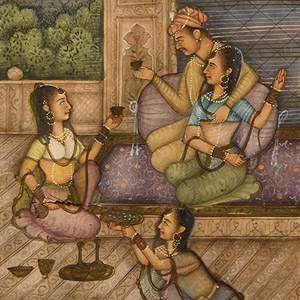
Framed Watercolour Painting
India, 20th century A.D.Estimate: £80 - 100 (+bp*)
Opening Bid: £40
Showing a convivial courtyard scene composed of a man and three women sharing drink and food, flowering plants in the foreground, moonlit treescape beyond; mounted in a reveal and a glazed wooden frame. 683 grams, 34.6 x 25 cm
Fine condition.
Acquired on the UK art market, 1980s-1990s. The Woodbridge collection of Indo-Persian art. -
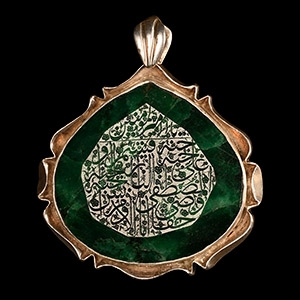
Calligraphic Emerald Gem in Silver-Coloured Metal Pendant
Late 20th century A.D.Sold for (Inc. bp): £416
The tear-shaped pendant with an ornate frame and articulate bail, set with a cut and polished emerald stone engraved with calligraphic Arabic script embellished with floral sprigs; domed reverse featuring a pierced floral motif. 63 grams, 62 mm
London collection since the 1980s. Property of a Canadian family. -
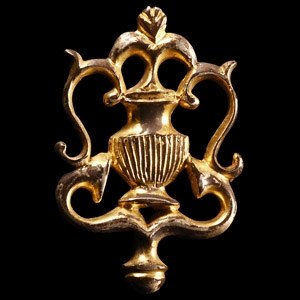
Post Medieval Silver-Gilt Amphora Fitting
Circa 17th century A.D.Sold for (Inc. bp): £46
In the form of a fluted vase with scrolling pattern to the bottom, sides and top; two attachment pins to the back. 7.29 grams, 36 mm
From a home counties collection formed 1970-1980.
