
Loading, please wait...
LOT 1502
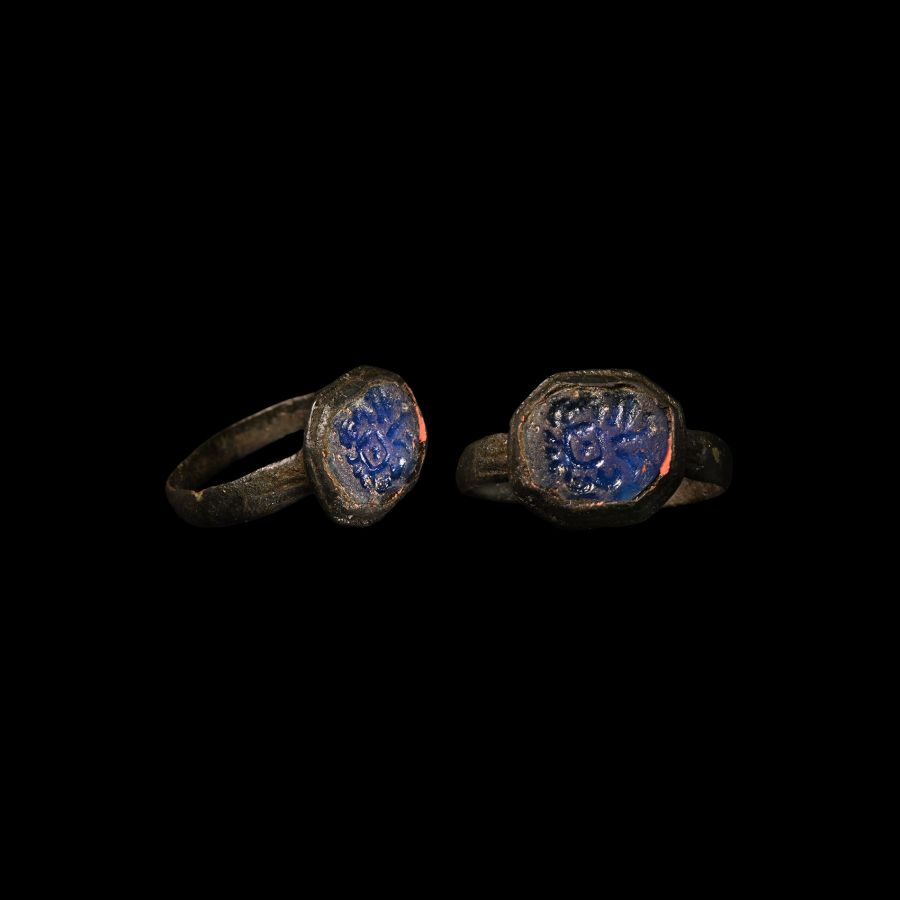
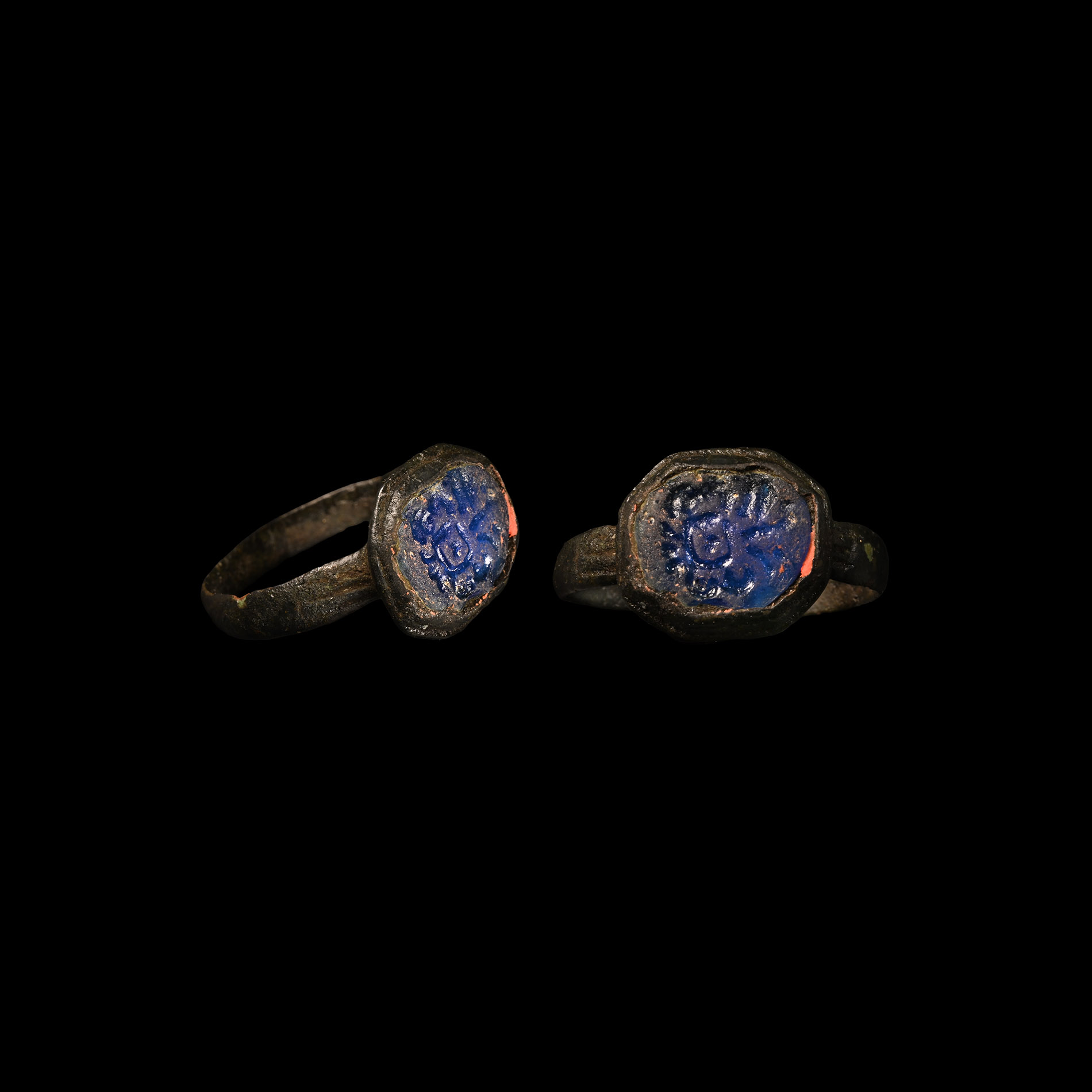
Tudor Period Ring with Intaglio
16TH-17TH CENTURY A.D.
3/4 in. (2.72 grams, 21.50 mm overall, 19.47 mm internal diameter (approximate size British N 1/2, USA 6 3/4, Europe 14.35, Japan 13)).
A copper-alloy ring composed of a slender hoop supporting an octagonal bezel, set with a blue glass intaglio displaying an enigmatic, possibly pseudo-armorial design. [No Reserve]
ProvenanceAcquired 1990s.
English private collection.
Property of an Essex gentleman.
TimeLine Auctions follows a vetting process to ensure the authenticity and legality of all items, reinforcing our commitment to integrity and responsible trading. Each antiquity, antique, and coin lot undergoes thorough examination by a vetting committee of at least ten external specialists, professional trade association members, scientists, and archaeologists: Our Vetting Process
AUCTIONS:
TimeLine is a leading auction house specialising in antiquities, ancient art, collectables, natural history, coins, medals, and books. Our auctions offer museums, collectors, historians, and enthusiasts the opportunity to acquire unique and historically significant pieces.
-
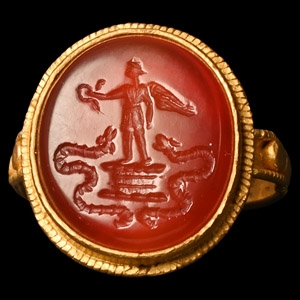
Victorian Gold Ring with Victory Gemstone
19th-20th century A.D. or earlierEstimate: £600 - 800 (+bp*)
Opening Bid: £300
A gold finger ring with beaded wire to the rim of the hoop and applied pellets, ellipsoid bezel with beaded wire border, inset carnelian cloison with figure of Victory on a plinth between rearing snakes. 3.54 grams, 20.07 mm overall, 15.50 mm internal diameter (approximate size British I, USA 4 1/4, Europe 7.44, Japan 7)
English private collection. -
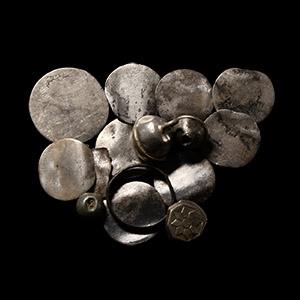
Post Medieval Love Token and Other Silver Artefact Group
18th-19th century A.D.Sold for (Inc. bp): £21
A mixed group of silver artefacts comprising; coins bent into 'love tokens'; worn coins; a plain finger ring; two crotal bell fragments; bulbous button fragment; button with geometric floral motif; fragment of a thimble. 28.7 grams total, 8-25 mm
Found Wiltshire, UK. -
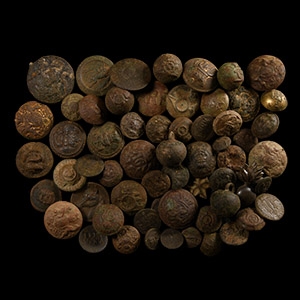
Post Medieval Button Group
19th-20th century A.D.Sold for (Inc. bp): £26
A mixed group of mainly bronze buttons including figural, armorial and military types. 196 grams total, 12-29 mm
Found Suffolk.
