
Loading, please wait...
LOT 1432
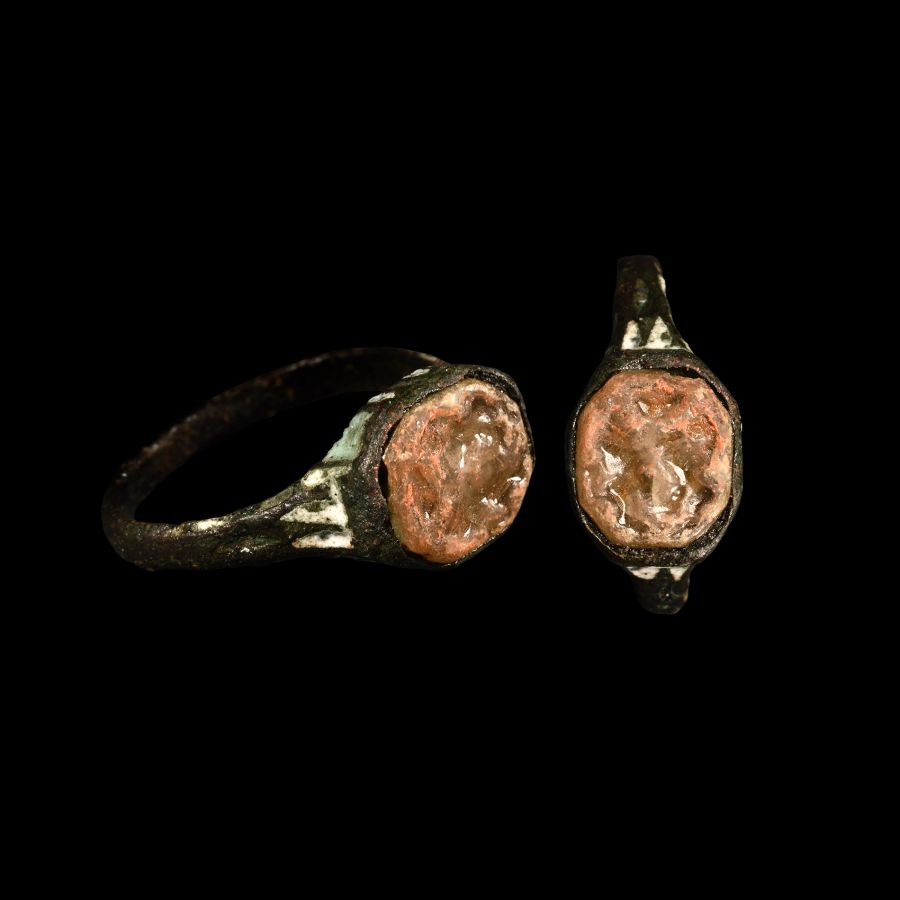
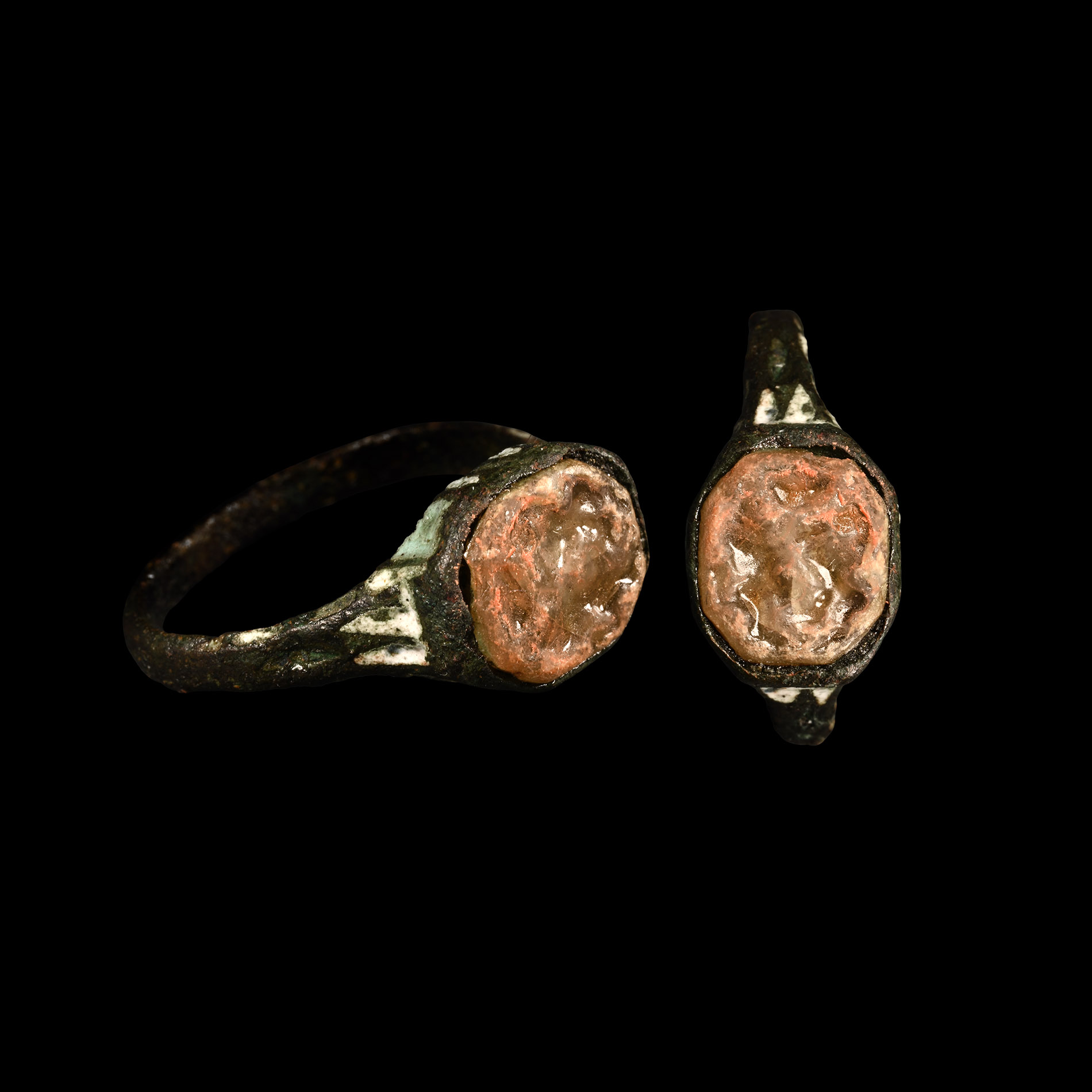
Tudor Period Ring with Armorial Intaglio
CIRCA 16TH-17TH CENTURY A.D.
1 in. (4.95 grams, 26.72 mm overall, 21.47 mm internal diameter (approximate size British U, USA 10, Europe 22.52, Japan 21)).
A copper-alloy ring composed of a slightly convex hoop and octagonal bezel, set with an armorial glass intaglio; remains of polychrome enamelled cells to the vertical bezel edge. [No Reserve]
ProvenanceFound Cambridgeshire in the 1990s.
CONDITIONTimeLine Auctions follows a vetting process to ensure the authenticity and legality of all items, reinforcing our commitment to integrity and responsible trading. Each antiquity, antique, and coin lot undergoes thorough examination by a vetting committee of at least ten external specialists, professional trade association members, scientists, and archaeologists: Our Vetting Process
AUCTIONS:
TimeLine is a leading auction house specialising in antiquities, ancient art, collectables, natural history, coins, medals, and books. Our auctions offer museums, collectors, historians, and enthusiasts the opportunity to acquire unique and historically significant pieces.
-
Post Medieval Bronze 'LOVE' Posy Ring
18th-19th century A.D.Sold for (Inc. bp): £33
A slender bronze posy ring inscribed 'LOVE' to the interior and other worn inscription; hoop split. 0.99 grams, 19.90 mm overall, 17.52 mm internal diameter (approximate size British M 1/2, USA 6 1/4, Europe 13.09, Japan 12)
Acquired circa 2010. From an old Essex, UK, collection. -
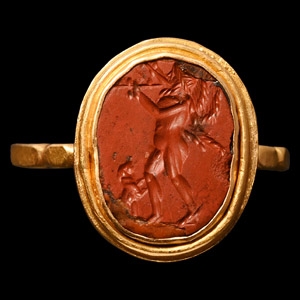
Post Medieval Gold Ring with Jester Gemstone
20th century A.D. or earlierSold for (Inc. bp): £936
A gold finger ring with segmented hoop, cupped bezel with rosette to the underside, inset jasper cloison with intaglio advancing balatro jester playing pan-pipes while a dog jumps at his lower legs. 8.27 grams, 30.52 mm overall, 18.80 mm internal diameter (approximate size British Q 1/2, USA 8 1/4, Europe 18.12, Japan 17)
English private collection. -
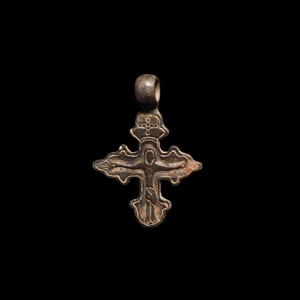
Post Medieval Silver Cross Pendant
17th-19th century A.D.Sold for (Inc. bp): £57
A silver cruciform pendant bearing the figure of Christ on the cross with elaborate arms in low-relief, a cross composed of pellets above, simple detailing to the hands, feet and loin cloth worn by Christ, suspension loop above. 6.9 grams, 38 mm
Fine condition.
Acquired on the UK art market in the late 1990s. Property of a UK gentleman.
