
Loading, please wait...
LOT 2287
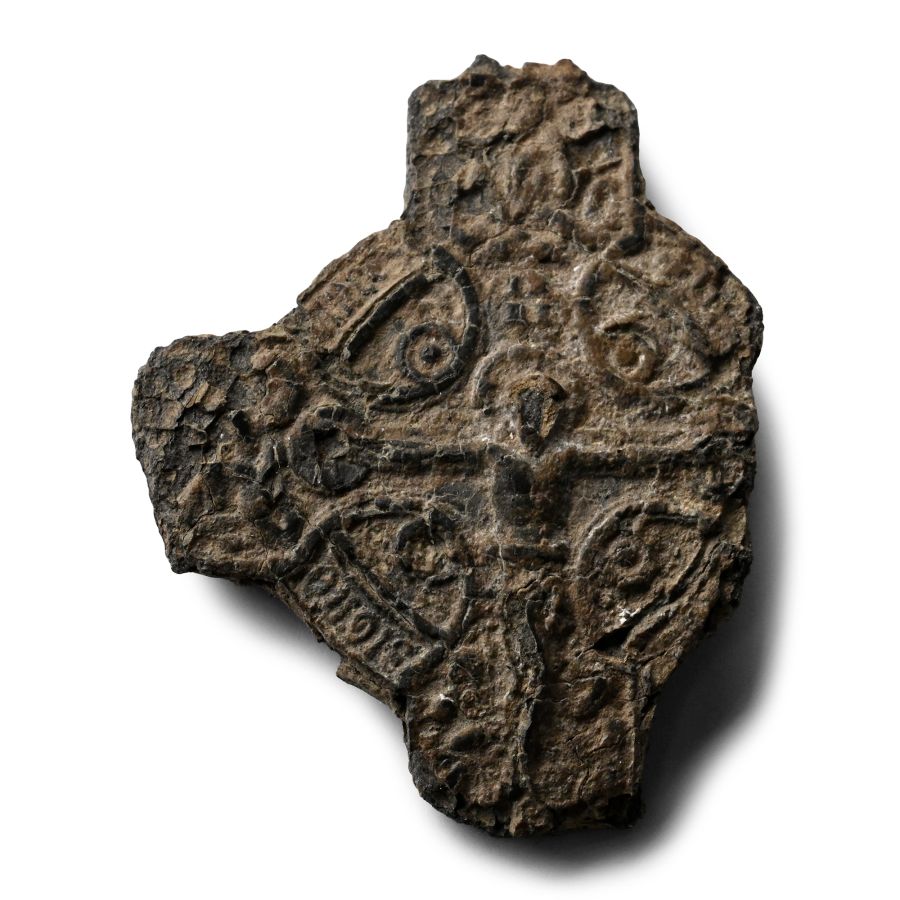
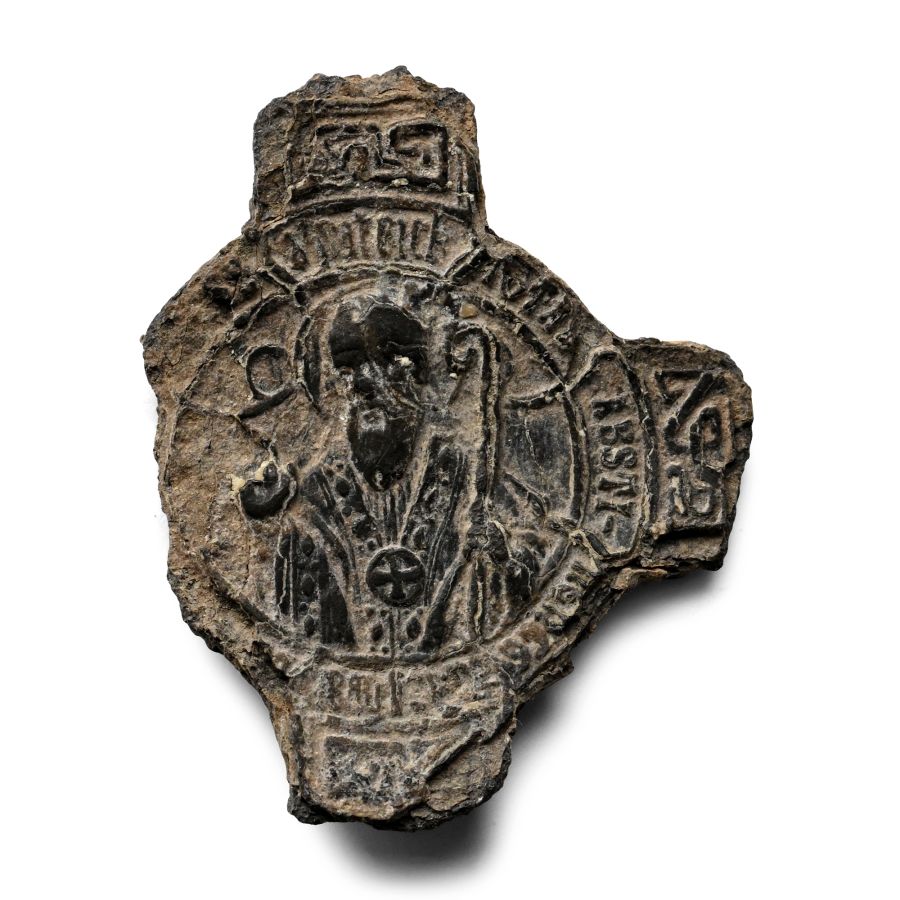
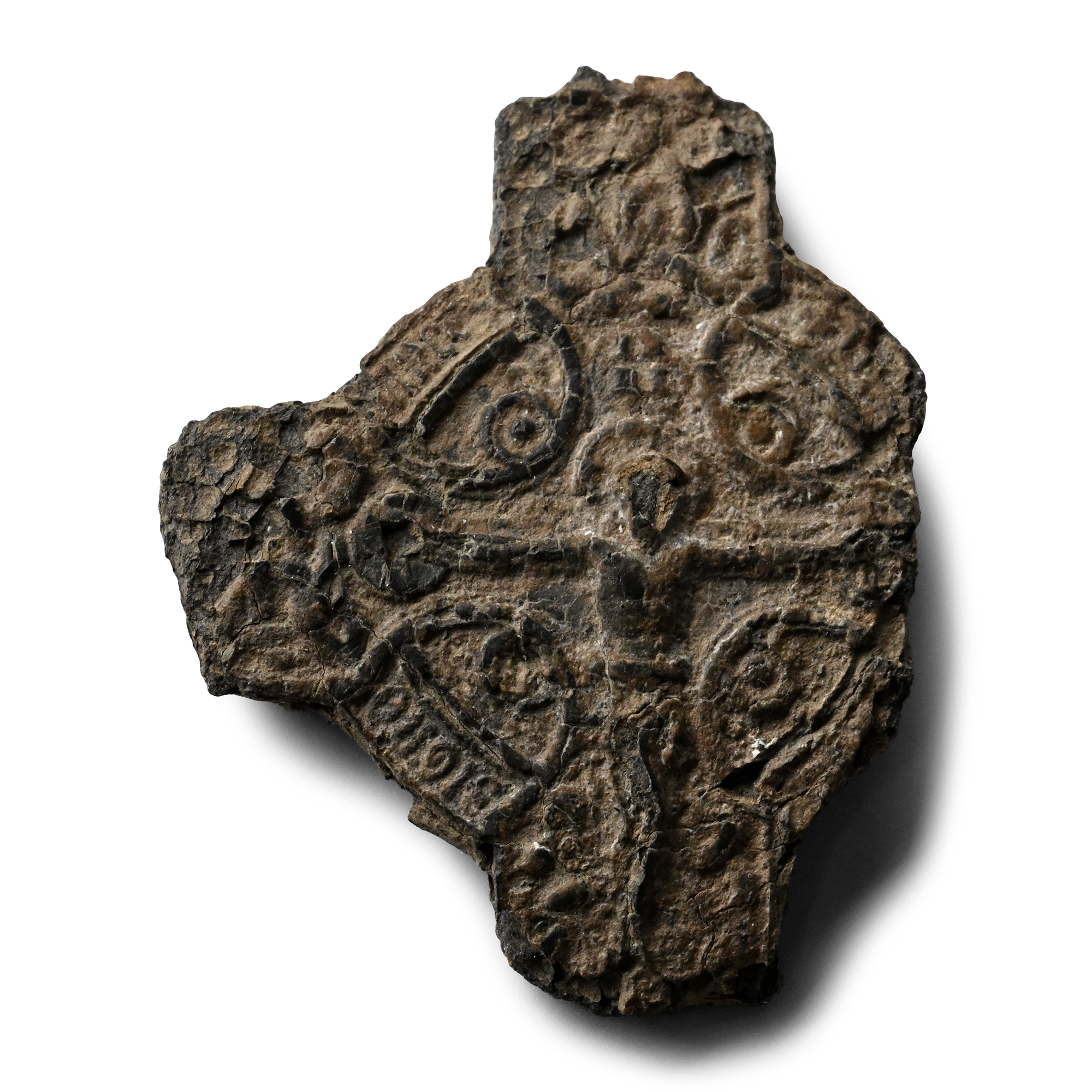
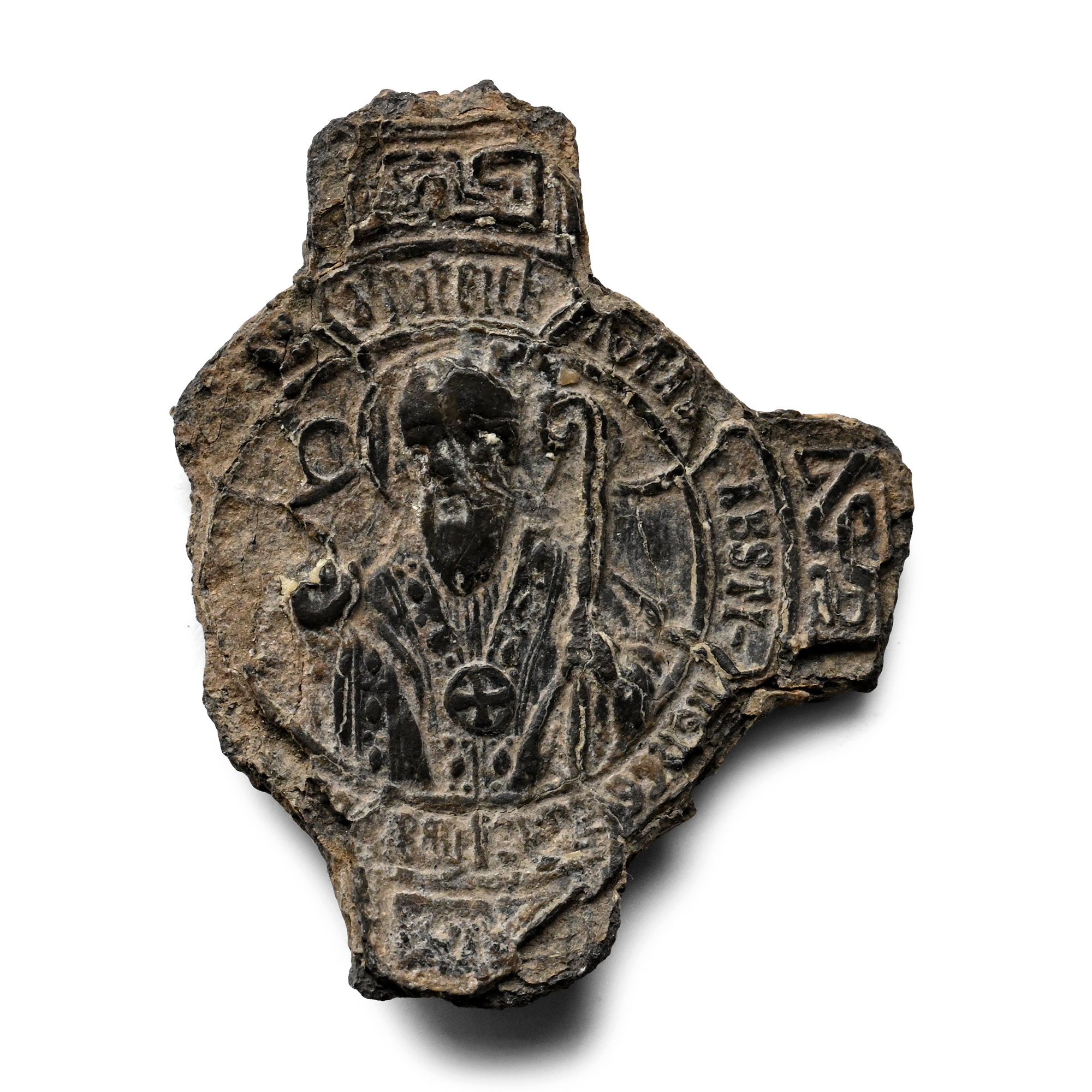
Tudor Period Pewter Pilgrim's Pendant with Bishop
16TH-17TH CENTURY A.D.
1 1/4 in. (6 grams, 33 mm).
Bifacial low-relief design; obverse: Corpus Christi amid scrolls on foliate cross; reverse: nimbate bishop in three-quarter view with crozier, legend to the circular band. [No Reserve]
ProvenanceFrom a retired Lincolnshire, UK, gentleman's collection, a long time member of the Pewter Society.
LiteratureCf. Mitchiner, M., Medieval Pilgrim & Secular Badges, London, 1986, item 909, for type.
CONDITIONTimeLine Auctions follows a vetting process to ensure the authenticity and legality of all items, reinforcing our commitment to integrity and responsible trading. Each antiquity, antique, and coin lot undergoes thorough examination by a vetting committee of at least ten external specialists, professional trade association members, scientists, and archaeologists: Our Vetting Process
AUCTIONS:
TimeLine is a leading auction house specialising in antiquities, ancient art, collectables, natural history, coins, medals, and books. Our auctions offer museums, collectors, historians, and enthusiasts the opportunity to acquire unique and historically significant pieces.
-
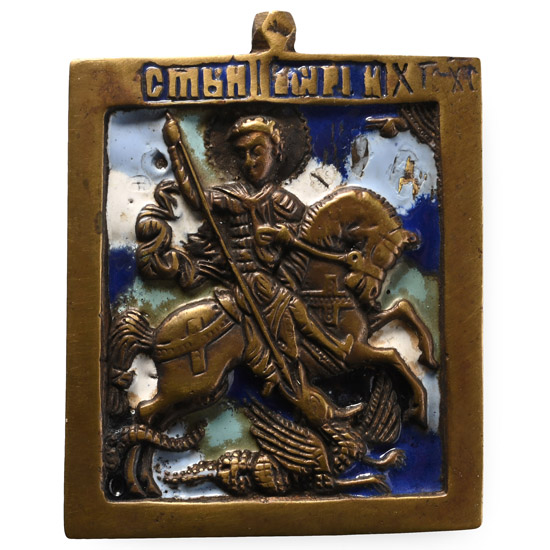
Russian Orthodox Enamelled Bronze Travel Icon with Saint George
19th century A.D.Sold for (Inc. bp): £98
Saint George on horseback, dispatching the dragon with a spear; the saint dressed in lamellar Roman cuirass and seated on a high-ended saddle secured by breast, rump, and belly straps; Old Slavic inscription on the top, reciting Saint George (Свято́й Гео́ргий ). 90 grams, 65 mm
Acquired from Chris Martin-Zakheim, Iconastas, 5 Piccadilly Arcade, London SW1. From the private collection of a West London, UK, gentleman, formed since the early 2000s.
According to the Christian tradition, Saint George would have lived between the end of the 3rd century and the beginning of the 4th century: born into a noble Christian family, he became an officer in the Roman army and was then named a praetorian by Diocletian. But when the same emperor decided to resume the persecutions, Saint George became a victim despite his important political rank. His role in the development of the faith is so important that he is included among the Great Martyrs of the Eastern Church and his fight against the dragon becomes a symbol par excellence of the fight for good which defeats evil. -

Grand Tour Marble Specimen Panel
Late 19th-early 20th century A.D.Sold for (Inc. bp): £715
A rectangular plaque with four rows and seven columns of various marble and imperial porphyry specimens, from the Grand Tour. 2.81 kg, 26.5 x 18 cm
Acquired at Shepton Mallet Fair, Somerset, UK, in 2010. From the private collection of a Somerset gentleman. -

Russian Orthodox Icon with Saints Tamara (Holy Empress of Georgia, Tamara the Great), and Valerian
19th century A.D.Sold for (Inc. bp): £390
Painted on a wooden board, at the centre the Holy Empress of Georgia, Tamara the Great, shown on the left, dressed in rich blue, white and red clothing with pearls around her neck and wearing a crown; on the right, Saint Valerian dressed in an emerald green robe and red cloak, holding a crozier, with a highly ornate gilt background. 269 grams, 17.8 x 14.4 cm
Acquired from Derby Antiques Fair, 2003. Ian Wilkinson collection, Nottinghamshire, UK, formed since 1985. Accompanied by a copy of a Russian export licence.
