
Loading, please wait...
LOT 2003
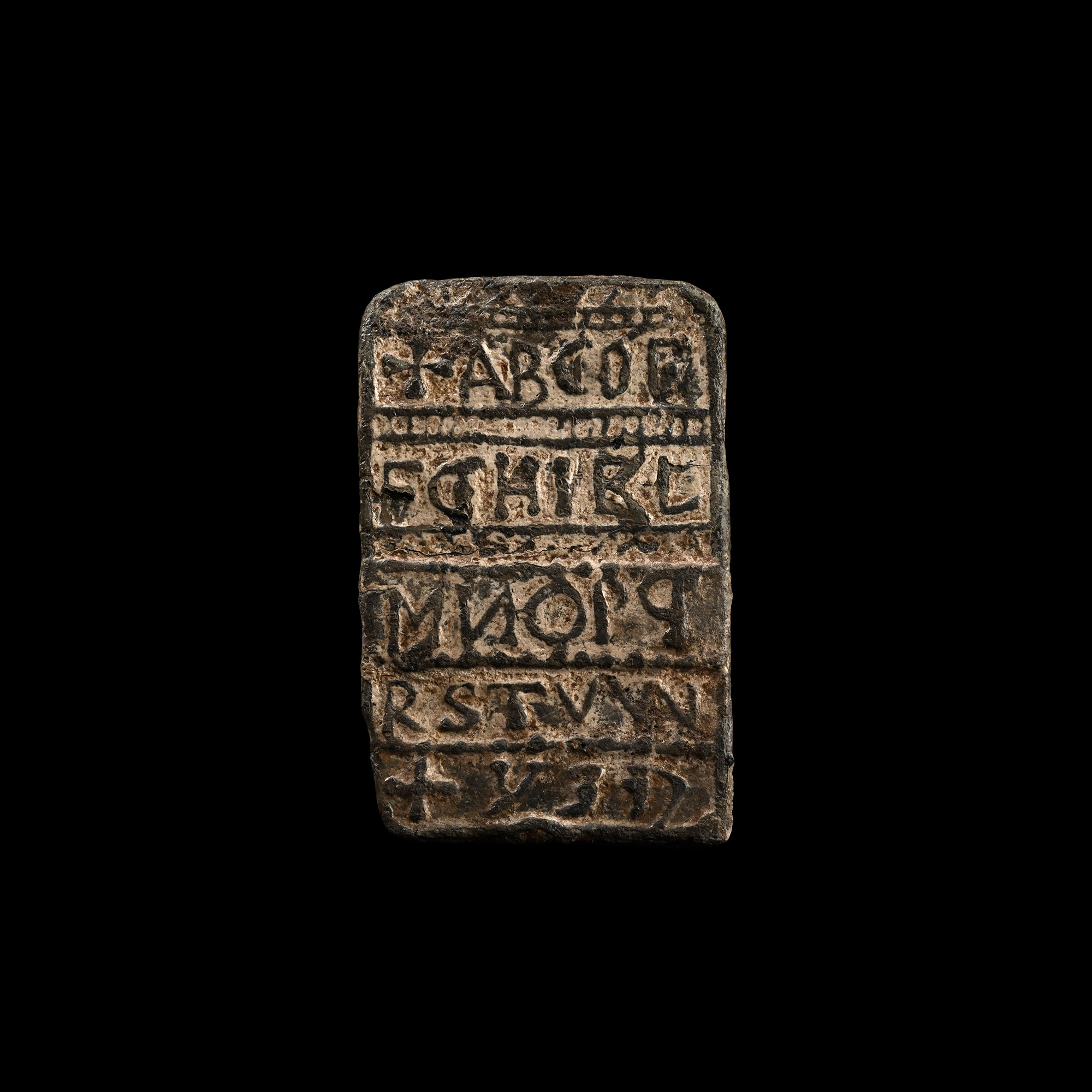
Tudor Period Lead 'Horn Book' Teaching Aid
1600-1633 A.D.
2 in. (26.8 grams, 53 mm).
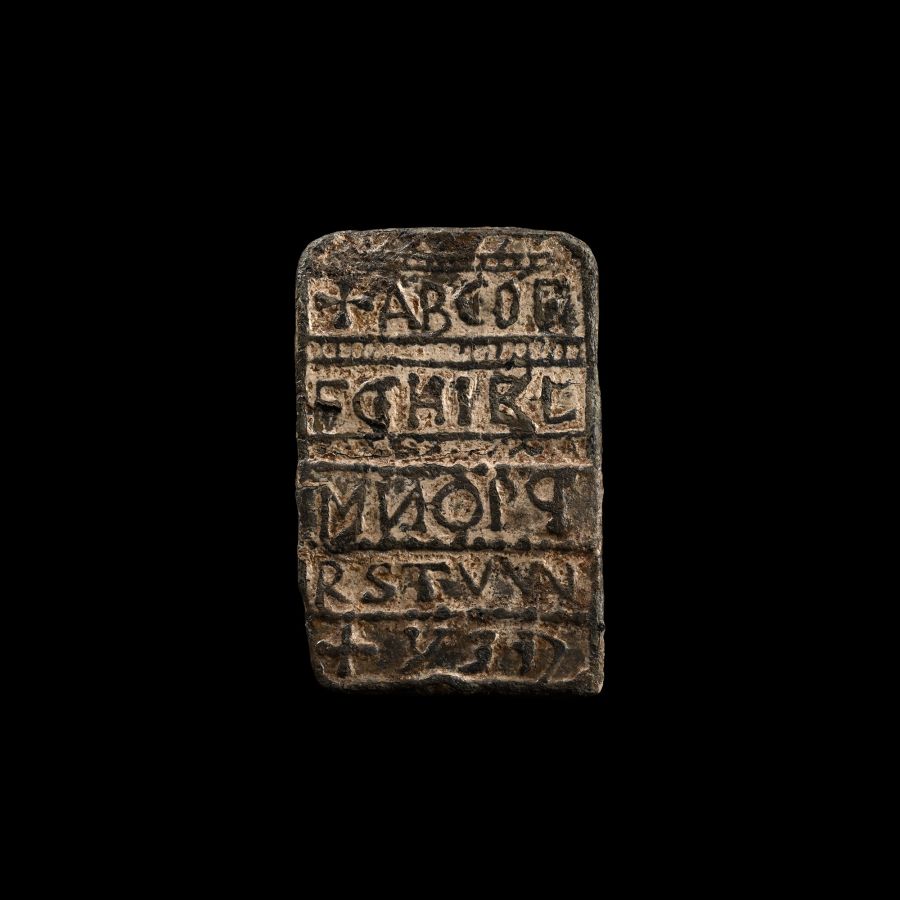
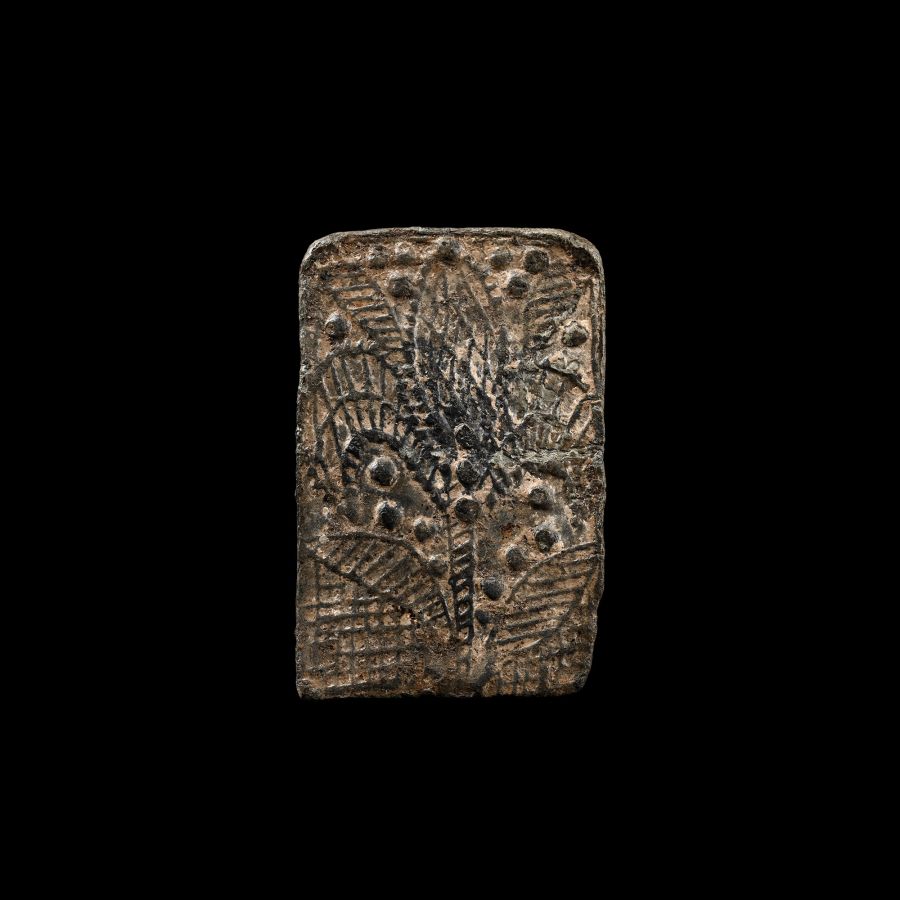
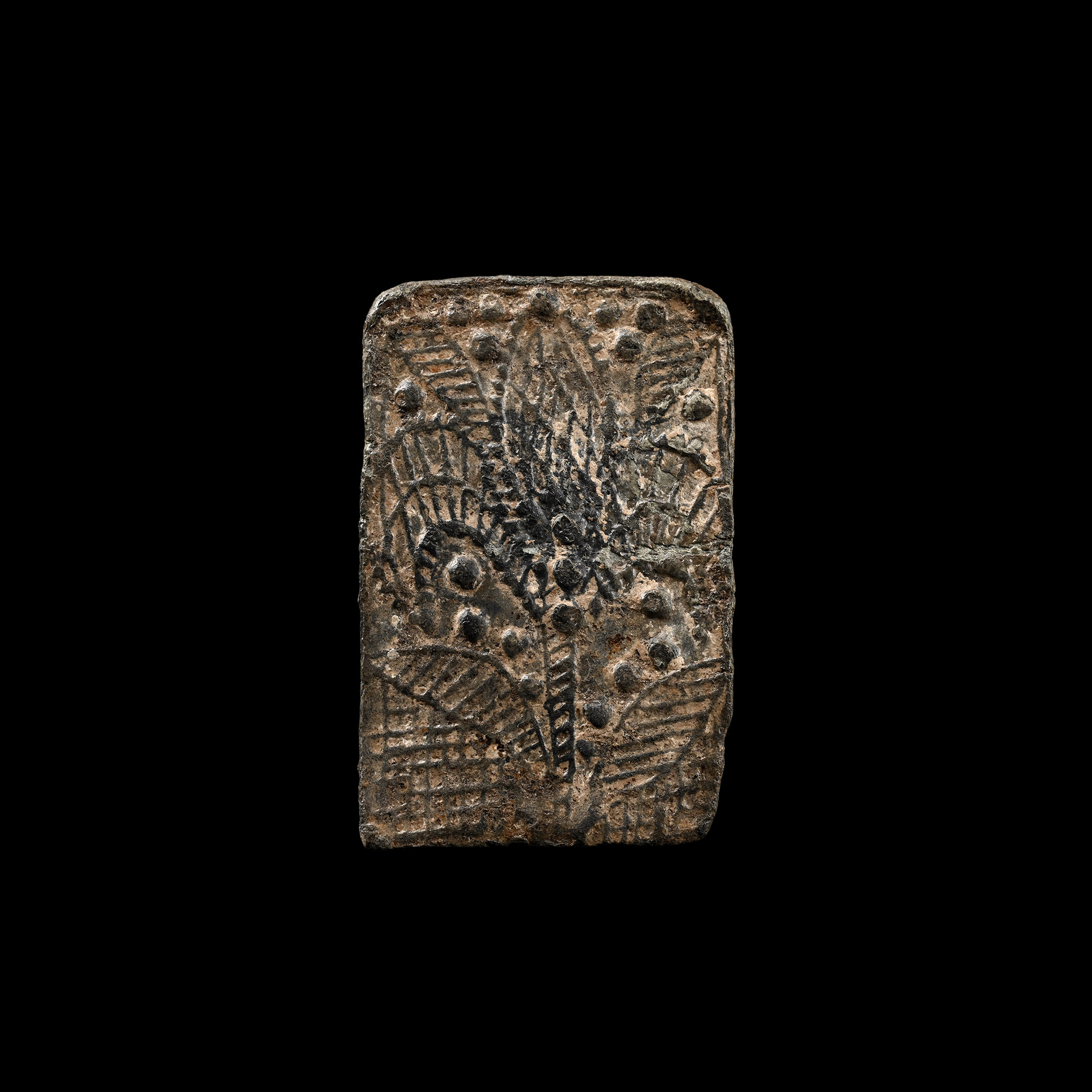
A rare complete and undamaged rectangular plaque bearing raised, moulded text on the obverse; with hatched three horizontal bars and two pelletted between five registers, framing the letters of the alphabet '+ABCDE / FGHIKL / MN[reversed]OPq / RSTVW / +Y[Z]'; tree with berries on a hatched field to the reverse.
ProvenanceFound whilst searching with a metal detector near Kniveton, Derbyshire Dales, UK.
Accompanied by a copy of the British Museum's Portable Antiquities Scheme (PAS) report no.WMID-341C6A.
The letter 'U' has been omitted from the alphabet, as is common with such objects, as has the letter 'J', suggesting that the book was produced prior to the publication of Charles Butler's English Grammar (1633), which first distinguished between I and J. The letter Z is reversed. Hornbooks were employed as learning aids and commonly made from paper mounted onto wood, together with a transparent sheet of horn. Smaller, more portable lead-alloy examples such as this one are generally believed to have been mass-produced, whilst still falling within the genre of 'hornbooks'.
CONDITIONTimeLine Auctions follows a vetting process to ensure the authenticity and legality of all items, reinforcing our commitment to integrity and responsible trading. Each antiquity, antique, and coin lot undergoes thorough examination by a vetting committee of at least ten external specialists, professional trade association members, scientists, and archaeologists: Our Vetting Process
AUCTIONS:
TimeLine is a leading auction house specialising in antiquities, ancient art, collectables, natural history, coins, medals, and books. Our auctions offer museums, collectors, historians, and enthusiasts the opportunity to acquire unique and historically significant pieces.
-
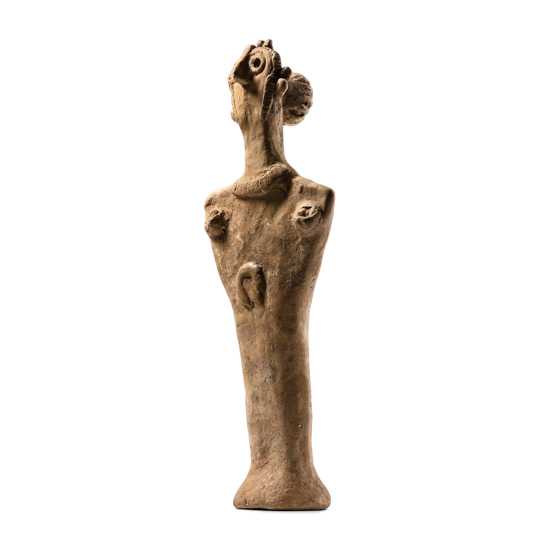
Large Syro-Hittite Style Terracotta Standing Figure
20th century A.D. or earlierSold for (Inc. bp): £7
Modelled in the round, standing, facing, each with pronounced facial features and hairdo. 181 grams, 20 cm
From the private collection of John Meredith, acquired since the 1990s; thence by descent. -
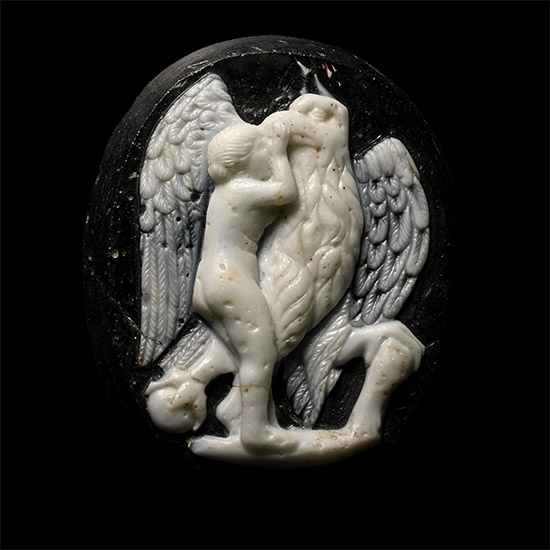
Large Post-Classical Glass Paste Cameo of a Female Figure with Eagle
20th century A.D.Estimate: £2,000 - 3,000 (+bp*)
Opening Bid: £1,000
A cameo scene comprising a standing female figure with hair tied in a chignon, approaching a perching eagle with wings spread and clutching a sphere in one claw; the woman drawing the bird's beak close to her forehead; the eagle with claws extended leaning on a branch; exergue below. 118 grams, 87 mm
Private collection, England. This lot has been checked against the Interpol Database of stolen works of art and is accompanied by search certificate number no.13172-249567.
The eagle is probably a metamorphosed personification of Jupiter, and the globe is a symbol of domain and military power. The scene is an interesting allegorical composition with possible references to the metamorphosis and Jupiter's love affairs, considering the presence of the naked female figure. The peculiar superimposition of the limbs is inspired by ancient models. The scene is engraved on the white layer of the glass paste, characterised by a dark violet second layer (seen with a powerful light from the back). On the back, traces of the glass dough melting. The evident presence of clear engraving marks and the cut glass bubbles confirms the fact that this work is an intaglio (not a cast). A work with a personality, showing undercuts. -
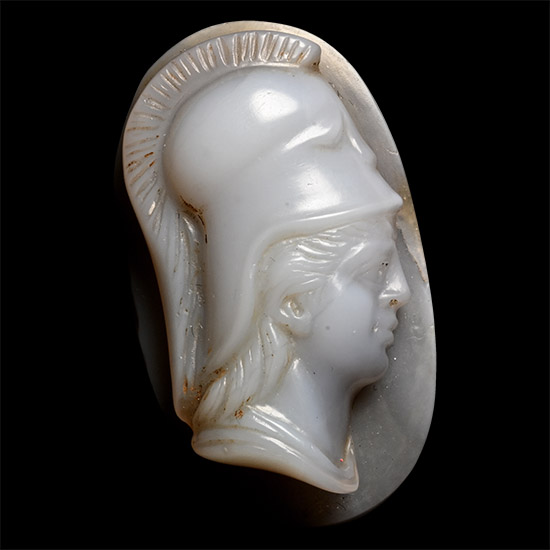
Post-Classical Agate Cameo with the Goddess Minerva
18th-19th century A.D.Estimate: £1,000 - 1,400 (+bp*)
Opening Bid: £500
Ellipsoid in plan with helmetted bust of Minerva; deep undercuts to the edges. 12.3 grams, 35 mm
with Hindmann, Chicago, 21 March 2023, no.221. Private collection, England.
