
Loading, please wait...
LOT 1063
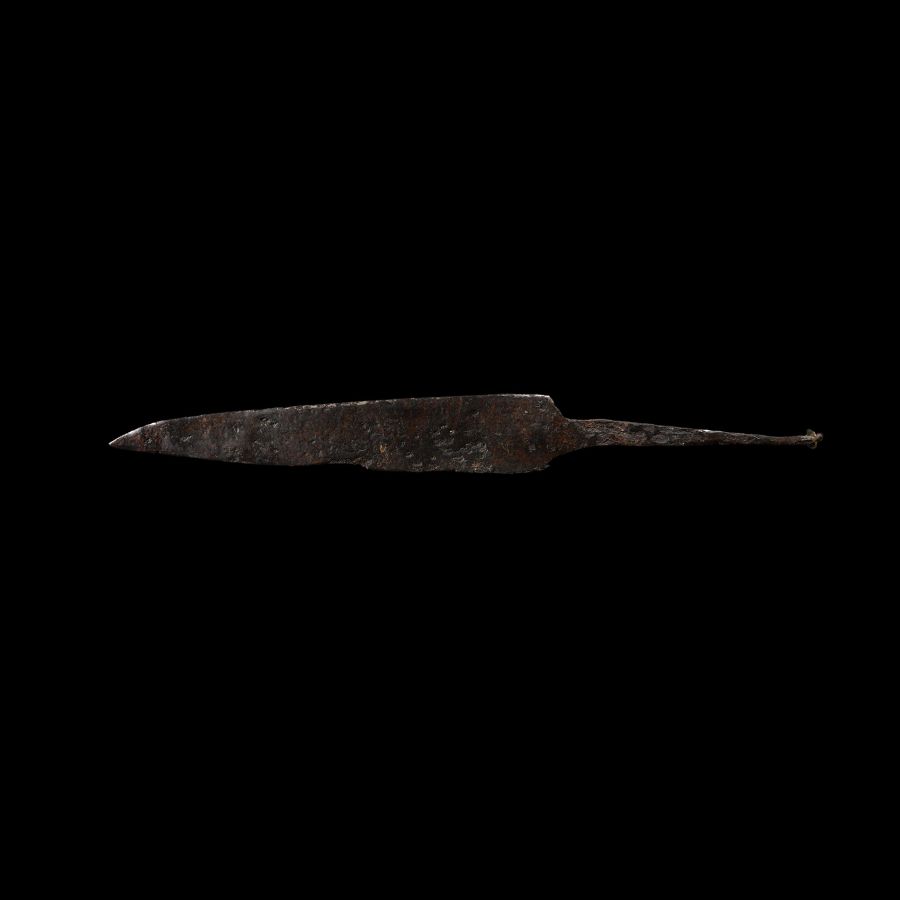
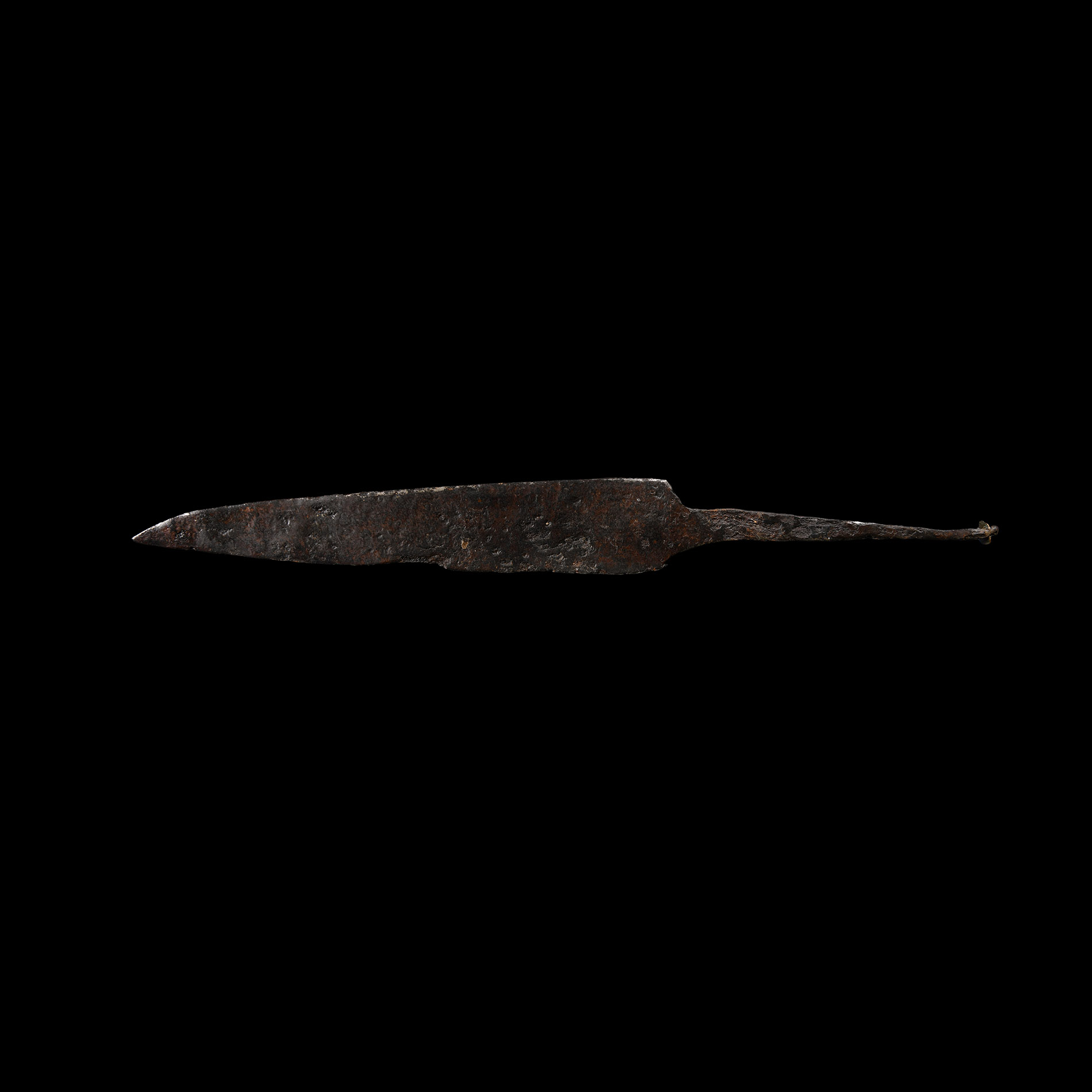
Tudor Period Iron Dagger
16TH CENTURY A.D. OR LATER
11 1/4 in. (155 grams, 28.5 cm).
Comprising a single cutting edge and tang.
ProvenanceAcquired 1960s-1990s.
Late Alison Barker collection, a retired London barrister.
TimeLine Auctions follows a vetting process to ensure the authenticity and legality of all items, reinforcing our commitment to integrity and responsible trading. Each antiquity, antique, and coin lot undergoes thorough examination by a vetting committee of at least ten external specialists, professional trade association members, scientists, and archaeologists: Our Vetting Process
AUCTIONS:
TimeLine is a leading auction house specialising in antiquities, ancient art, collectables, natural history, coins, medals, and books. Our auctions offer museums, collectors, historians, and enthusiasts the opportunity to acquire unique and historically significant pieces.
LOT 1063
Tudor Period Iron Dagger
Estimate £80 - 100€93 - 116 (for guidance only)$108 - 135 (for guidance only)
-
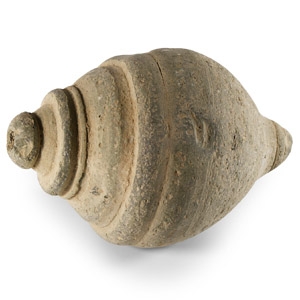
Turco-Mongol Ceramic Fire Bomb or Hand Grenade
14th-15th century A.D.Sold for (Inc. bp): £117
Piriform body with domed filler-hole, raised horizontal flanges to the shoulders; intended to be filled with explosive liquid and wick, used as a hand grenade. 409 grams, 11.7 cm
Acquired 1980-2015. Ex Abelita family collection. Accompanied by an academic paper by military specialist Dr Raffaele D'Amato, dated 15 July 2019 and titled 'Eastern Roman Empire - Greek Fire Bomb or Hand Grenade (μεσαίον kακάβιον) 9th-11th century AD'.
This piece was a sort of ceramic fire grenade, similar to the ones used by the Eastern Romans but of Turco-Mongol type. Apart from the use of manual flame-throwers, special corps of soldiers employed terracotta grenades, in the form of small jars, abundantly evidenced in archaeological excavations. -
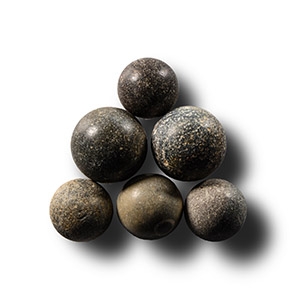
Post Medieval Stone Grapeshot Ammunition Collection
Circa 17th-18th century A.D.Sold for (Inc. bp): £20
Group of spherical grapeshot balls of various sizes. 32 grams total, 14-17 mm
Private collection formed in the 1990s. Acquired from a central London gallery. Property of an Essex gentleman. -
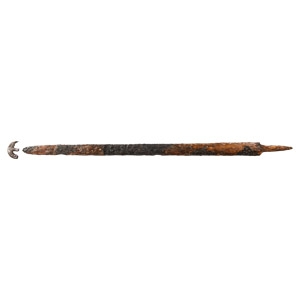
Roman Iron Spatha with Remains of Scabbard and Chape
4th century A.D.Sold for (Inc. bp): £3,900
With a double-edged blade of Illerup-Wyhl Type, narrow parallel cutting edges tapering towards the point; remains of wooden scabbard on the blade and remains of wooden grip on the hilt; accompanied by a crescent-shaped iron chape. 1.02 kg total, 6.5-94.5 cm
From the private collection of a London gentleman, from his grandfather's collection formed before the early 1970s. Accompanied by an academic report by Dr Raffaele D’Amato. This lot has been checked against the Interpol Database of stolen works of art and is accompanied by search certificate no.11924-209661.
The iconographic sources indicate that Roman swords changed in the later 2nd and 3rd centuries A.D. Longer swords, which were more popular within Germanic and Celtic cultures and more useful for fighting on horseback, were soon widespread among infantry units and mass-produced in the Roman workshops. They were brought home by foreigners after mercenary or auxiliary service in the Roman army. This, together the possibility of war booty, may explain why a great number of these swords have been found in the distant areas such as Nydam Mose, Eisbøl and Illerup Adal, all in modern Denmark.
