Loading, please wait...

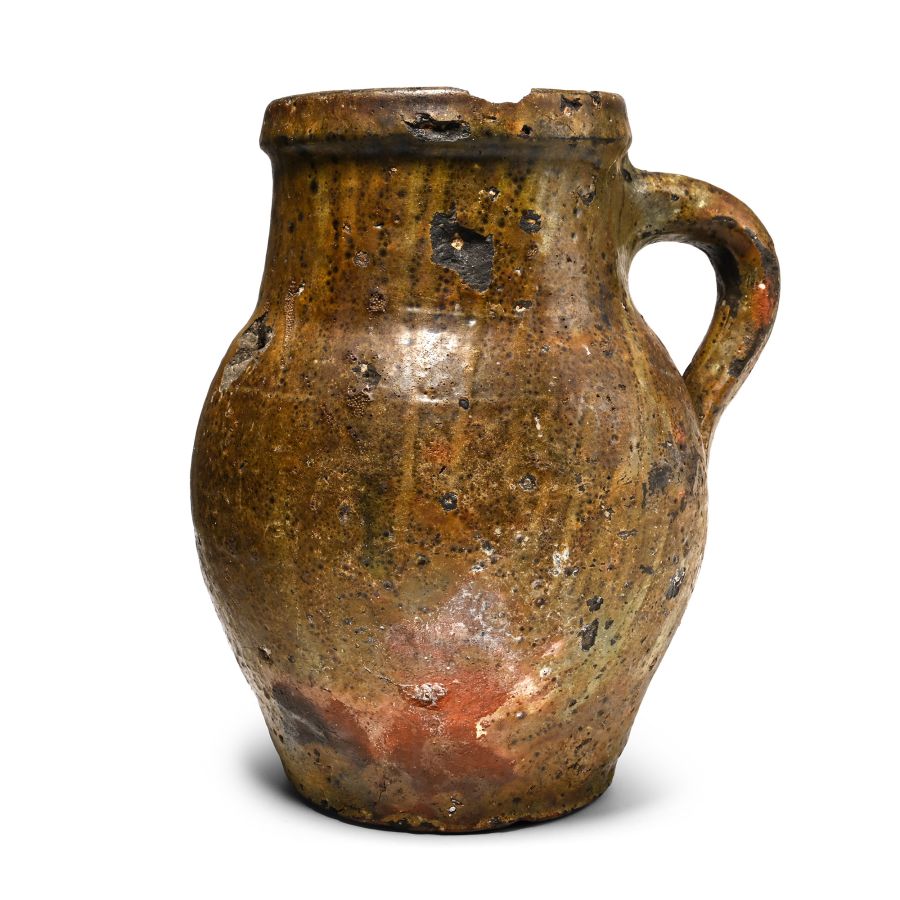
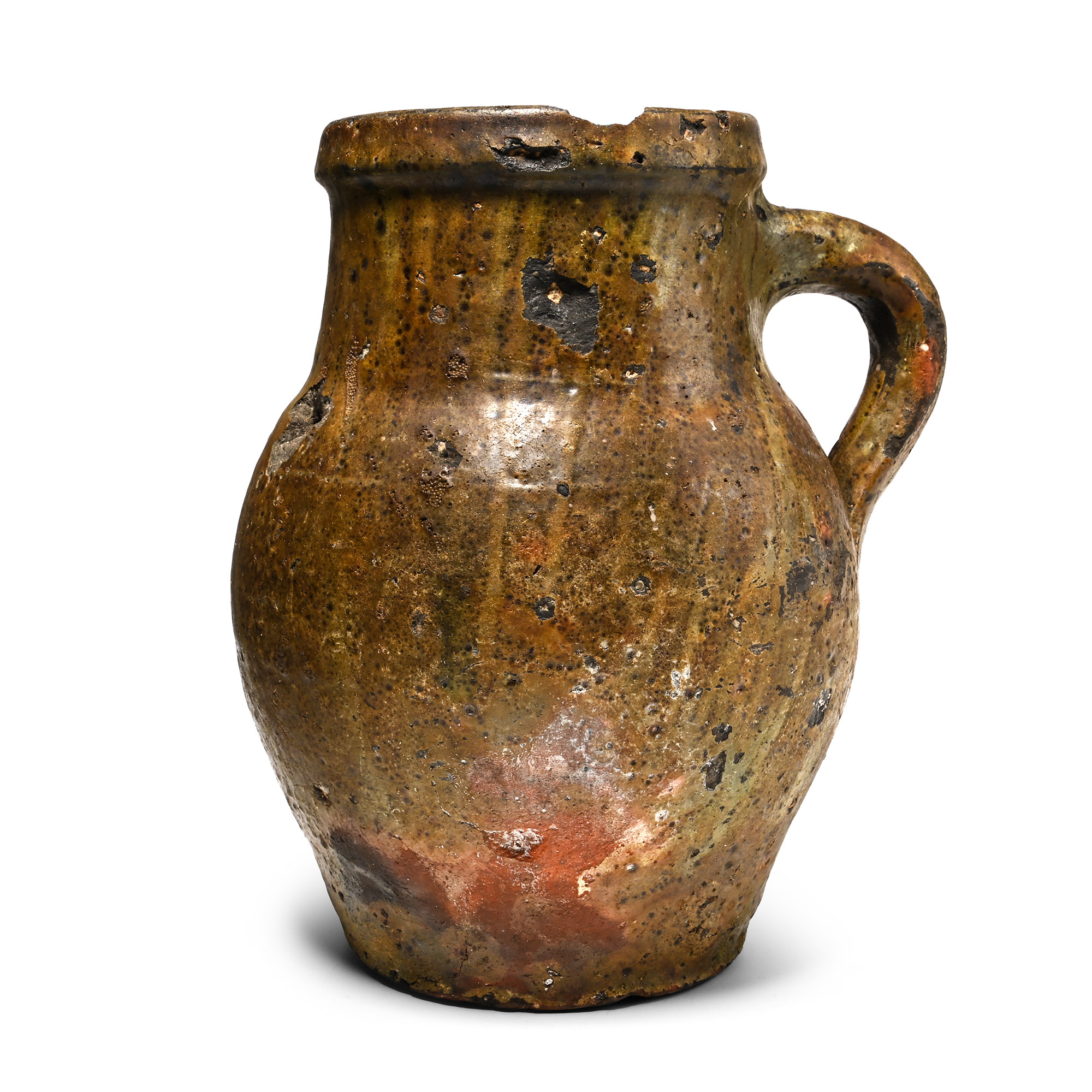
Tudor Period Green Glazed Pitcher Tudor Period Green Glazed Pitcher Tudor Period Green Glazed Pitcher
Use mousewheel to zoom in and out, click to enlarge
Details

LOT 2061

Tudor Period Green Glazed Pitcher

LATE 16TH CENTURY A.D.

6 7/8 in. (1.09 kg, 17.5 cm).

Comprising a bulbous body and thickened rim, single handle to the rear; collector's label 'Simon Bendall Collection C157' on the base. [No Reserve]

Provenance

From the private collection of Simon Bendall, collection reference number C157.
Property of a Kent, UK, lady collector.

Published

Exhibited at the Harwich Museum, Harwich, Essex, UK, 8th June 2026-14th September 2026; accompanied by a copy of a photograph of the artefacts on display.

CONDITION
VETTING:

TimeLine Auctions follows a vetting process to ensure the authenticity and legality of all items, reinforcing our commitment to integrity and responsible trading. Each antiquity, antique, and coin lot undergoes thorough examination by a vetting committee of at least ten external specialists, professional trade association members, scientists, and archaeologists: Our Vetting Process


AUCTIONS:

TimeLine is a leading auction house specialising in antiquities, ancient art, collectables, natural history, coins, medals, and books. Our auctions offer museums, collectors, historians, and enthusiasts the opportunity to acquire unique and historically significant pieces.

LOT 2061

Tudor Period Green Glazed Pitcher

Estimate £150 - 200€170 - 230 (for guidance only)$200 - 270 (for guidance only)

Opening Bid
£5 (EUR 6; USD 7) +BP*

Sign in to Bid

Please enter a e-mail
Please enter a password
Or Create Account here.
Please confirm to accept TC and Privacy policy

Bids: 0
RELATED LOTS
  • Renaissance Gold Ring with Toadstone
    Renaissance Gold Ring with Toadstone
    Western Europe, 16th century A.D.

    Estimate: £8,000 - 10,000 (+bp*)

    Opening Bid: £4,000

    Featuring a round-section large hoop expanding towards the shoulders, a large circular bezel with a Greek key motif encircling the outer rim and set with a brown 'toadstone'. 13.01 grams, 32.42 mm overall, 23.12 x 19.25 mm internal diameter (approximate size British V 1/2, USA 10 3/4, Europe 24.4, Japan 23)


    Acquired on the European art market. This lot has been checked against the Interpol Database of stolen works of art and is accompanied by search certificate number no.13398-257996.

    William Shakespeare’s As You Like It, circa 1599: 'Sweet are the uses of adversity, Which, like the toad, ugly and venomous, Wears yet a precious jewel in his head.' Toadstones are mythical stones that were thought to be found inside the head of a toad. They were believed to sweat, change colour or even heat up in the presence of poison. It was thought that a toadstone placed on bites from snakes, insects, spiders and shrews would extract poison from the wound. They were thought to bring good luck and ward off evil, whether in the present life or in the afterlife. The Book of Secrets from the 13th century recommends swallowing the stone to 'cleanse the bowels of filth and excrements'. The stone could then be retrieved and used again. They were often set as amulets and talismans, a practice that continued in Europe until the 18th century. Toadstones are actually the button-like fossilised teeth of Lepidotes, an extinct genus of fish common in the Jurassic and Cretaceous Periods, 200 to 100 million years ago.

    Lot Details

  • French Carnelian Gemstone with King Henry IV in Gold Ring
    French Carnelian Gemstone with King Henry IV in Gold Ring
    19th century A.D.

    Estimate: £1,200 - 1,700 (+bp*)

    Opening Bid: £600

    Finely engraved intaglio portraying a left-facing bust of Henry IV (1553–1610), King of France, in armour, with a decorated gorget and distinctive curled beard, set in a high-carat gold bezel and later fitted with a modern plain shank; supplied with a museum-quality impression. 5.24 grams, 21.83 mm overall, 19.35 mm internal diameter (approximate size British P, USA 7 1/2, Europe 16.23, Japan 15)


    Acquired on the European art market.

    The engraving is directly after a medallic portrait by Guillaume Dupré, Henry IV’s official medallist, which was widely circulated during the king’s reign and thereafter. The king’s profile is clearly drawn from a familiar medallic type, often used in the 17th and 18th centuries as a symbol of royal authority and dynastic legitimacy.

    Lot Details

  • Life-Size Stone Head of a Centaur
    Life-Size Stone Head of a Centaur
    18th century A.D.

    Estimate: £3,000 - 4,000 (+bp*)

    Opening Bid: £1,500

    Carved in the round bust depicting a faun or centaur with a youthful face; the hair falling in exuberant curls over the goat-like ears, the mouth parted in laughter, the eyes set beneath a stern brow; on an integral pedestal base with repair to reverse. 21.4 kg, 45 cm high


    Private collection, UK. This lot has been checked against the Interpol Database of stolen works of art and is accompanied by search certificate number no.13392-259012.

    Monumental marble centaurs were excavated together at Hadrian's Villa in December 1736. Pope Clement XIII secured them for the Capitoline Museum, where they remain to this day. Bronze reproductions of the famous centaurs were very much in vogue amongst the Grand Tour travellers of the 18th century.

    Lot Details