
Loading, please wait...
LOT 2020
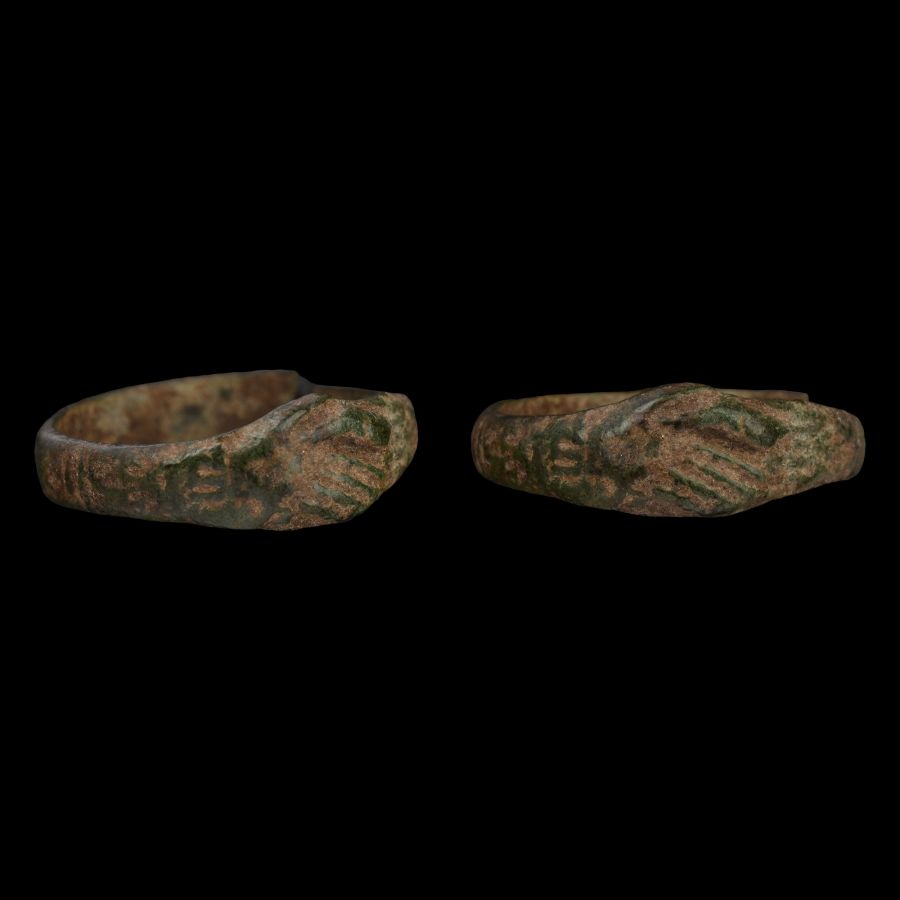
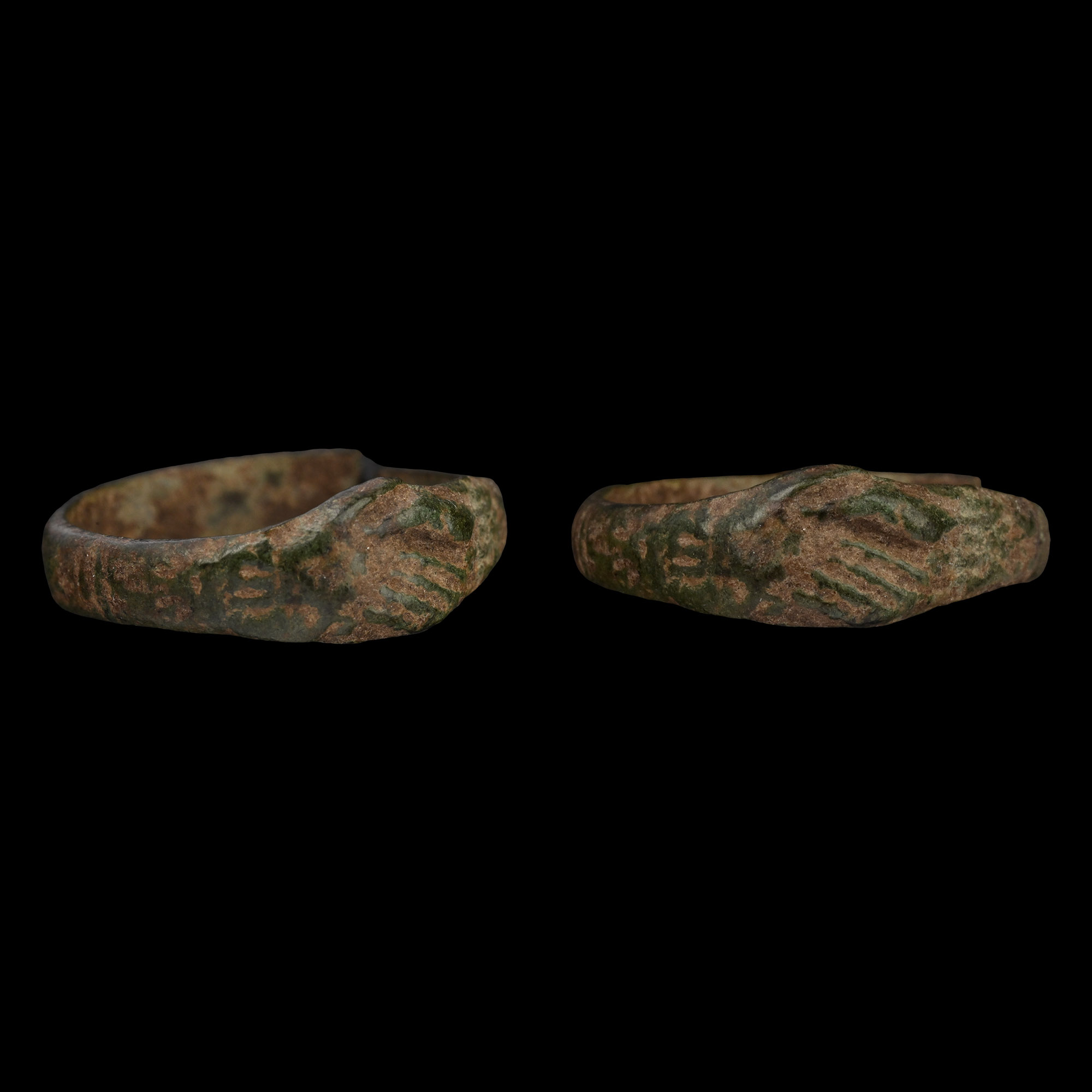
Tudor Period Bronze Ring with Clasped Hands
16TH-17TH CENTURY A.D.
7/8 in. (2.73 grams, 22.35 mm overall, 18.30 mm internal diameter (approximate size British O, USA 7, Europe 14.98, Japan 14)).
D-section hoop with bezel formed as two clasped hands, the mani-in-fede motif. [No Reserve]
ProvenanceAcquired on the London art market in the late 1980s-1990s.
From the family collection of an East London, UK, gentleman.
This lot is accompanied by an illustrated lot declaration signed by the Head of the Antiquities Department, Dr Raffaele D'Amato.
TimeLine Auctions follows a vetting process to ensure the authenticity and legality of all items, reinforcing our commitment to integrity and responsible trading. Each antiquity, antique, and coin lot undergoes thorough examination by a vetting committee of at least ten external specialists, professional trade association members, scientists, and archaeologists: Our Vetting Process
AUCTIONS:
TimeLine is a leading auction house specialising in antiquities, ancient art, collectables, natural history, coins, medals, and books. Our auctions offer museums, collectors, historians, and enthusiasts the opportunity to acquire unique and historically significant pieces.
-
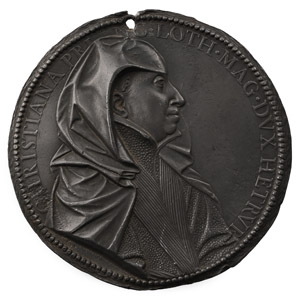
Christine of Lorraine Lead Commemorative Medallion
Circa 1900 A.D.Sold for (Inc. bp): £26
Discoid unifacial medallion pierced close to the beaded rim; profile bust with legend. 119 grams, 96 mm
Acquired on the UK art market in the early 2000s. This lot is accompanied by an illustrated lot declaration signed by the Head of the Antiquities Department, Dr Raffaele D'Amato. -
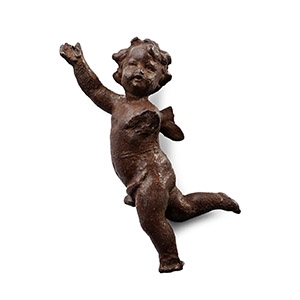
Georgian Bronze Cherub Statuette
18th century A.D.Sold for (Inc. bp): £13
Modelled in a classical dynamic pose with his right arm and leg raised, head turned to the left, and small wings on the back. 69.5 grams, 70 mm
Acquired on the UK art market in the 1970s-1990s. Property of a Nottinghamshire, UK, gentleman. This lot is accompanied by an illustrated lot declaration signed by the Head of the Antiquities Department, Dr Raffaele D'Amato. -
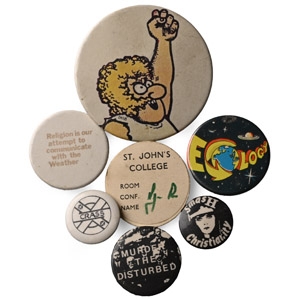
Miscellaneous Vintage Pin Badge Collection
Circa 1980s A.D.Sold for (Inc. bp): £7
Including 'Smash Christianity', 'Murder the Disturbed' and other types. 29 grams total, 25-64 mm
From the private collection of a S.W. London gentleman, acquired in the 1970s. This lot is accompanied by an illustrated lot declaration signed by the Head of the Antiquities Department, Dr Raffaele D'Amato.
