
Loading, please wait...
LOT 1989
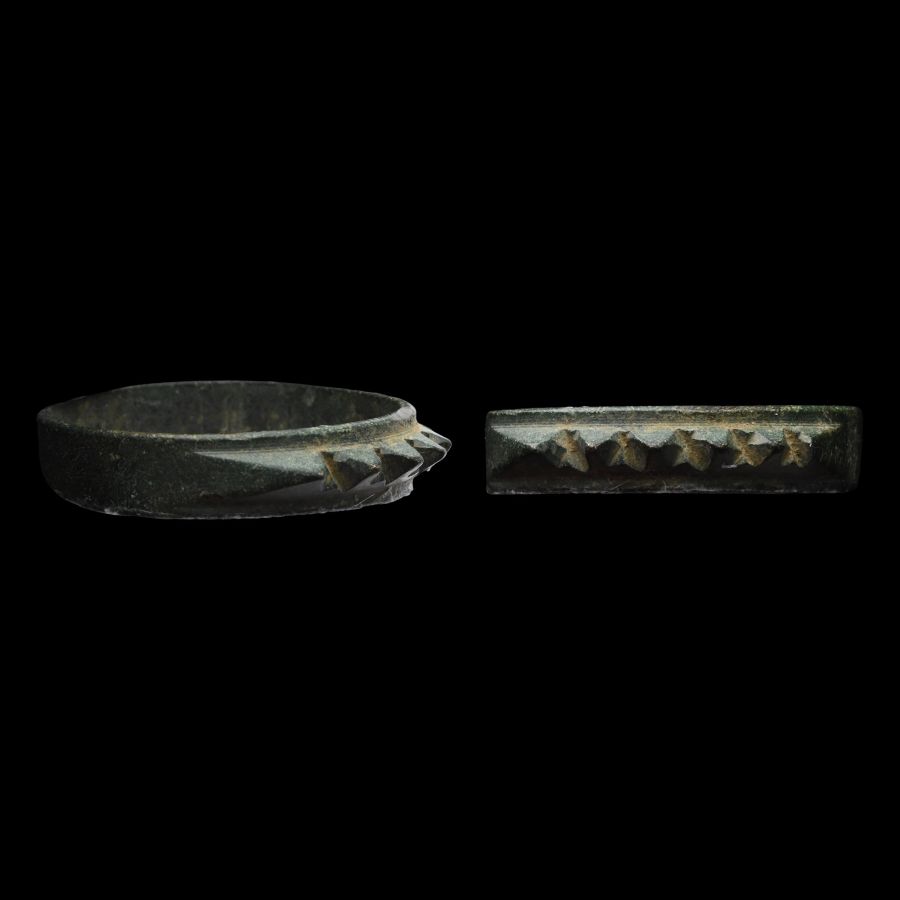
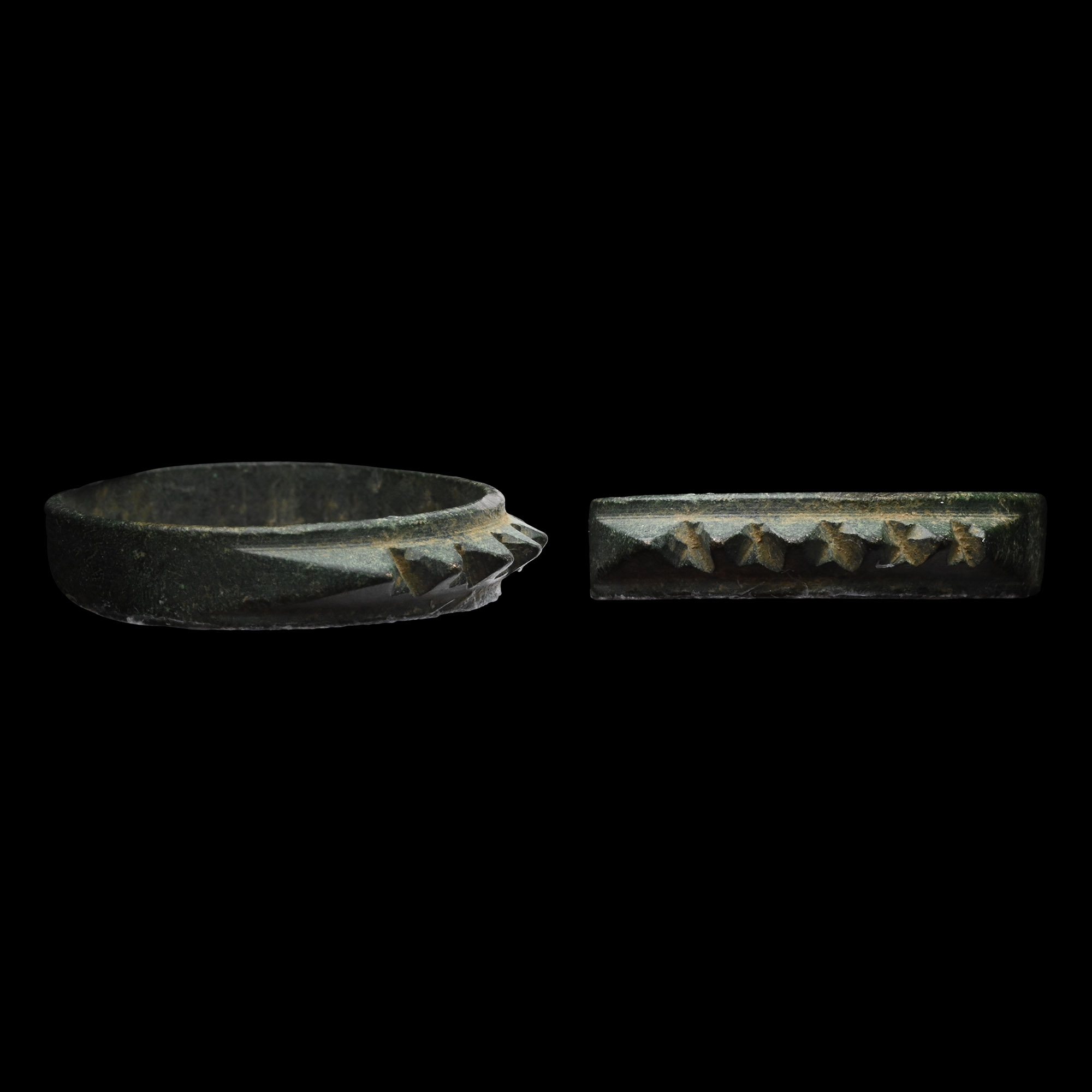
Tudor Period Bronze 'Knuckle Duster' Ring
ENGLAND, 16TH-17TH CENTURY A.D.
1 in. (2.38 grams, 24.22 mm overall, 18.41 x 20.53 mm internal diameter (approximate size British P, USA 7 1/2, Europe 16.23, Japan 15)).
Flat in section with six raised points on the bezel. [No Reserve]
ProvenanceFound Colmworth, Bedfordshire, UK.
Recorded with UKDFD no.51227.
TimeLine Auctions follows a vetting process to ensure the authenticity and legality of all items, reinforcing our commitment to integrity and responsible trading. Each antiquity, antique, and coin lot undergoes thorough examination by a vetting committee of at least ten external specialists, professional trade association members, scientists, and archaeologists: Our Vetting Process
AUCTIONS:
TimeLine is a leading auction house specialising in antiquities, ancient art, collectables, natural history, coins, medals, and books. Our auctions offer museums, collectors, historians, and enthusiasts the opportunity to acquire unique and historically significant pieces.
-
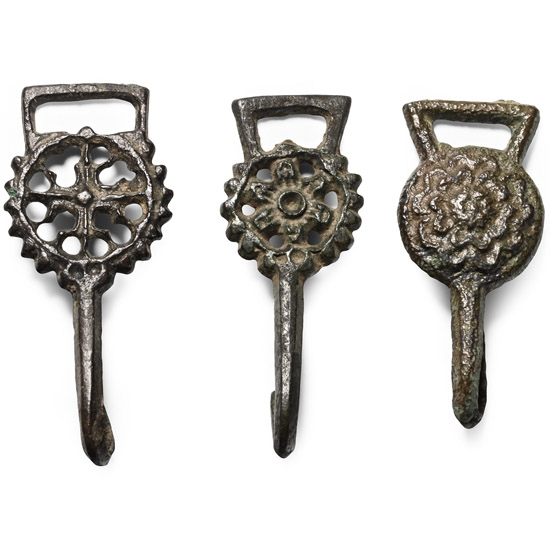
Tudor Period Bronze Hook Fastener Group
Circa 16th century A.D.Sold for (Inc. bp): £26
Comprising: an openwork fastener with a cross motif; a fastener with a Tudor rose; an openwork fastener with a six-petalled flower. 7.52 grams total, 34-39 mm
From the private collection of Graham Slater (1927-2024), Cambridge, UK; formed 1980s-1990s. -

Painting of a Saint by a Follower of Giovanni Bellini
Italy, 1430-1516 A.D.Sold for (Inc. bp): £351
Depicting a bust of a bearded mature man, probably a saint, wearing a yellow cloak and a lighter undergarment, looking to the side with a pensive expression, with a small tuft of grey hair on top of his head; oil on copper panel and set in a moulded frame, an old label on the reverse 'Italian School: 'Study of a Man with a Grey Beard' oil on copper, 7 x 5ins.' 1.26 kg total, 32 x 27.5 cm
Private collection, London, UK. -
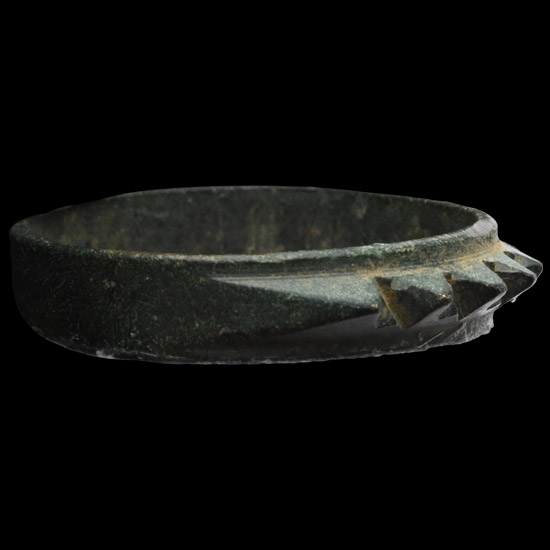
Tudor Period Bronze 'Knuckle Duster' Ring
England, 16th-17th century A.D.Sold for (Inc. bp): £143
Flat in section with six raised points on the bezel. 2.38 grams, 24.22 mm overall, 18.41 x 20.53 mm internal diameter (approximate size British P, USA 7 1/2, Europe 16.23, Japan 15)
Found Colmworth, Bedfordshire, UK. Recorded with UKDFD no.51227.
