
Loading, please wait...
LOT 2022
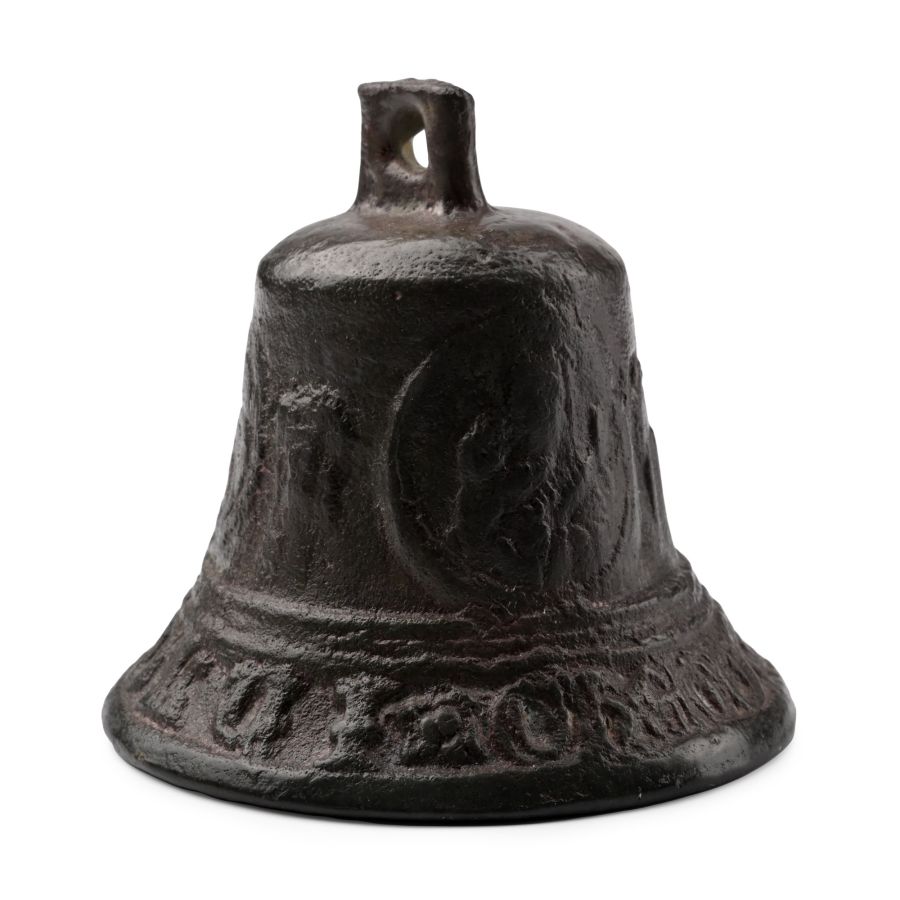
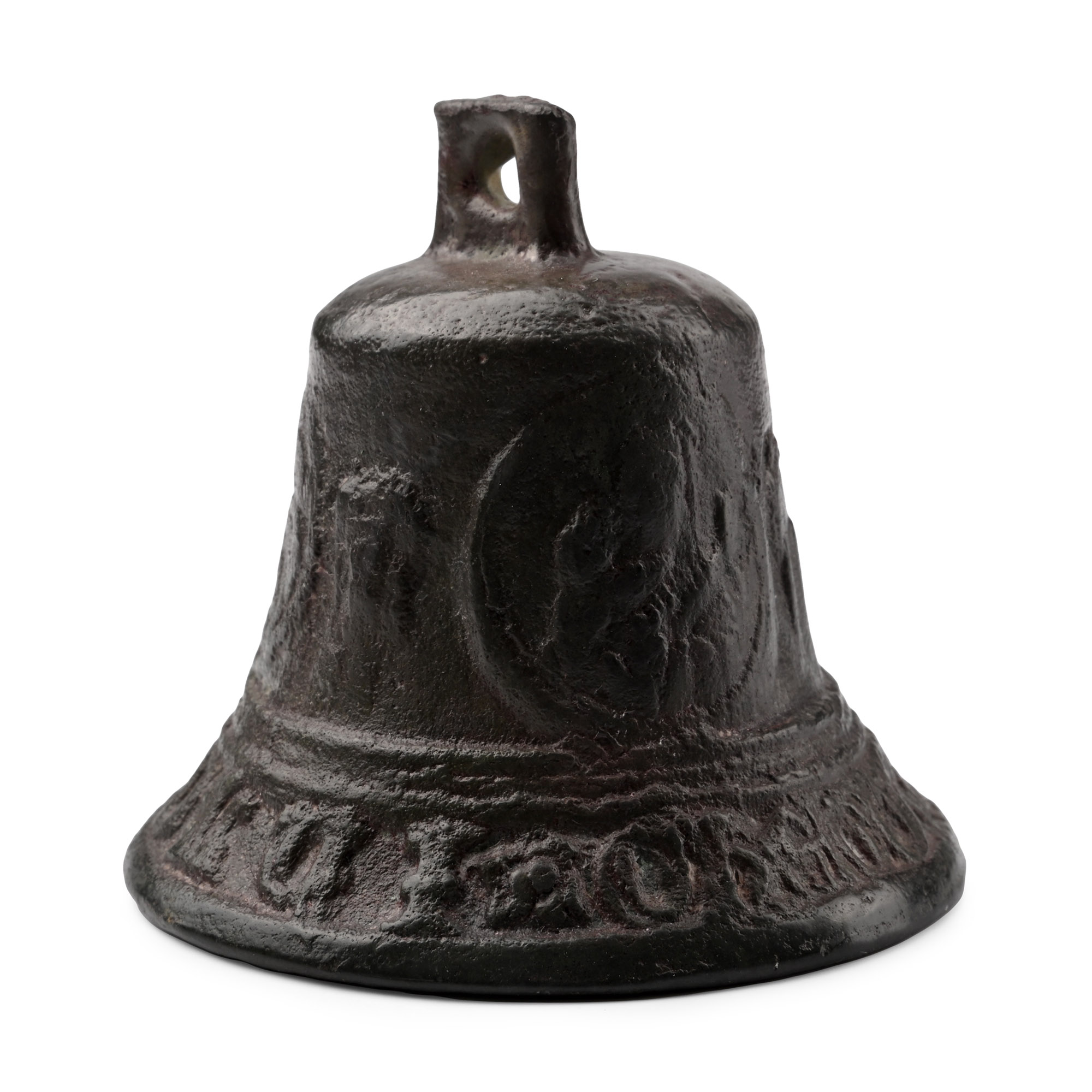
Tudor Period Bronze Bell
DATED 1556 A.D.
2 3/8 in. (184 grams, 62 mm).
With pierced rectangular suspension lug; three round figural panels to the sidewall each with a nimbate figure; interstitial tongue-shaped vertical panels; Lombardic script legend to rim with 'MDLVI' year; ferrous remains to inside. [No Reserve]
ProvenanceFound Hannington, Swindon, UK.
Accompanied by a copy of the British Museum's Portable Antiquities Scheme report no.WILT-433FA9.
This lot is accompanied by an illustrated lot declaration signed by the Head of the Antiquities Department, Dr Raffaele D'Amato.
TimeLine Auctions follows a vetting process to ensure the authenticity and legality of all items, reinforcing our commitment to integrity and responsible trading. Each antiquity, antique, and coin lot undergoes thorough examination by a vetting committee of at least ten external specialists, professional trade association members, scientists, and archaeologists: Our Vetting Process
AUCTIONS:
TimeLine is a leading auction house specialising in antiquities, ancient art, collectables, natural history, coins, medals, and books. Our auctions offer museums, collectors, historians, and enthusiasts the opportunity to acquire unique and historically significant pieces.
-
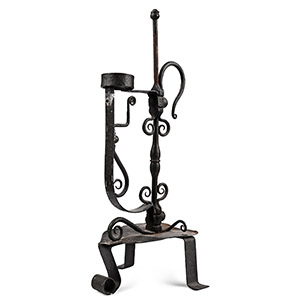
Iron Candle Holder
France, 18th century A.D.Estimate: £500 - 700 (+bp*)
Opening Bid: £250
The central baluster knopped column with scrolling ornament and looped carrying handle above a trefoil-shaped platform and rivetted tripod feet. 1.21 kg, 44 cm
Ex Nic McElhatton, former chairman of Christie's South Kensington. Property of a Berkshire, UK, collector. Accompanied by a copy of McElhatton's cataloguing page. This lot is accompanied by an illustrated lot declaration signed by the Head of the Antiquities Department, Dr Raffaele D'Amato. -
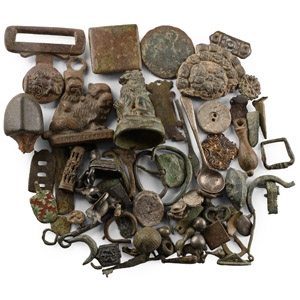
Post Medieval Bronze and Other Artefact Group
17th-20th century A.D.Sold for (Inc. bp): £52
Including lion holding a shield statuette, spoon, buttons, large military belt buckle, horse harness pendant, lead button, scotch terriers pendant and others. 683 grams total, 10-78 mm
Found East Anglia, UK. This lot is accompanied by an illustrated lot declaration signed by the Head of the Antiquities Department, Dr Raffaele D'Amato.
N.B. This lot is for UK buyers only. -
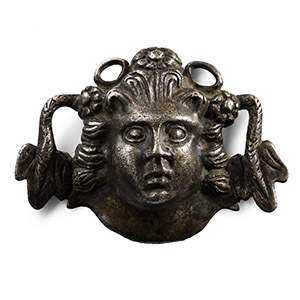
Post Medieval Silver Bacchus Fitting with Swans
19th century A.D.Sold for (Inc. bp): £85
A large domed openwork mount showing the head of Bacchus in high-relief, his hair arranged in regular tufts and adorned with flowers, two stylised swans flanking the hair. 58 grams, 81 mm
Acquired on the UK art market in the 1970s-1990s. Property of a Nottinghamshire, UK, gentleman. This lot is accompanied by an illustrated lot declaration signed by the Head of the Antiquities Department, Dr Raffaele D'Amato.
