
Loading, please wait...
LOT 1907
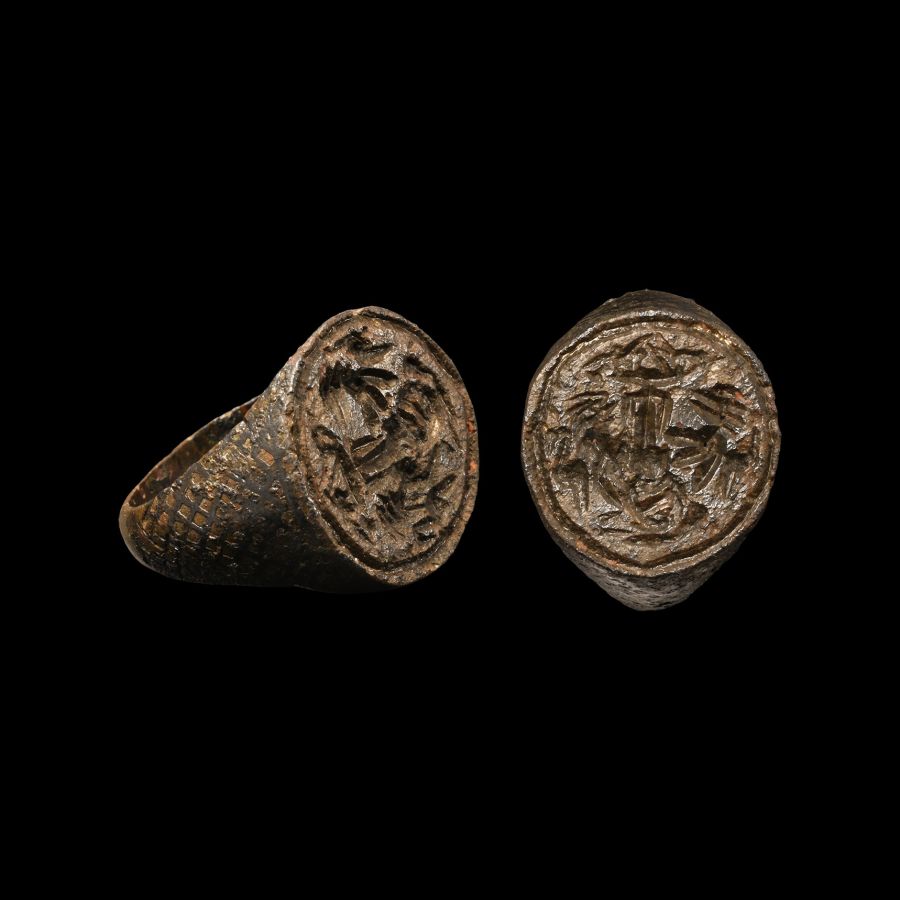
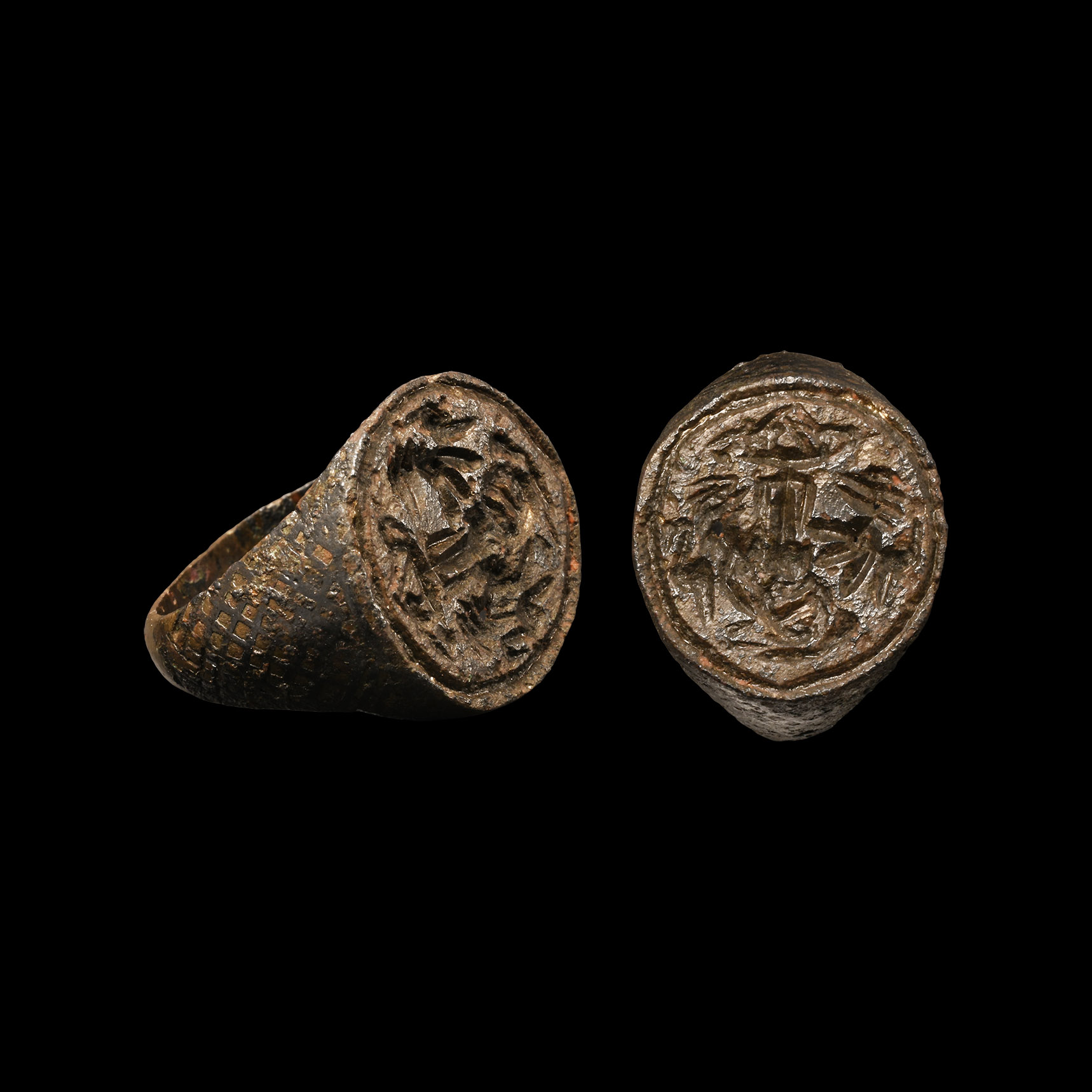
Tudor Period Bronze Armorial Signet Ring
16TH-17TH CENTURY A.D.
1 in. (6.49 grams, 23.87 mm overall, 20.77 mm internal diameter (approximate size British T, USA 9 1/2, Europe 21.26, Japan 20)).
Hoop expanding to decoratively hatched shoulders, sub-circular bezel displaying enigmatic armorial design. [No Reserve]
ProvenancePrivate collection formed since the 1940s.
UK art market.
Property of an Essex gentleman.
TimeLine Auctions follows a vetting process to ensure the authenticity and legality of all items, reinforcing our commitment to integrity and responsible trading. Each antiquity, antique, and coin lot undergoes thorough examination by a vetting committee of at least ten external specialists, professional trade association members, scientists, and archaeologists: Our Vetting Process
AUCTIONS:
TimeLine is a leading auction house specialising in antiquities, ancient art, collectables, natural history, coins, medals, and books. Our auctions offer museums, collectors, historians, and enthusiasts the opportunity to acquire unique and historically significant pieces.
-
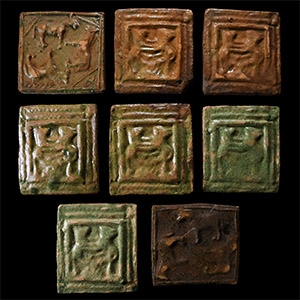
Post Medieval Glazed Ceramic Tile Group
17th-18th century A.D.Sold for (Inc. bp): £117
Comprising two designs in relief including three horses in an enclosure and two animals, likely cats, fighting; coloured glazes. 1.3 kg total, 10 x 9 - 10.5 x 9.5 cm
Acquired 1990s-early 2000s. East Anglian private collection.
The tile production increases in the second half of the sixteenth century and during the following centuries. The fragments discovered from various localities (pot-tiles, rectangular, triangular and trapezoidal panels, open-work crest tiles) were all produced in regional workshops, from the end of the 15th century or at the beginning of the 16th century. They all had diverse decorative motifs, mainly animals and geometrical or vegetal combinations, almost all of them singular finds for this study area. -
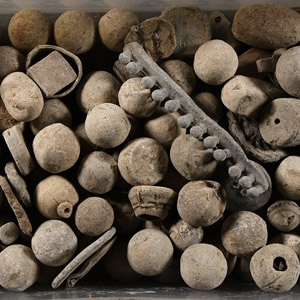
Post Medieval Lead Musket Ball Group
Circa 16th-19th century A.D.Sold for (Inc. bp): £33
Including balls of various gauges, some with casting flashes; together with lead seals and other miscellaneous items. 3.45 kg total, 1-7 cm
Acquired 1990s-early 2000s. East Anglian private collection. -
.jpg)
Framed Watercolour Painting
India, 20th century A.D.Estimate: £80 - 100 (+bp*)
Opening Bid: £40
Showing two figures standing in a courtyard, the woman with her head covered, pointing towards the hills beyond, gold-coloured embellishments to their clothes, border around the whole, Indian workmanship; set in a glazed wooden frame. 370 grams, 25.5 x 19.5 cm
Very fine condition.
Acquired on the UK art market, 1980s-1990s. The Woodbridge collection of Indo-Persian art.
