
Loading, please wait...
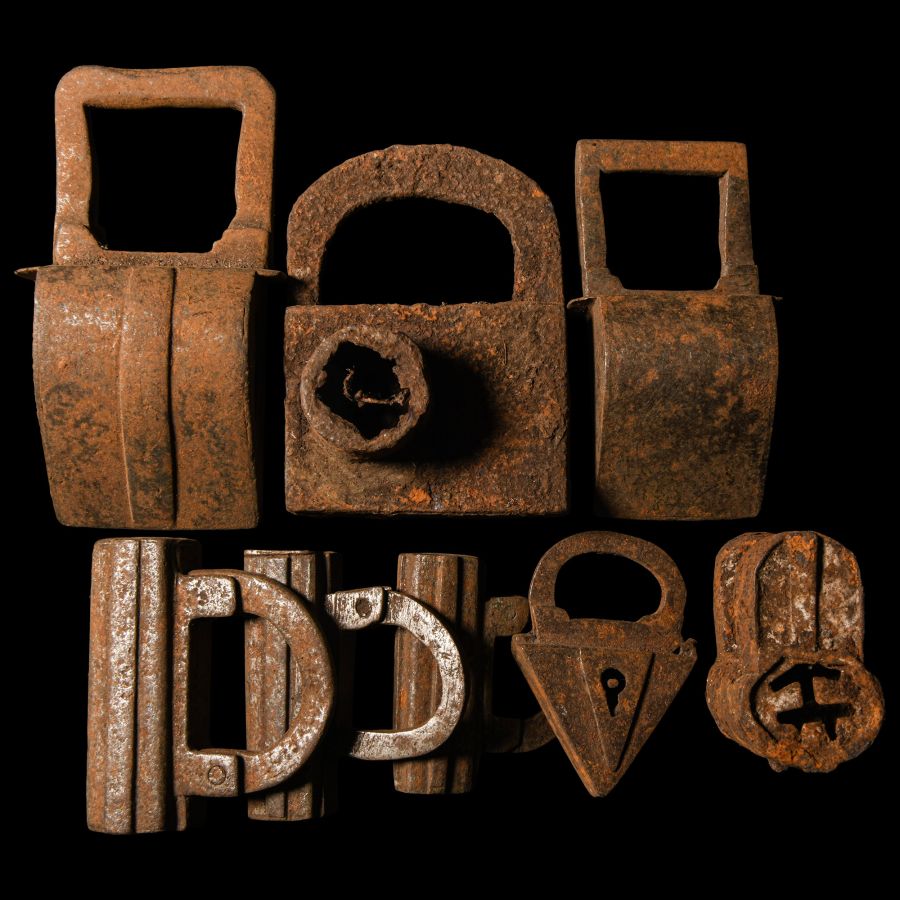


LOT 1611
Tudor Period and Later Iron Padlock Collection
CIRCA 16TH-17TH CENTURY A.D.
1 3/4 - 3 1/8 in. (390 grams total, 45-80 mm).
Comprising a variety of types of padlocks, most retaining their arm and ceased in the locked position. [8]
ProvenanceAcquired 1990s-early 2000s.
East Anglian private collection.
TimeLine Auctions follows a vetting process to ensure the authenticity and legality of all items, reinforcing our commitment to integrity and responsible trading. Each antiquity, antique, and coin lot undergoes thorough examination by a vetting committee of at least ten external specialists, professional trade association members, scientists, and archaeologists: Our Vetting Process
AUCTIONS:
TimeLine is a leading auction house specialising in antiquities, ancient art, collectables, natural history, coins, medals, and books. Our auctions offer museums, collectors, historians, and enthusiasts the opportunity to acquire unique and historically significant pieces.
-

Antique Gold Brooch with Shell Cameo
Circa 1900 A.D.Estimate: £400 - 600 (+bp*)
Opening Bid: £75
With gold frame and hinged pin; cameo frieze in high relief of two young female busts in profile wearing romantic classical costume, one with flowers and foliage in the hair and the other with a veil and diadem of poppies, perching dove with wings spread below; marked to the reverse in florid script 'No.5' and 'nm / uo 3-17 l. pux'. 19.44 grams, 51 mm high
Property of an Essex, UK, gentleman. -
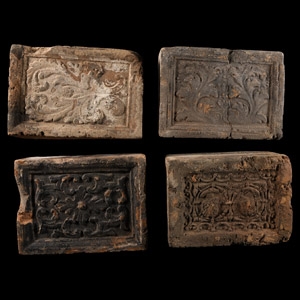
Elizabethan Period Ceramic Fire Brick Group
Circa 16th century A.D.Estimate: £120 - 170 (+bp*)
Opening Bid: £60
Comprising four bricks displaying raised designs: three scrolled vegetal compositions and a brick with facing male and female bust in roundels, swags around. 5.9 kg total, 13.5-14.5 cm
Acquired 1990s-early 2000s. East Anglian private collection.
These glazed stove or floor tiles are similar to the ones of the great hall and the Tudor kitchens at Hampton Court Palace, made of ceramic, with a glaze to make it hard-wearing and washable. Not just the furnishings, but the palaces themselves were multi-coloured, with brick walls painted red, and exposed timbers in yellow, red, green and white. -

Post Medieval Ornate Ceramic Statue Base
17th-18th century A.D.Sold for (Inc. bp): £117
Hollow formed with rectangular body, the front modelled with volute scrolls enclosing a rounded face, possibly depicting a putto. 1.6 kg, 13 cm high
Acquired 1950s-1960s. Private UK collection of Joseph Duncan Steel, Southampton, UK. Property of an East Sussex, UK, gentleman.
