
Loading, please wait...
LOT 0326
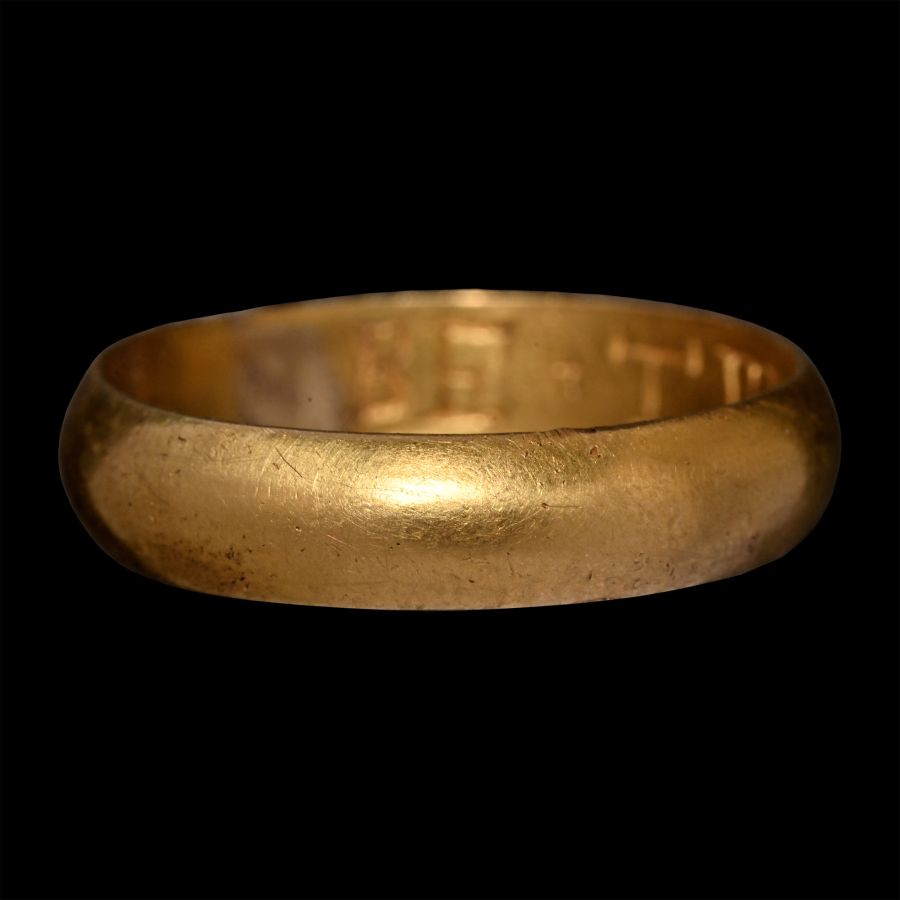
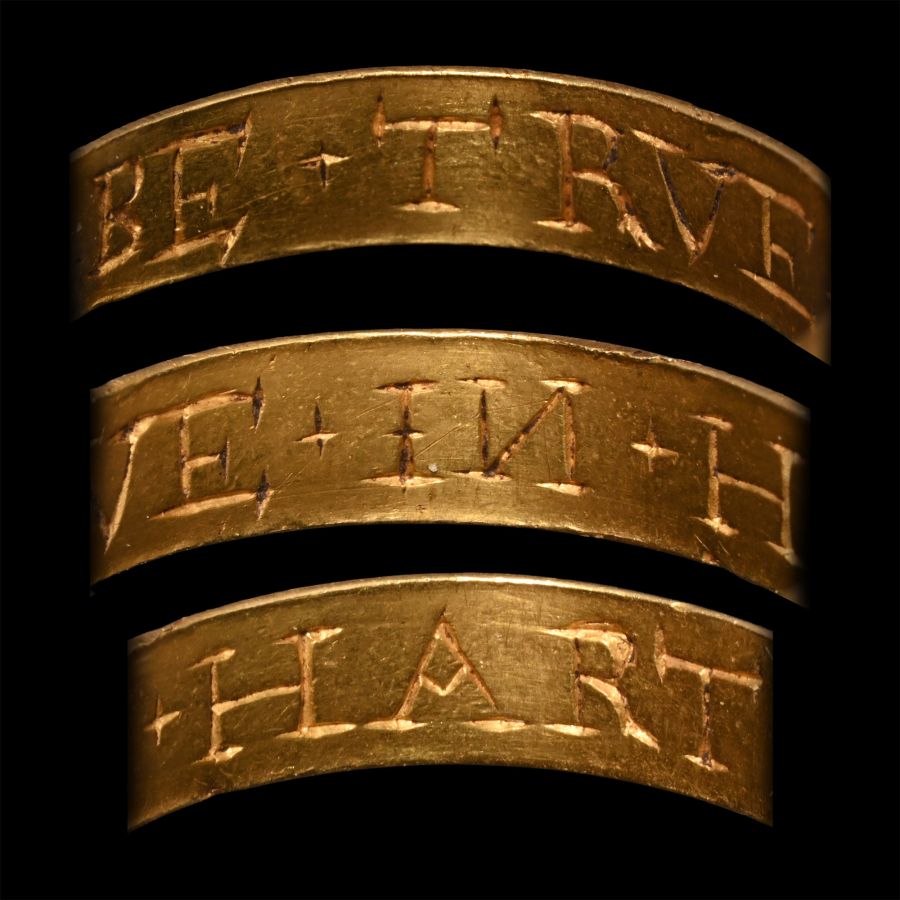
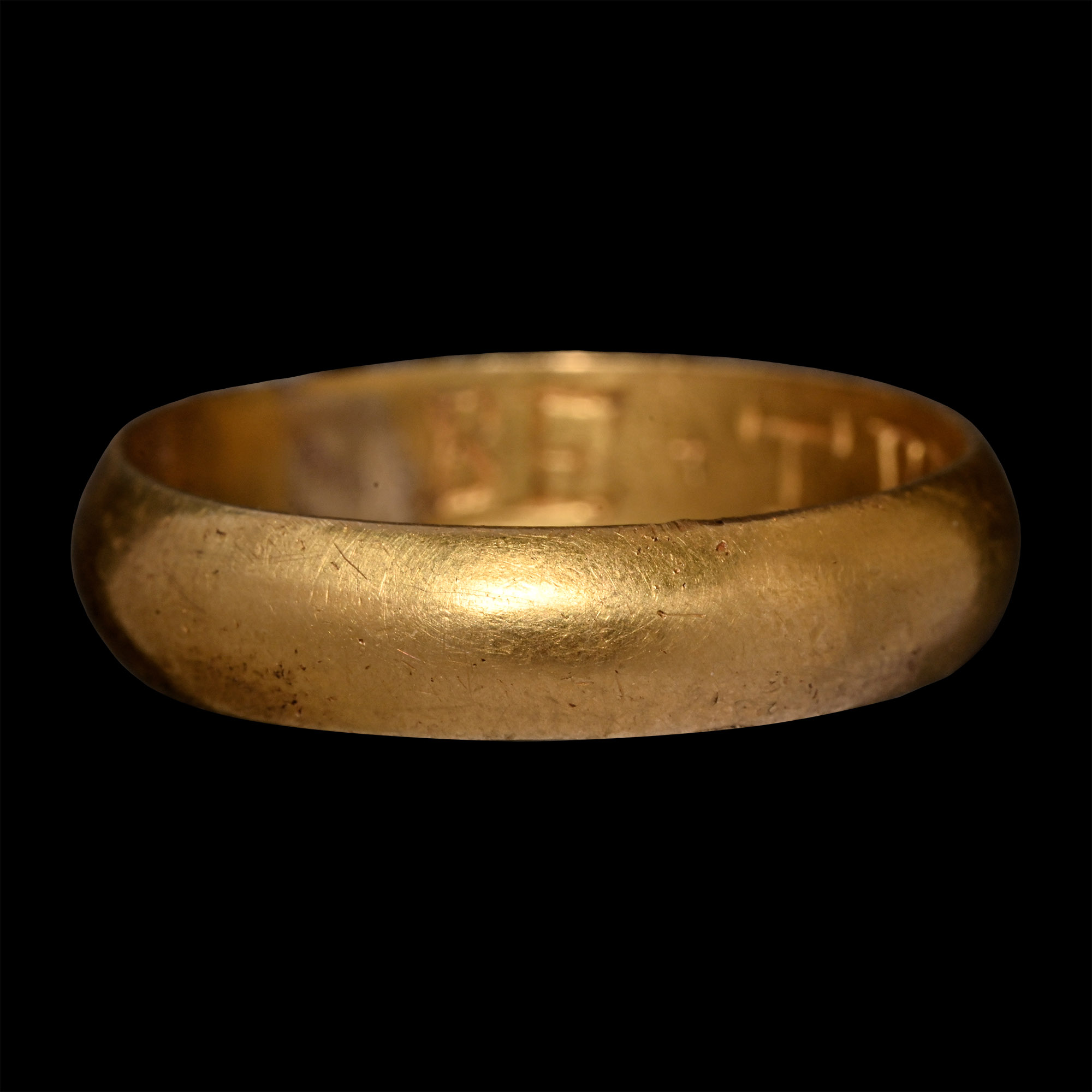
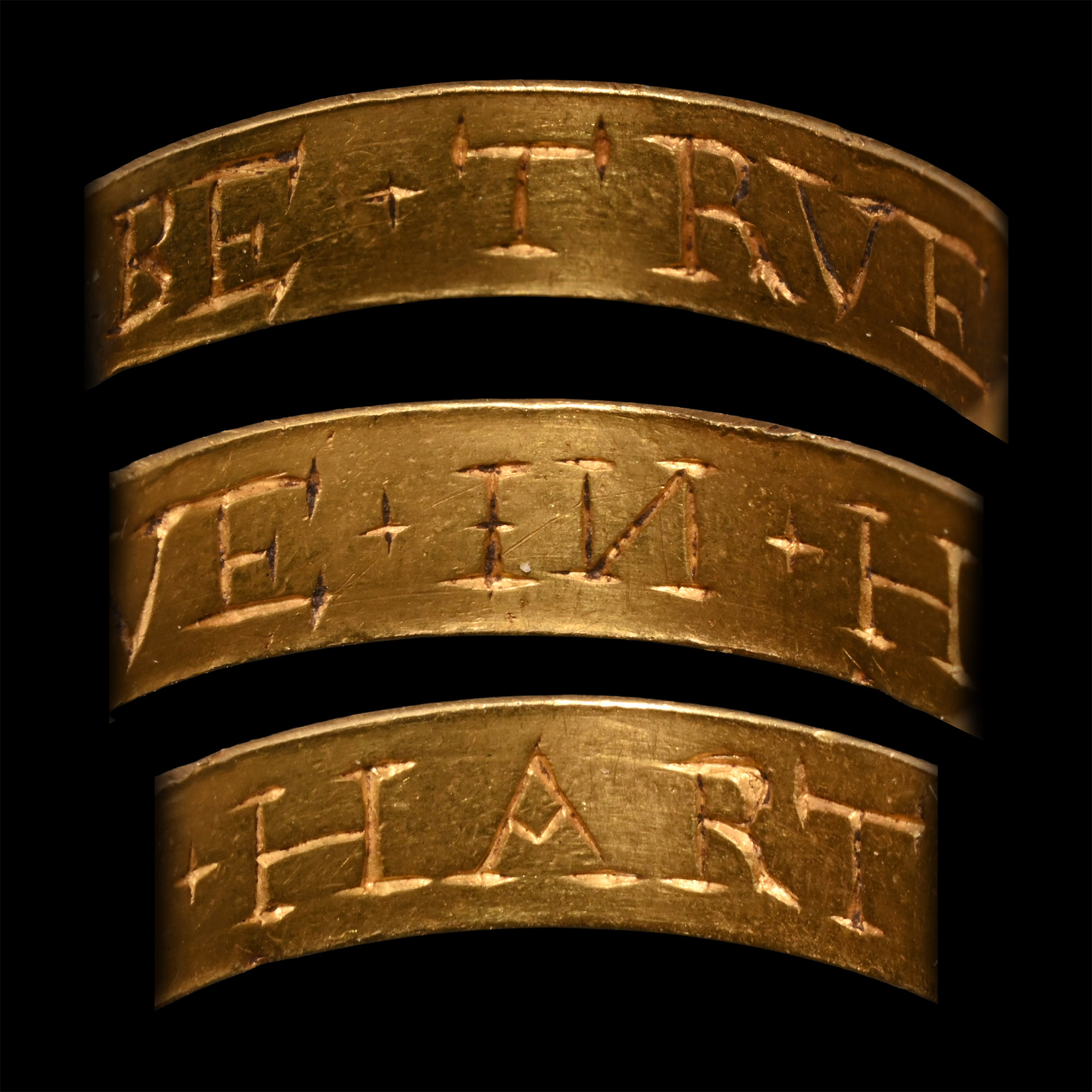
Tudor Gold 'BE . TRVE . IN . HART' Posy Ring
CIRCA 16TH CENTURY A.D.
7/8 in. (4.25 grams, 20.66 mm overall, 18.06 mm internal diameter (approximate size British P, USA 7 1/2, Europe 16.23, Japan 15)).
Featuring a smooth exterior and D-shaped in cross-section, a flat internal face with an inscription in upper case Roman letters, reading 'BE . TRVE . IN . HART' for 'Be true in heart' with the stops formed as small crosses and the N reversed.
ProvenanceFound whilst searching with a metal detector near Edgmond, Telford & Wrekin, UK, by George Elymn, on 27 October 2024.
Recorded with the British Museum's Portable Antiquities Scheme (PAS) with reference no.HESH-B237EA; handed in as Treasure under the Treasure Act, and subsequently disclaimed and returned to the finder.
Accompanied by a copy of the Report for H M Coroner on finding of Potential Treasure, with reference no.2025T1645.
Accompanied by a copy of a letter from the British Museum explaining that the Crown's interest in this find has been disclaimed.
Cf. The Portable Antiquities Scheme, record nos.YORYM-438136, WILT-0BD081, GLO-44FA36, YORYM-407F5C and NMS-070AE2, for variations of the motto; see also the British Museum, London, museum nos.AF.1210 and 1961,1202.96.
FootnotesThe 'posy' name is derived from the 'poesy' (motto) engraved around the hoop. In medieval examples, the posy is usually found around the hoop exterior, although on later examples, inscriptions were more usually engraved on the interior. Rings with amatory inscriptions can be found from the 14th century AD onwards, when they served as love gifts, betrothal and wedding rings. Posy rings were also given to friends or used to mark significant occasions. Posies were composed by the giver, kept in stock by goldsmiths, or could be selected from published compendiums or commonplace books such as 'The Mysteries of Love or the Arts of Wooing' (1658 AD), or 'Love's Garland or Posies for Rings, Hand-kerchers and Gloves and such pretty tokens that Lovers send their Loves' (1674 AD). Rings were one genre of personal item amongst many to be adorned with posies at this time.
CONDITIONTimeLine Auctions follows a vetting process to ensure the authenticity and legality of all items, reinforcing our commitment to integrity and responsible trading. Each antiquity, antique, and coin lot undergoes thorough examination by a vetting committee of at least ten external specialists, professional trade association members, scientists, and archaeologists: Our Vetting Process
AUCTIONS:
TimeLine is a leading auction house specialising in antiquities, ancient art, collectables, natural history, coins, medals, and books. Our auctions offer museums, collectors, historians, and enthusiasts the opportunity to acquire unique and historically significant pieces.
-
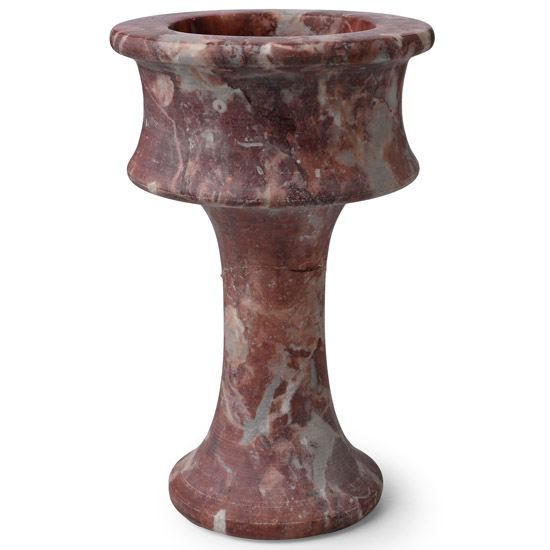
Bactrian Style Pink Stone Chalice
20th century A.D.Sold for (Inc. bp): £39
Formed as a chalice with a flared foot and a sturdy shank, bowl with a carinated profile and an everted rim. 3.3 kg, 24 cm high
From Maa Oriental Gallery, Bath, UK; and a West Country collection, 1990-2000. -
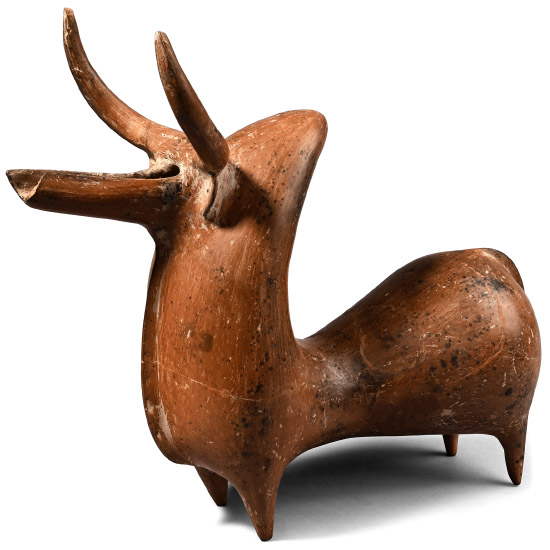
Amlash Style Terracotta Bull Rhyton
20th century A.D.Sold for (Inc. bp): £3,900
Formed as a standing bull with exaggerated neckhump, four stub legs and long curving horns, U-shaped muzzle forming the spout. 1.37 kg, 36.5 cm wide
Private collection of Dr Alvin M. Soffe (c.1922–1995) and Elizabeth Ann Soffe, Bryn Mawr, Pennsylvania, acquired circa 1960s–1970s; thence by descent. Accompanied by a copy of a letter no.S00256670 from the Art Loss Register confirming that this item was not found on their database. -
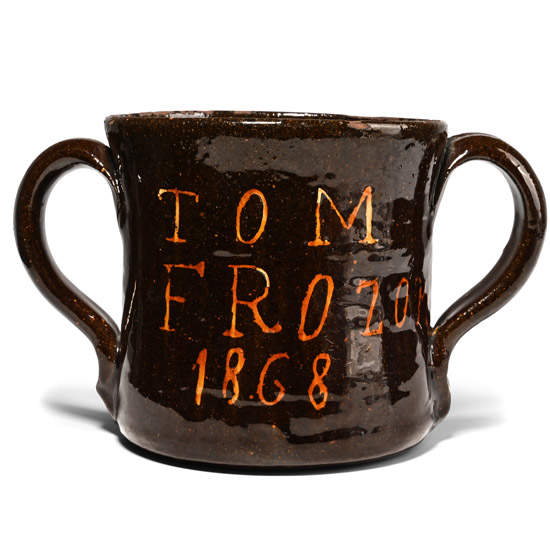
Slipware Frog 'Loving Cup' Named Tom Frozon
Halifax, England, 1868 A.D.Sold for (Inc. bp): £234
The two-handled pottery cup named and dated in slip 'Tom Frozon 1868' on the side; a frog located inside the base to surprise the unwary drinker; an exceptional example made at Howcans Pottery, Halifax, Yorkshire. 938 grams, 21.5 cm wide
From the Martin Harrison collection, North Wales. Ex John Howard, English pottery specialist. Property of a Kent, UK, lady collector. Accompanied by a copy of the John Howard catalogue listing.
