
Loading, please wait...
LOT 1413
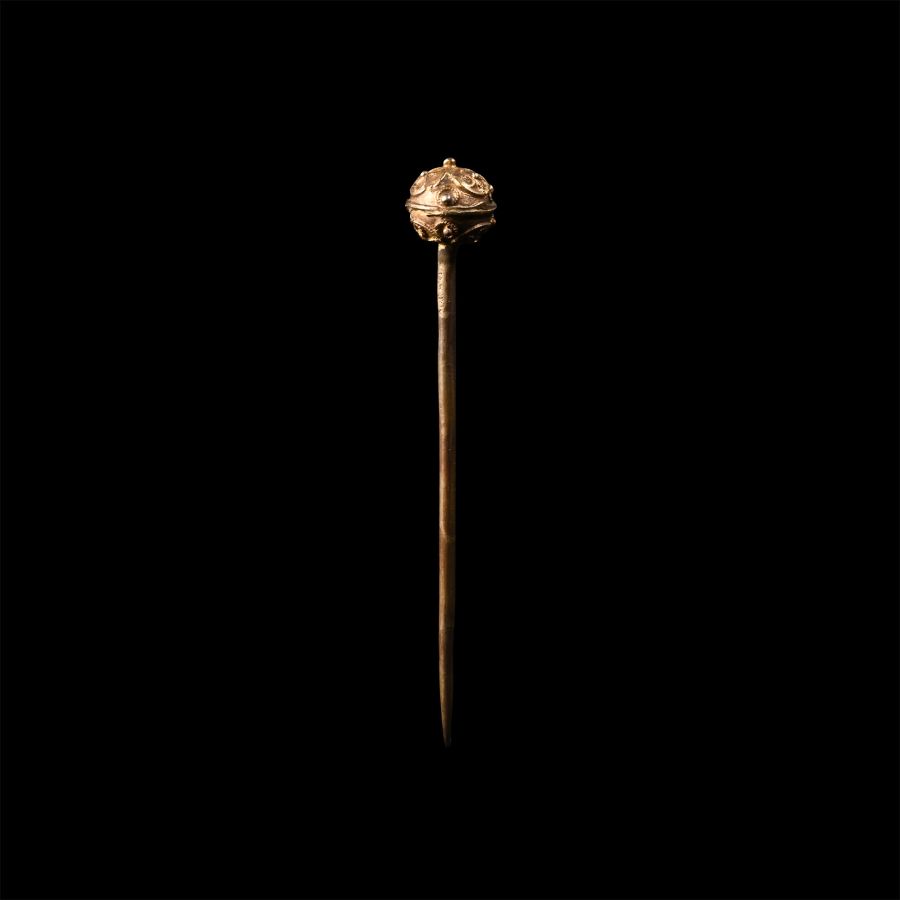
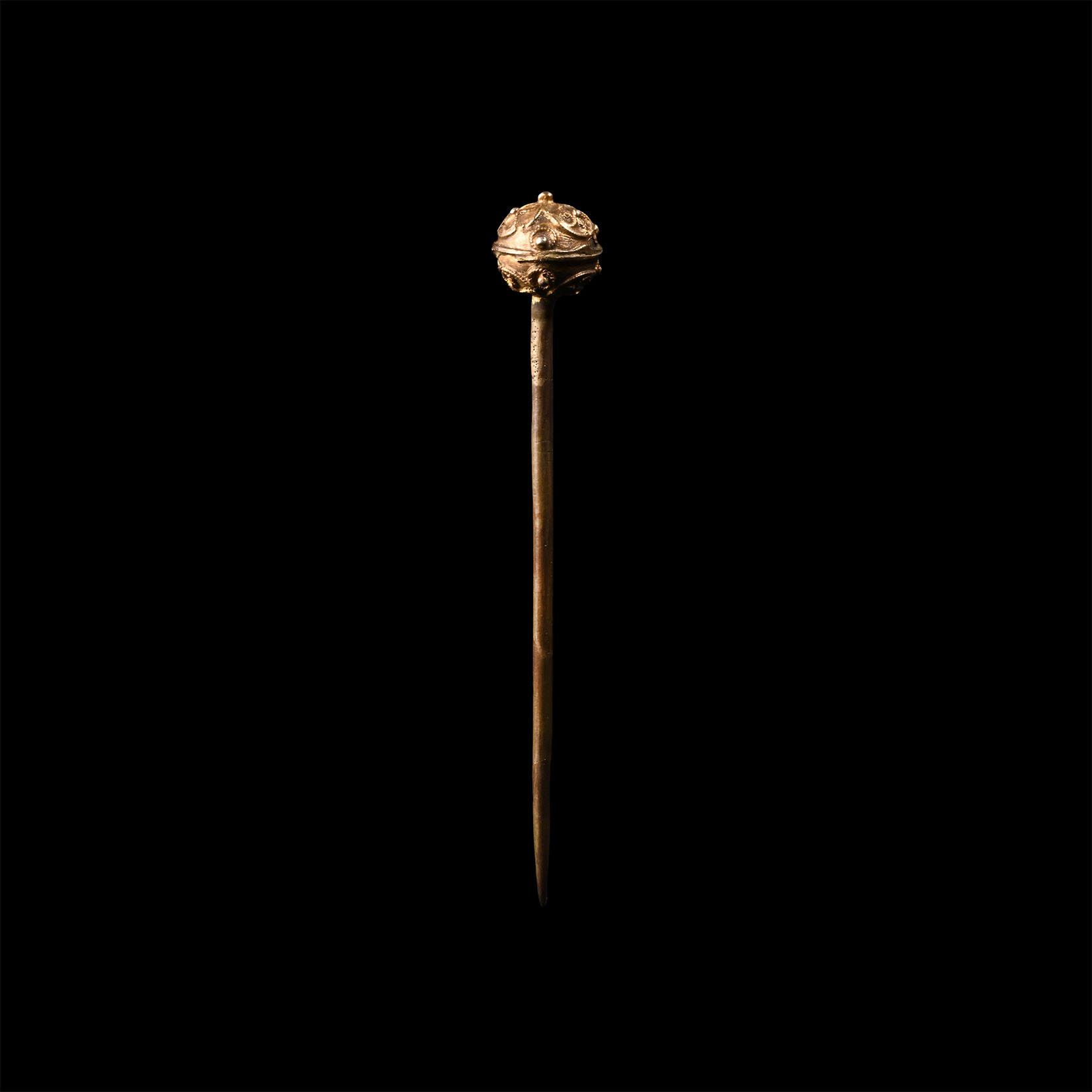
Tudor Gilt Silver Dress Pin
CIRCA 16TH CENTURY A.D.
2 1.2 in. (2.8 grams, 62 mm).
A gilt-silver dress pin composed of a round-section body and roughly spherical head, decorated with granules and filigree trefoils and roundels above and below a medial band. [No Reserve]
ProvenanceAcquired on the UK antiques market between 1974-1985.
Albert Ward collection, Essex, UK.
TimeLine Auctions follows a vetting process to ensure the authenticity and legality of all items, reinforcing our commitment to integrity and responsible trading. Each antiquity, antique, and coin lot undergoes thorough examination by a vetting committee of at least ten external specialists, professional trade association members, scientists, and archaeologists: Our Vetting Process
AUCTIONS:
TimeLine is a leading auction house specialising in antiquities, ancient art, collectables, natural history, coins, medals, and books. Our auctions offer museums, collectors, historians, and enthusiasts the opportunity to acquire unique and historically significant pieces.
-
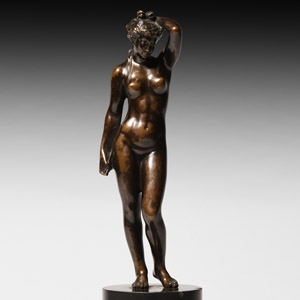
Renaissance Bronze Female Figure
16th-17th century A.D. or earlierSold for (Inc. bp): £3,900
A naturalistic bronze female figure modelled standing contrapposto, nude, looking down towards her feet, one arm reaching over her head towards her neck, the other resting by her side, her weight placed on her right leg, hair tied into an elaborate bun with a ribbon, short ringlets falling down her nape and the end of the ribbon cascading over her shoulder, along the side of her right breast and down to her thigh, where she is holding the end; mounted on a custom-made display base. 754 grams, 20.5 cm high
English private collection.
With stylistic similarities to work by Giovanni Bologna; possibly Italian or Northern European. -
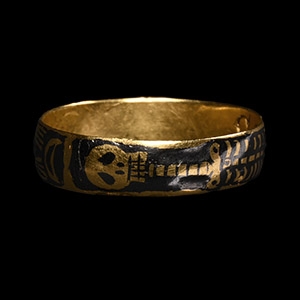
Early Georgian Gold Enamelled Memento Mori Skeleton Ring for 'S N'
Dated 1717 A.D.Sold for (Inc. bp): £4,420
A gold George I period memento mori ring decorated around the exterior with a stylised human skeleton against a black enamelled field, the body featuring an elongated neck, exaggerated numbers of ribs and disproportionately short legs, with a crescent at the base of the feet; interior engraved 'SN 17.17'. 3.15 grams, 20.76 mm overall, 18.77 mm internal diameter (approximate size British Q 1/2, USA 8 1/4, Europe 18.12, Japan 17)
Acquired in the late 1990s-2000. Property of an East London gentleman. -
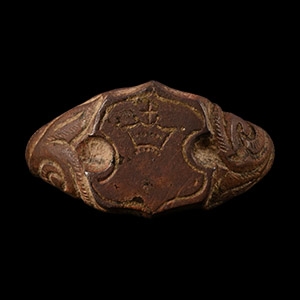
Post Medieval Armorial Ring with Crown in Shield
17th-18th century A.D.Sold for (Inc. bp): £52
A copper-alloy armorial ring composed of a convex hoop expanding at the shoulders to a shield-shaped plaque engraved with a crown surmounted by a cross, the shoulders embellished with swirling motifs. 10.41 grams, 27.23 mm overall, 21.02 mm internal diameter (approximate size British U, USA 10, Europe 22.33, Japan 21)
Acquired in the late 1990s-2000. Property of an East London gentleman.
