
Loading, please wait...
![Tudor Decorated 'TENES LA [F]OY' Silver Posy Ring](https://timelineauctions.com/zoom_images/zoomthumb/2/4/248057_900x900.jpg "Tudor Decorated 'TENES LA [F]OY' Silver Posy Ring")
![Tudor Decorated 'TENES LA [F]OY' Silver Posy Ring](https://timelineauctions.com/zoom_images/zoommap/2/4/248057_200x200.jpg "Tudor Decorated 'TENES LA [F]OY' Silver Posy Ring")
![Tudor Decorated 'TENES LA [F]OY' Silver Posy Ring](https://timelineauctions.com/upload/images/items/248057.jpg "Tudor Decorated 'TENES LA [F]OY' Silver Posy Ring")
LOT 2025
Tudor Decorated 'TENES LA [F]OY' Silver Posy Ring
15TH-16TH CENTURY A.D.
7/8 in. (2.49 grams, 21.42 mm overall, 18.09 mm internal diameter (approximate size British P, USA 7 1/2, Europe 16.23, Japan 15)).
Barrel-shaped in profile with beaded rims, diagonal bands of beading framing parcel-gilt bands with flower and tendril ornament; legend to inner face in italic capitals 'TENES LA [F]OY' (keep the faith). [No Reserve]
ProvenanceEx East Sussex private collection, 1970s-1980s.
LiteratureSee Evans, J., English Posies and Posy Rings, Oxford, 1931, for discussion.
CONDITIONTimeLine Auctions follows a vetting process to ensure the authenticity and legality of all items, reinforcing our commitment to integrity and responsible trading. Each antiquity, antique, and coin lot undergoes thorough examination by a vetting committee of at least ten external specialists, professional trade association members, scientists, and archaeologists: Our Vetting Process
AUCTIONS:
TimeLine is a leading auction house specialising in antiquities, ancient art, collectables, natural history, coins, medals, and books. Our auctions offer museums, collectors, historians, and enthusiasts the opportunity to acquire unique and historically significant pieces.
-
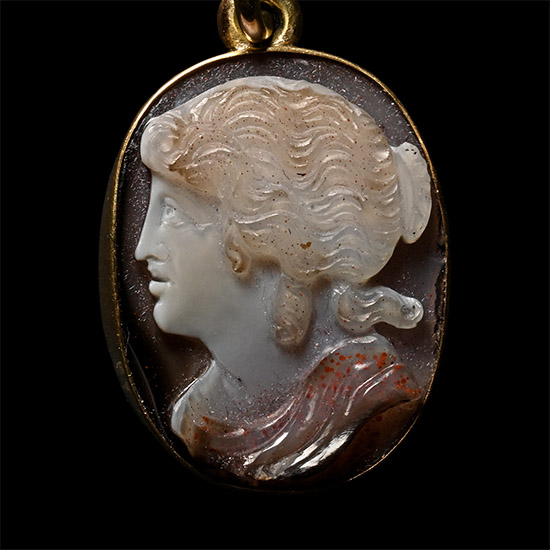
Post Medieval Agate Cameo of a Classical Muse in Gold Mount
Italy, 18th century A.D.Estimate: £800 - 1,000 (+bp*)
Opening Bid: £400
Gold cell with suspension loop, inset banded agate panel with reserved female profile bust with hair in a chignon. 7.8 grams, 38 mm
Private collection, Europe. Acquired on the English art market. -
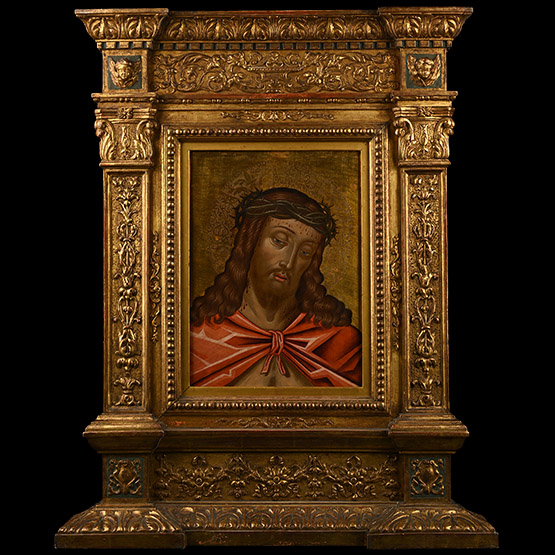
Large Veneto-Cretan Icon of 'Ecce Homo' in Gilt Wooden Frame
17th century A.D.Sold for (Inc. bp): £10,400
With the portrait of Christ in tempera and gold on wood panel, with mounting slots to reverse; gessoed board with gilt surface, reserved portrait bust in three-quarters view on a textured field with tendrils, scrolls and other ornament within the nimbus; Christ shown with shoulder-length auburn hair and short beard wearing a scarlet cloak fastened at the centre of the neck and crown of thorns on his head; facial expression of suffering and pain, with drops of blood on his forehead; the icon set in a carved gilded wooden frame with a beaded edge, flanked by two small pillars with rich vegetal decoration and angel heads in the upper part. 7.75 kg, 79 x 58.5 cm
Acquired on the European art market. Private collection, London, UK. Accompanied by an academic report by Dr Raffaele D’Amato. This lot has been checked against the Interpol Database of stolen works of art and is accompanied by search certificate number no.13061-249291.
This splendid specimen represents Christ as ‘Ecce Homo’, when Pilate, in the desperate attempt to save Jesus from Crucifixion, presented him to the people of Jerusalem dressed in a red cloak and wearing the crown of thorns (John, XIX,5). -
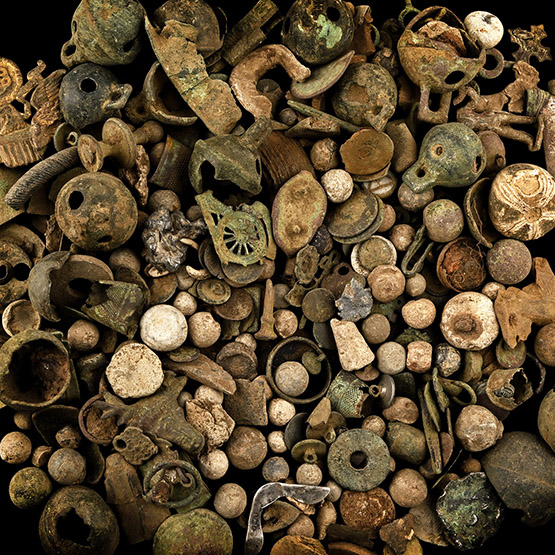
Tudor and Later Artefact Group
Circa 16th-21st century A.D.Sold for (Inc. bp): £98
Including crotal bells, coins, lead shot, military badges, thimbles and other items. 1.89 kg total, 8-55 mm
Found Suffolk, UK. (UK buyers only, not for export)
