
Loading, please wait...
LOT 2016
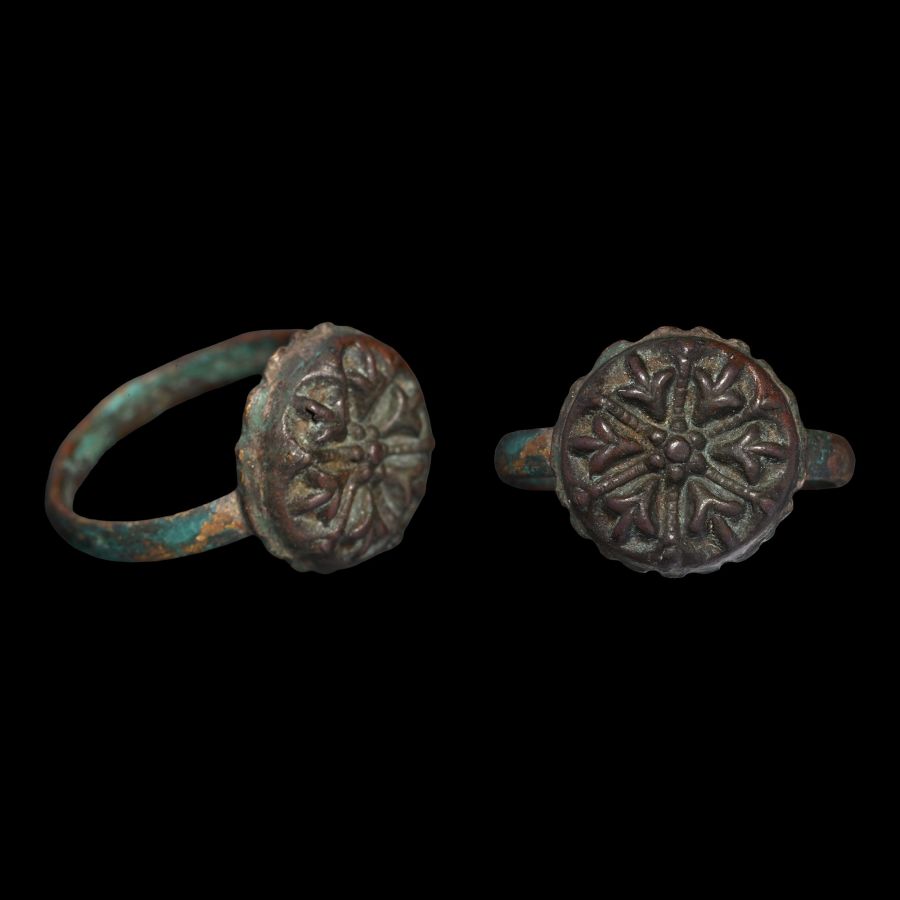
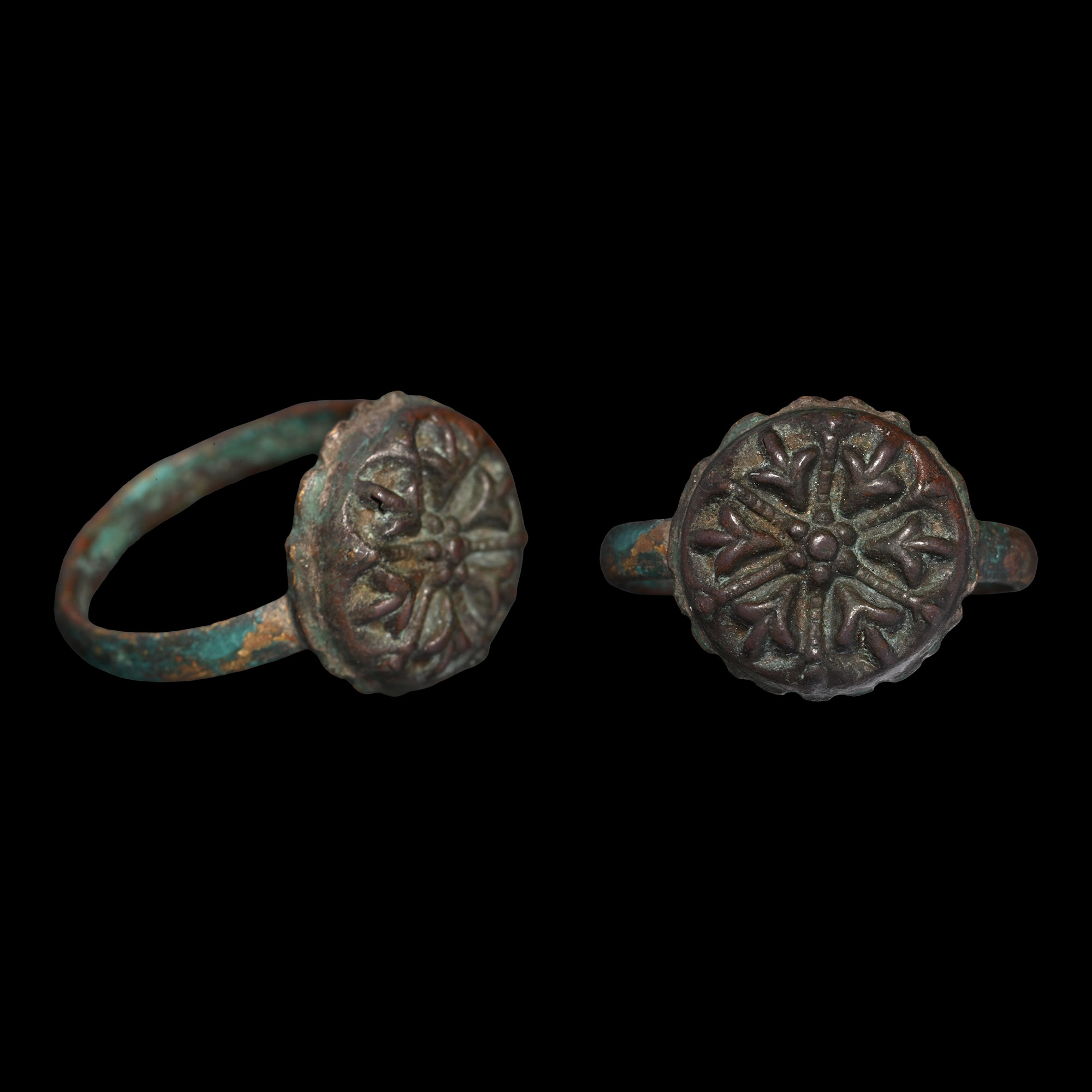
Tudor Bronze Ring with Floral Bezel
CIRCA 16TH CENTURY A.D.
1 in. (3.80 grams, 25.45 mm overall, 20.34 mm internal diameter (approximate size British U, USA 10, Europe 22.52, Japan 21)).
With disc bezel, high-relief hexafoil with pellet centre, beaded rim. [No Reserve]
ProvenanceEx North London gentleman; formerly with Robin Symes Gallery, Mayfair, before 1999.
Private collection, Suffolk, UK.
TimeLine Auctions follows a vetting process to ensure the authenticity and legality of all items, reinforcing our commitment to integrity and responsible trading. Each antiquity, antique, and coin lot undergoes thorough examination by a vetting committee of at least ten external specialists, professional trade association members, scientists, and archaeologists: Our Vetting Process
AUCTIONS:
TimeLine is a leading auction house specialising in antiquities, ancient art, collectables, natural history, coins, medals, and books. Our auctions offer museums, collectors, historians, and enthusiasts the opportunity to acquire unique and historically significant pieces.
-
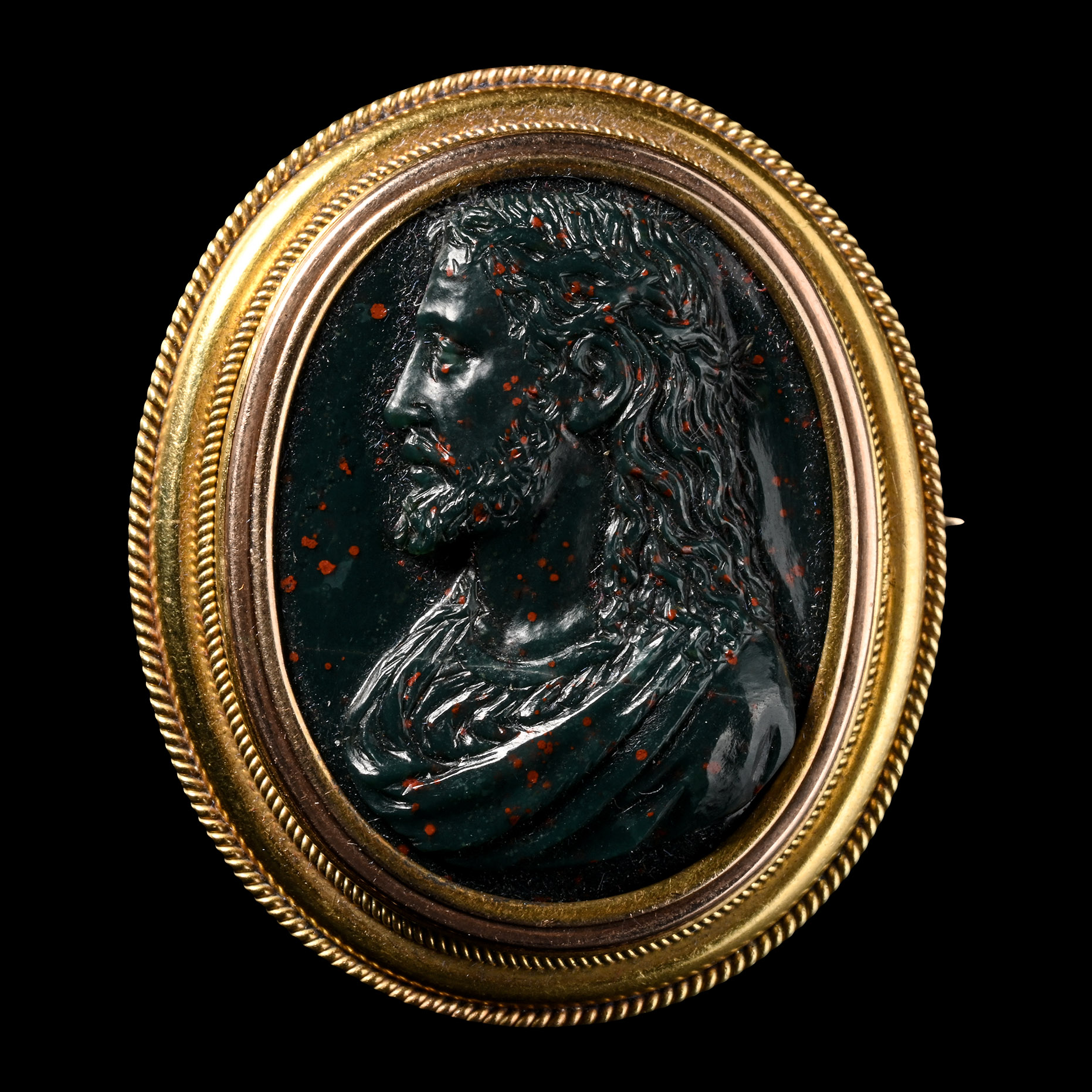
Heliotrope Cameo with Christ in Gold Mount
Italy, 17th century A.D.Estimate: £2,500 - 3,500 (+bp*)
Current Winning Bid: £1,250
Carefully rendered bust of Christ facing left, crown of thorns resting on his curly hair, short beard and pained expression on his face; set in a gold mount with applied ropework collars, pin and catch on the reverse. 16.3 grams, 42 mm
Acquired on the European art market. This lot has been checked against the Interpol Database of stolen works of art and is accompanied by search certificate number no.13404-257986.
It was believed that the scarlet flecks in the stone were the blood of Christ, hence its popular use for the subject of Christ throughout the Middle Ages until the 19th century. -
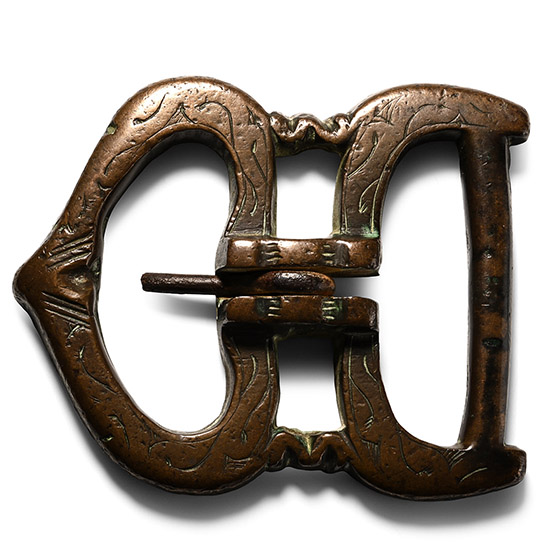
Massive Stuart Period Bronze Buckle
Continental Europe, 17th century A.D.Sold for (Inc. bp): £117
Pointed outer edge on a rounded loop, bifid knop on either end of the strap bar, surface decorated with stylised vegetal ornaments. 253 grams, 95 mm
Private collection, UK.
These buckles usually have one rectangular and one rounded D-shaped loop on either side of the central bar. During the late 16th and 17th centuries, the range of asymmetrical buckles became wide. -
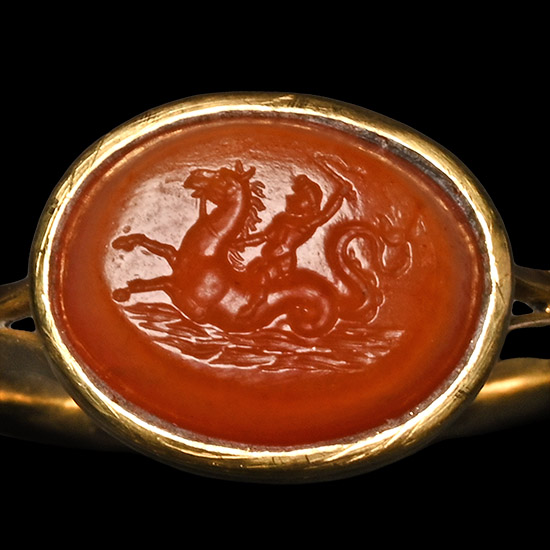
Renaissance Agate Gemstone with Eros Riding a Hippocampus in Gold Ring
16th-17th century A.D.Sold for (Inc. bp): £2,340
Oval banded agate intaglio engraved with Eros riding a hippocampus through the waves and wielding a whip in his hand; set in a later gold ring with openwork shoulders. 4.57 grams, 25.29 mm overall, 17.36 mm internal diameter (approximate size British N 1/2, USA 6 3/4, Europe 14.35, Japan 13)
Acquired on the European art market. This lot has been checked against the Interpol Database of stolen works of art and is accompanied by search certificate number no.13348-257957.
The term hippocampus originates in the Renaissance, from Julius Caesar Arantius. He originated the term from the Greek word for seahorse (hippos [‘horse’] and kampos [‘sea monster’]). Arantius published his description of the hippocampus in 1587, in the first chapter of his work titled De Humano Foetu Liber.
