Loading, please wait...

Tudor Bronze Purse Bar Tudor Bronze Purse Bar Tudor Bronze Purse Bar
Use mousewheel to zoom in and out, click to enlarge
Details

LOT 2185

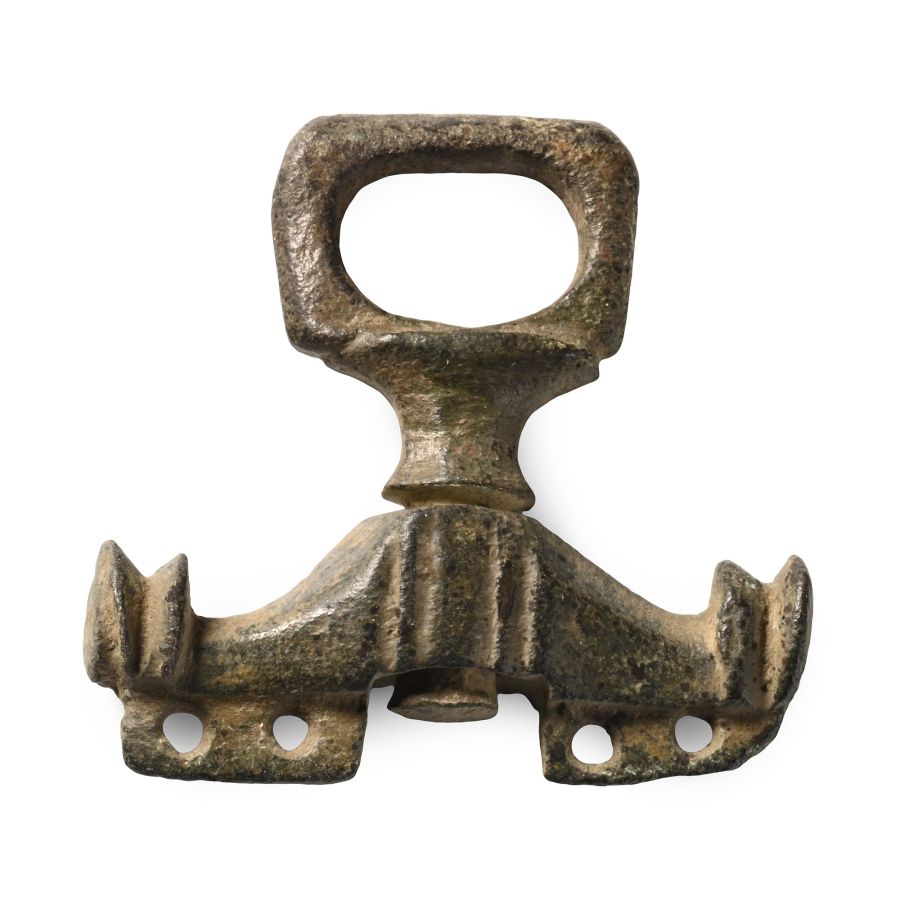
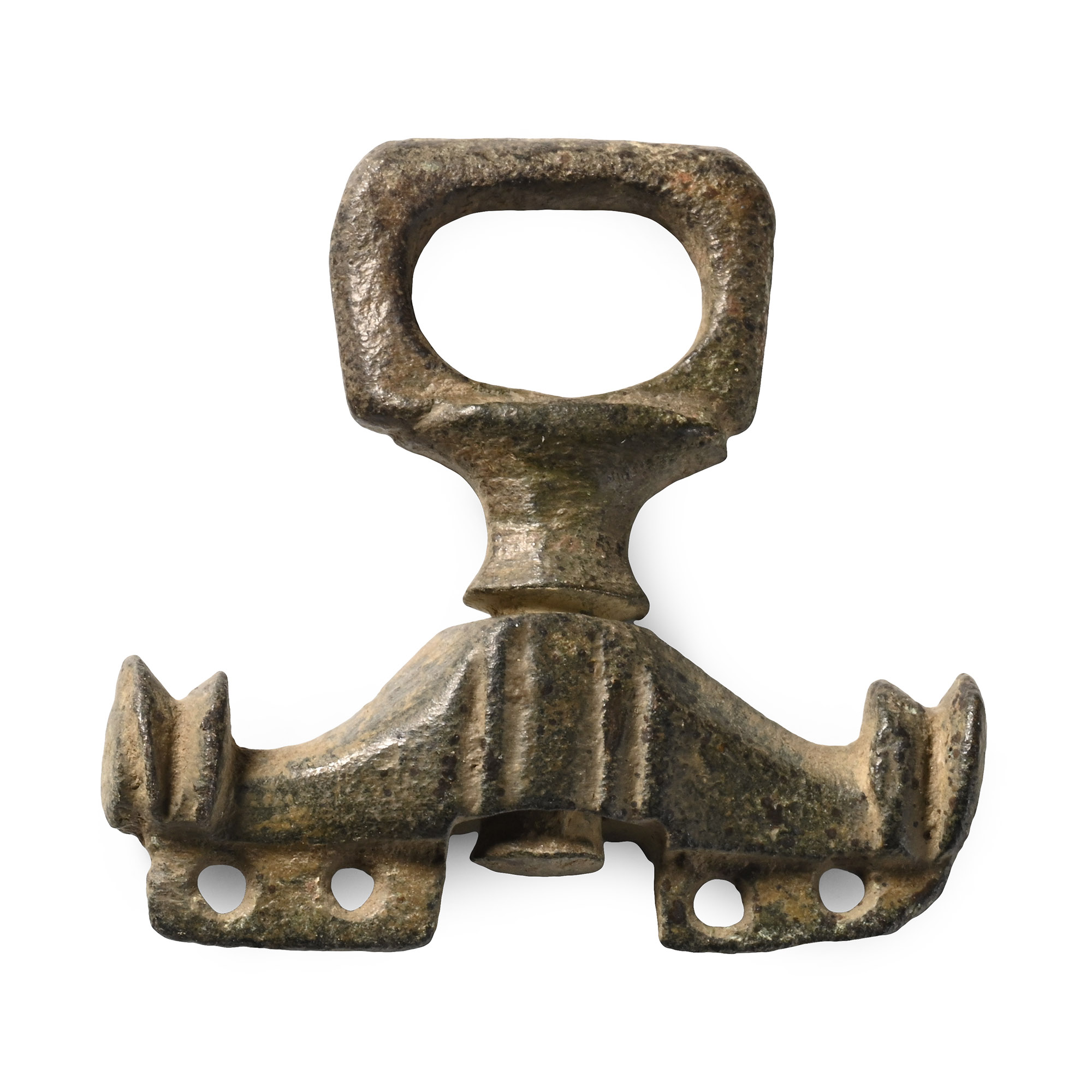
Tudor Bronze Purse Bar

16TH CENTURY A.D.

1 3/8 in. (15.9 grams, 34 mm).

With horizontal bar, ribbed finials, vertical swivel and rectangular suspension loop. [No Reserve]

Provenance

From the private collection of the late Graham Slater (1927-2024), Cambridge, UK, acquired 1980s-1990s.

CONDITION
VETTING:

TimeLine Auctions follows a vetting process to ensure the authenticity and legality of all items, reinforcing our commitment to integrity and responsible trading. Each antiquity, antique, and coin lot undergoes thorough examination by a vetting committee of at least ten external specialists, professional trade association members, scientists, and archaeologists: Our Vetting Process


AUCTIONS:

TimeLine is a leading auction house specialising in antiquities, ancient art, collectables, natural history, coins, medals, and books. Our auctions offer museums, collectors, historians, and enthusiasts the opportunity to acquire unique and historically significant pieces.

LOT 2185

Tudor Bronze Purse Bar

Sold for (Inc. bp): £46

Print page

RELATED LOTS
  • Cylinder Seal Electrotype Group
    Cylinder Seal Electrotype Group
    Late 19th-early 20th century A.D.

    Sold for (Inc. bp): £143

    Of academic interest, copper coated lead seal impressions taken from cylinder seals, showing scenes including worshipping scene, animals, and three with cuneiform text. 185 grams total, 29-42 mm


    Possibly made by the British Museum. From a West Country, UK, private collection.

    Lot Details

  • Veneto-Cretan Icon with Nativity of Christ Attributed to the Workshop of Theodore Poulakis
    Veneto-Cretan Icon with Nativity of Christ Attributed to the Workshop of Theodore Poulakis
    17th-18th century A.D.

    Estimate: £18,000 - 24,000 (+bp*)

    Opening Bid: £9,000

    Divided into two separate scenes: in a small panel on the right side, the Annunciation with the archangel Gabriel standing with the messenger's staff in his left hand, his right hand extending towards the Virgin in a sign of greeting and homage; the archangel dressed in a blue ankle-length garment (sticharion) with a red mantle (himation); Mary in a floor-length blue robe and crimson mantle, holding a scroll; above the two figures inscriptions in Greek letters, 'Γ (Γαβριήλ)' over the Archangel and ‘ΜΡ ϴΥ'(Mother of God) over the Virgin Mary; on the main field a representation of the Nativity, according the typical Byzantine iconography: standing Mary beneath a rocky landscape above a cave, wearing a red maphorion mantle over a dark blue robe, with elaborate golden threads of fine gold brocade at the hem, showing baby Jesus to the three wise men, dressed as kings and bearing gifts of gold, incense and myrrh; a shepherd wearing a long, shaggy cloak, leaning on his staff, converses amicably with thoughtful Saint Joseph, seated on rocks; an ox and a donkey beneath the cradle; in the upper part, two ranks of singing angels, dressed in gold, blue, and red robes, while among the ranks of angels on the right, one of the celestial creatures announces the good news to the shepherds, inviting them to worship the heavenly child; Greek inscription from the Creed in red within the angels: 'τὸν δι' ἡμᾶς τοὺς ἀνθρώπους καὶ διὰ τὴν ἡμετέραν σωτηρίαν κατελθόντα ἐκ τῶν οὐρανῶν, καὶ σαρκωθέντα ἐκ Πνεύματος Ἁγίου καὶ Μαρίας τῆς παρθένου, καὶ ἐνανθρωπήσαντα' (Who because of us men and because of our salvation came down from the heavens, and was incarnate from the Holy Spirit and the Virgin Mary and became man), another above the Virgin Mary: 'ἡ κατἀ σαρκα γένεσις τοῦ κὒ Ἰησοῦ Χριστοῦ' (The Birth in flesh of our Lord Jesus Christ), also the letters ‘ΜΡ ϴΥ'(Mother of God), over the head of Jesus, 'ΙC ΧΡ' (Jesus Christ); tempera on wood panel, on the reverse old label 'Kunstausstellung Kühl'. 1.59 kg, 42.2 x 34.2 cm


    Acquired on the European art market. Private collection, London, UK. Accompanied by an academic report by Dr Raffaele D’Amato. This lot has been checked against the Interpol Database of stolen works of art and is accompanied by search certificate number no.13062-249293.

    Theodoros Poulakis (1622-1692) was a key figure of the Cretan School, known for his religious icon paintings. He blended Byzantine and Venetian styles, especially after moving to Venice following the Ottoman conquest of Crete. His vivid, detailed icons are highly regarded in both religious and artistic circles. Here, the artist combines narrations of the birth of Jesus Christ in Matthew 1:18-2:12 and Luke 2:1-2:20.

    Lot Details

  • Post Medieval Bronze Padlock
    Post Medieval Bronze Padlock
    16th-17th century A.D.

    Sold for (Inc. bp): £33

    Tudor period with C-shaped locking arm, keyhole with ledge above. 16.92 grams, 34 mm


    Ex German art market, 2000s. Acquired from an EU collector living in London. From the collection of a Surrey, UK, gentleman.

    Lot Details

Stay up-to-date with the latest from TimeLine Auctions by joining our mailing list