
Loading, please wait...
LOT 2025
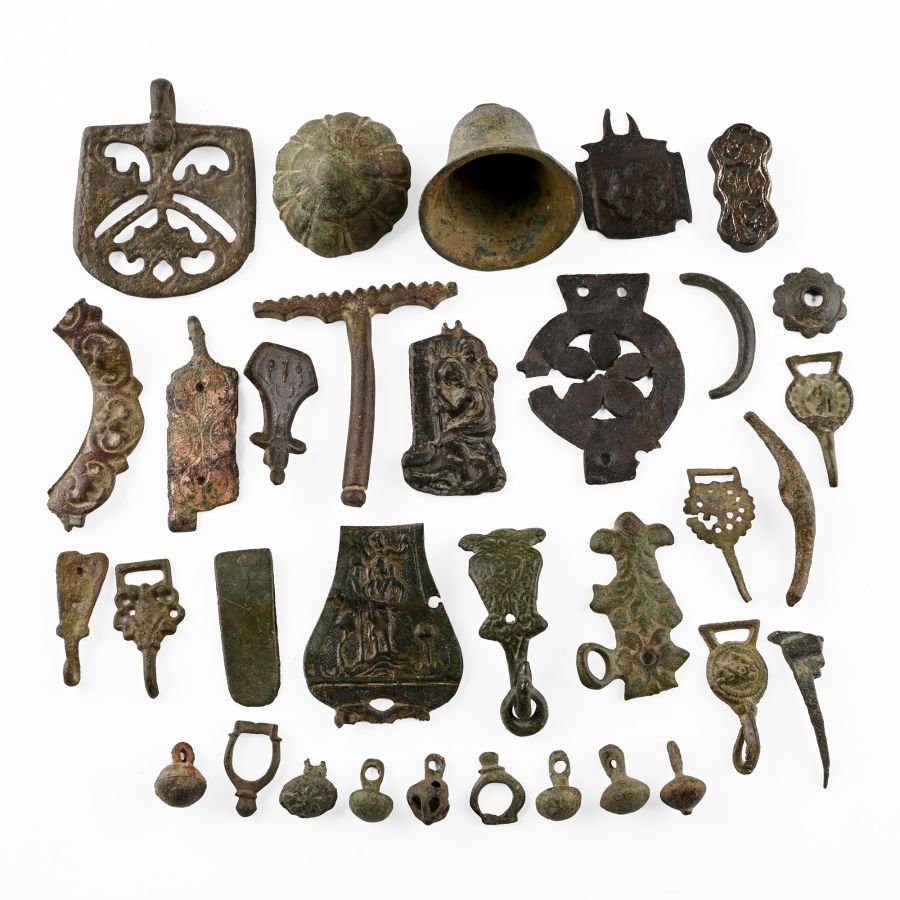
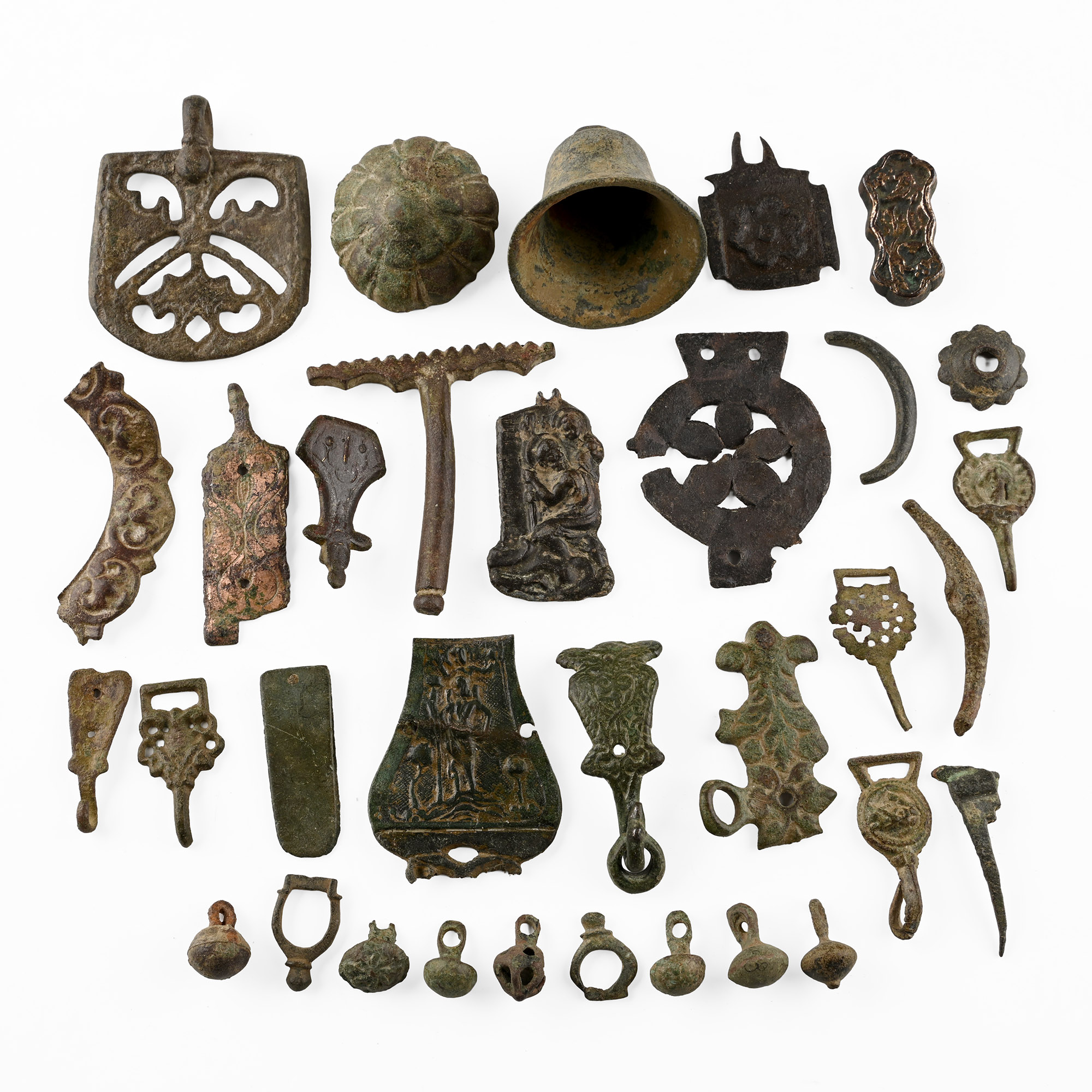
Tudor Bronze Artefact Group
16TH-17TH CENTURY A.D.
5/8 - 2 1/4 in. (235 grams total, 14-56 mm).
Including two appliqués with Saint Christopher, a bell with absent rumbler, globular buttons, large openwork harness pendant and others. [33, No Reserve]
ProvenanceFound East Anglia, UK.
This lot is accompanied by an illustrated lot declaration signed by the Head of the Antiquities Department, Dr Raffaele D'Amato.
N.B. This lot is for UK buyers only.
CONDITIONTimeLine Auctions follows a vetting process to ensure the authenticity and legality of all items, reinforcing our commitment to integrity and responsible trading. Each antiquity, antique, and coin lot undergoes thorough examination by a vetting committee of at least ten external specialists, professional trade association members, scientists, and archaeologists: Our Vetting Process
AUCTIONS:
TimeLine is a leading auction house specialising in antiquities, ancient art, collectables, natural history, coins, medals, and books. Our auctions offer museums, collectors, historians, and enthusiasts the opportunity to acquire unique and historically significant pieces.
-
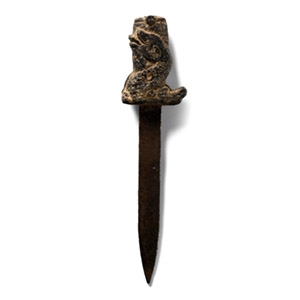
Roman Style Bronze Model Knife
18th century A.D. or laterSold for (Inc. bp): £91
With narrow tongue-shaped iron blade and copper-alloy hilt formed as a hippocamp. 10.7 grams, 87 mm
From the collection of a gentleman, acquired on the London art market in the 1990s. This lot is accompanied by an illustrated lot declaration signed by the Head of the Antiquities Department, Dr Raffaele D'Amato. -
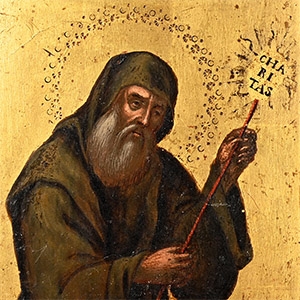
Veneto-Cretan Icon of St Francis of Paola
17th century A.D.Sold for (Inc. bp): £4,160
Tempera on wood panel, on a golden background, erect figure in three-quarter view in dark cowl and habit, holding a staff in both hands; halo ornately punched; the staff with nimbus finial surrounding majuscule legend 'CHA/RI/TAS' ('love, charity'); transverse mounting block to reverse and holes for another. 168 grams, 18.5 x 13 cm
Acquired on the European art market. Private collection, London, UK. This lot is accompanied by an illustrated lot declaration signed by the Head of the Antiquities Department, Dr Raffaele D'Amato.
Francis of Paola (1416-1507) was an Italian monk and the founder of the Order of Minims, a religious order focused on humility, penance, and charity. Born in Paola, Calabria, he was known for his ascetic lifestyle and deep spirituality. Francis was credited with performing miracles, including healing the sick and even crossing the sea on his cloak. He became a spiritual advisor to King Louis XI of France in his final years. Canonized in 1519, Francis of Paola is venerated as the patron saint of sailors and fishermen, symbolising humility and devotion to God. -
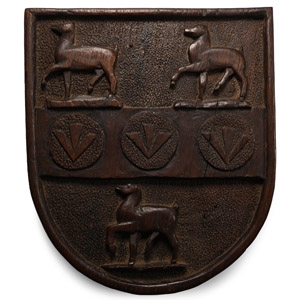
Post Medieval 'Parker Family' Oak Heraldic Shield
Circa 19th century A.D.Estimate: £100 - 140 (+bp*)
Opening Bid: £50
With raised border, comprising three advancing hinds, fess with three broad arrow heads, pointing downwards, possibly for the Parker family. 287 grams, 21 cm
Acquired on the UK art market. Property of a Nottinghamshire, UK, gentleman. This lot is accompanied by an illustrated lot declaration signed by the Head of the Antiquities Department, Dr Raffaele D'Amato.
