
Loading, please wait...

LOT 2134
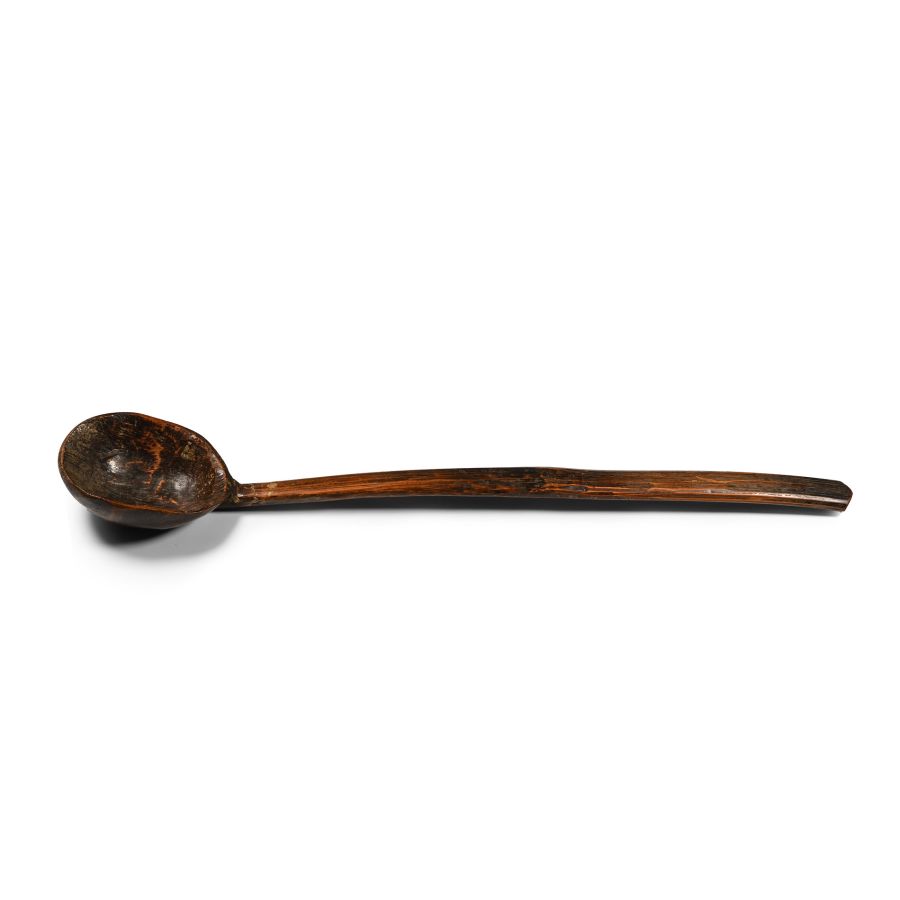
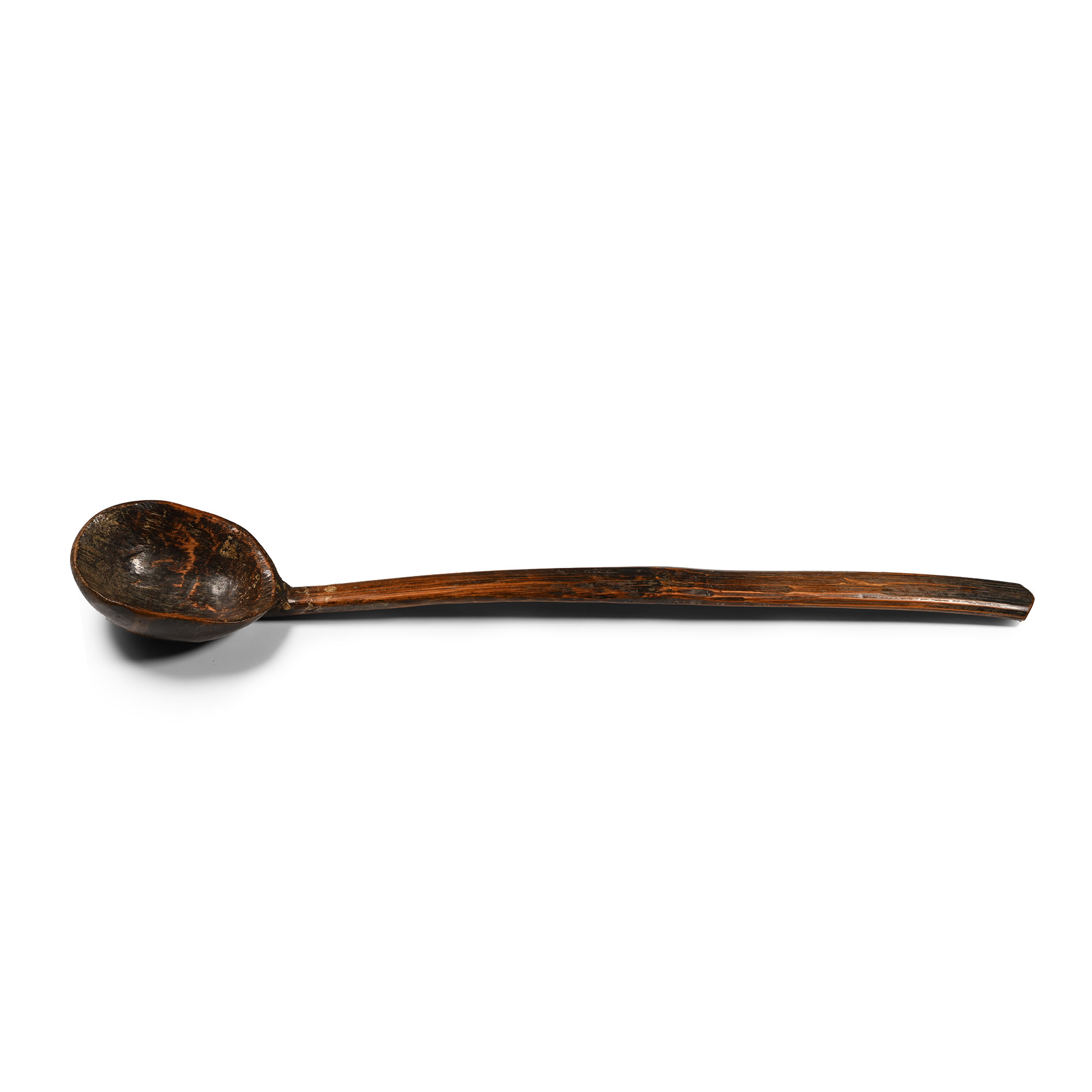
Tudor Apotropaic 'Anti Witchcraft' Wooden Ladle
16TH-17TH CENTURY A.D.
17 1/2 in. (96 grams, 44.5 cm).
With tapering flat-section handle, used as a device for warding off harmful magic; identified by Marie-Louise Kerr, curator of the West Berkshire Museum. [No Reserve]
ProvenanceFound wrapped in cloth along with fur, bones, and feathers, in the eves of a thatched cottage in Berkshire, UK, in 1978.
This lot is accompanied by an illustrated lot declaration signed by the Head of the Antiquities Department, Dr Raffaele D’Amato.
See Hutton, R., The Stations of the Sun: A History of the Ritual Year in Britain, Oxford University Press, 1996.
CONDITIONTimeLine Auctions follows a vetting process to ensure the authenticity and legality of all items, reinforcing our commitment to integrity and responsible trading. Each antiquity, antique, and coin lot undergoes thorough examination by a vetting committee of at least ten external specialists, professional trade association members, scientists, and archaeologists: Our Vetting Process
AUCTIONS:
TimeLine is a leading auction house specialising in antiquities, ancient art, collectables, natural history, coins, medals, and books. Our auctions offer museums, collectors, historians, and enthusiasts the opportunity to acquire unique and historically significant pieces.
-
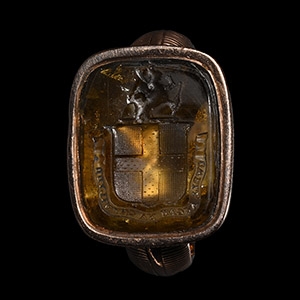
Large Gilt Heraldic 'Royal Regiment of Wales' Seal Matrix
20th century A.D.Sold for (Inc. bp): £143
Comprising a domed and fluted body with knop above, D-section swept hoop with barrel-shaped suspension ring; inset quartz seal with heater shield and scroll with Welsh motto: 'Gwell Angau na Chywilydd' (Death rather than Dishonour). 20.7 grams, 42 mm
Property of a Cheshire, UK, gentleman. This lot is accompanied by an illustrated lot declaration signed by the Head of the Antiquities Department, Dr Raffaele D’Amato.
The motto is used by the Royal Regiment of Wales. -
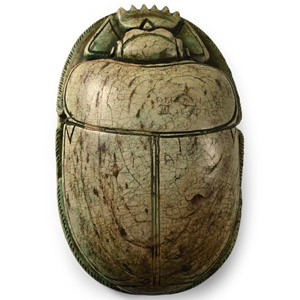
Grand Tour Steatite Scarab with Hieroglyphics
19th-20th century A.D.Sold for (Inc. bp): £124
Anatomical detailing to the carapace, head and legs, underside with twelve lines of hieroglyphic text, replicating the royal scarab of the Pharaoh Amenhotep III (ca. 1390–1352 B.C.), commemorating the construction of an artificial lake for his principal wife, Tiye. 326 grams, 98 mm
From a private, UK, collection in the 1980s. Property of a London, UK, antiquarian. This lot is accompanied by an illustrated lot declaration signed by the Head of the Antiquities Department, Dr Raffaele D’Amato.
This is a replica of one of several commemorative scarabs issued by Pharaoh Amenhotep III to celebrate various events. The text reads: Regnal Year 11 under the majesty of Horus, the Strong Bull Appearing in Truth, Two Ladies, Who Established the Laws and Pacifies the Two Lands, Horus of Gold, Strong of Arm who Smites the Asiatics, King of Upper and Lower Egypt Nebmaatre, Son of Re, Amenhotep Ruler of Thebes given life, the great royal wife Tiye, may she live, whose father's name is Yuya and whose mother's name is Tjuyu. His majesty commanded the making of a basin for the great royal wife Tiye, may she live, in her town of Djarukha. Its length is 3700 (cubits) and its width is 700 (cubits.) (His Majesty) celebrated the opening of the lake in the third month of the Akhet season, day 16. The procession of his majesty in the royal barge Aten-Tjehen (literally, 'the dazzling sun disk') was in it. -
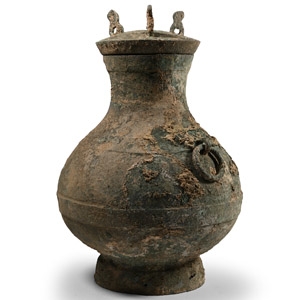
Archaic Chinese Style Bronze Vessel
20th century A.D.Sold for (Inc. bp): £169
With flared base, bulbous body and flared neck, circumferential band to the equator, taotie mask to each shoulder with suspension ring, domed lid with stylised dragons; after the antique. 3 kg, 35 cm high
Acquired from the London art market in the 2000s. This lot is accompanied by an illustrated lot declaration signed by the Head of the Antiquities Department, Dr Raffaele D’Amato.
