
Loading, please wait...
LOT 2115
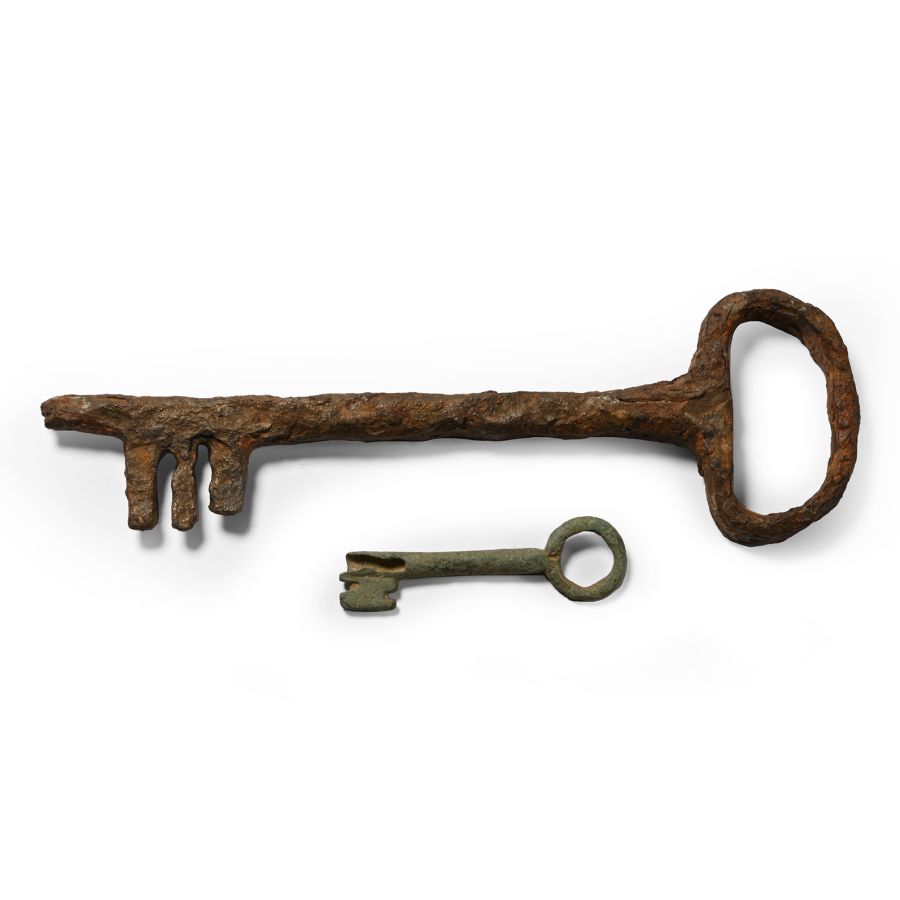
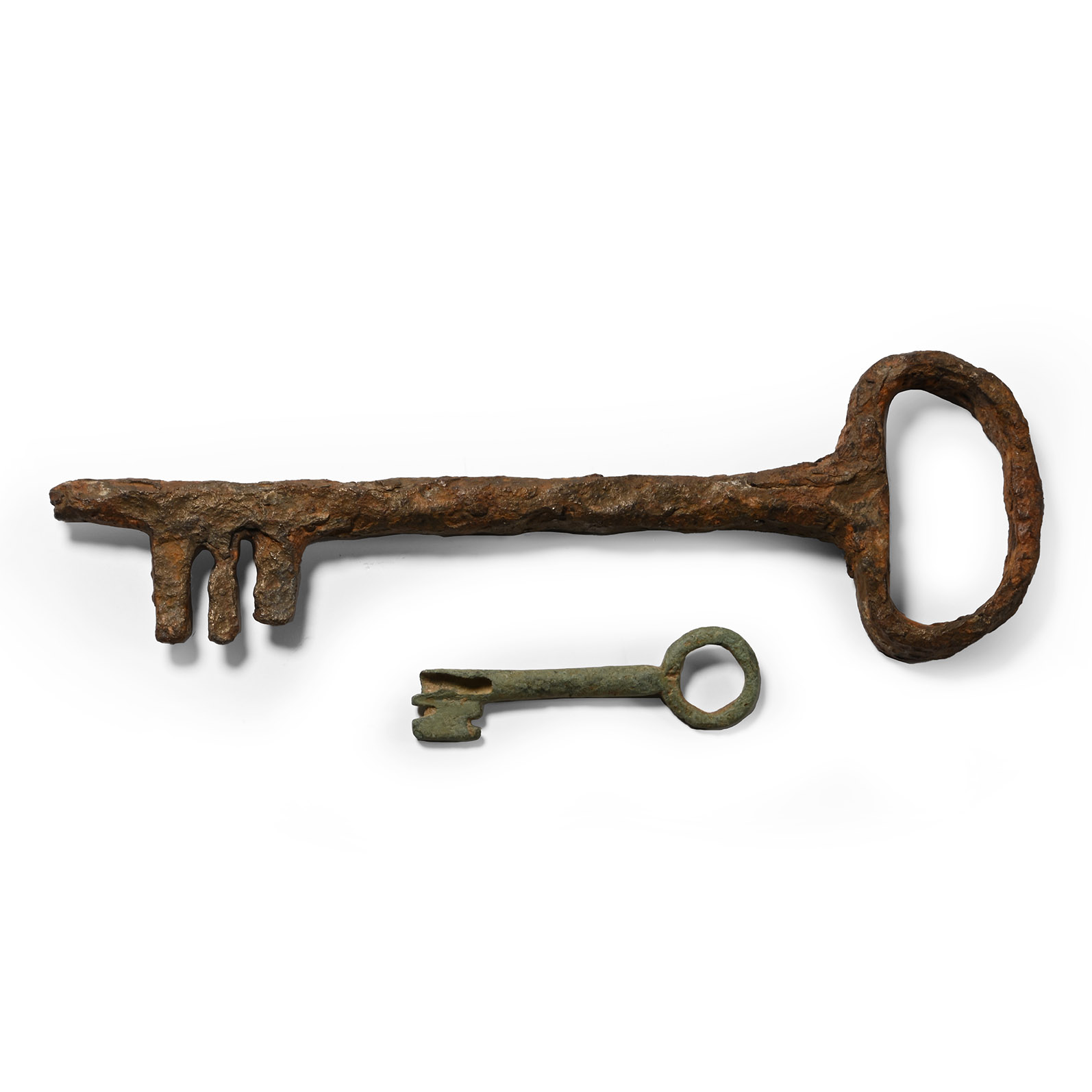
Tudor and Later Key Group
16TH-17TH CENTURY A.D.
2 - 5 7/8 in. (80 grams total, 5.2-15 cm).
Comprising a large iron door key with looped handle and a small bronze barrel lock key. [2, No Reserve]
ProvenanceFrom a private Barnsley, UK, family collection.
This lot is accompanied by an illustrated lot declaration signed by the Head of the Antiquities Department, Dr Raffaele D’Amato.
TimeLine Auctions follows a vetting process to ensure the authenticity and legality of all items, reinforcing our commitment to integrity and responsible trading. Each antiquity, antique, and coin lot undergoes thorough examination by a vetting committee of at least ten external specialists, professional trade association members, scientists, and archaeologists: Our Vetting Process
AUCTIONS:
TimeLine is a leading auction house specialising in antiquities, ancient art, collectables, natural history, coins, medals, and books. Our auctions offer museums, collectors, historians, and enthusiasts the opportunity to acquire unique and historically significant pieces.
-
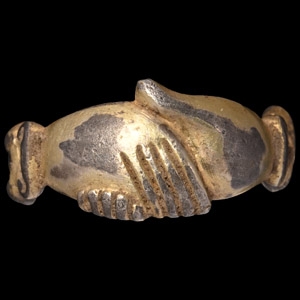
Tudor Period Silver-Gilt Clasped Hands Ring
16th-17th century A.D.Sold for (Inc. bp): £176
Narrow hoop with shallow median recess to outer face, each shoulder developing to a clasped hand. 3.58 grams, 23.80 mm overall, 17.12 x 20.34 mm internal diameter (approximate size British N, USA 6 1/2, Europe 13.72, Japan 13)
Ex German art market, 2000s. Acquired from an EU collector living in London. From the collection of Surrey, UK, gentleman. This lot is accompanied by an illustrated lot declaration signed by the Head of the Antiquities Department, Dr Raffaele D’Amato. -
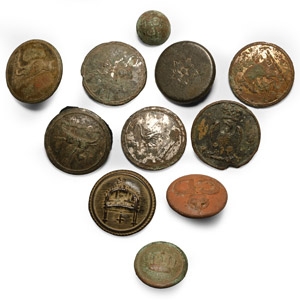
Mixed Button Collection
19th-20th century A.D.Sold for (Inc. bp): £7
Mainly military and livery types. 64 grams total, 14-27 mm
Found around the Buckinghamshire, UK, area. This lot is accompanied by an illustrated lot declaration signed by the Head of the Antiquities Department, Dr Raffaele D’Amato. -
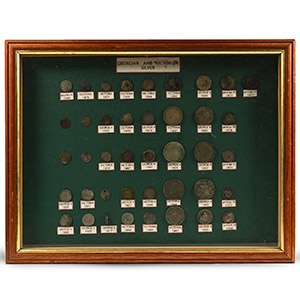
Post Medieval Cased 'Manchester Area' Silver Coin Collection
17th-20th century A.D.Sold for (Inc. bp): £52
Including issues by Charles II, Victoria, George II, George V and William IV; one pierced for mounting as an amulet and another bent as a love token; mounted in a glazed wooden frame. 1.5 kg, 34.5 x 44.5 cm
From the private collection of a Manchester, UK, detectorist, 1990s. This lot is accompanied by an illustrated lot declaration signed by the Head of the Antiquities Department, Dr Raffaele D’Amato.
