
Loading, please wait...


LOT 2133
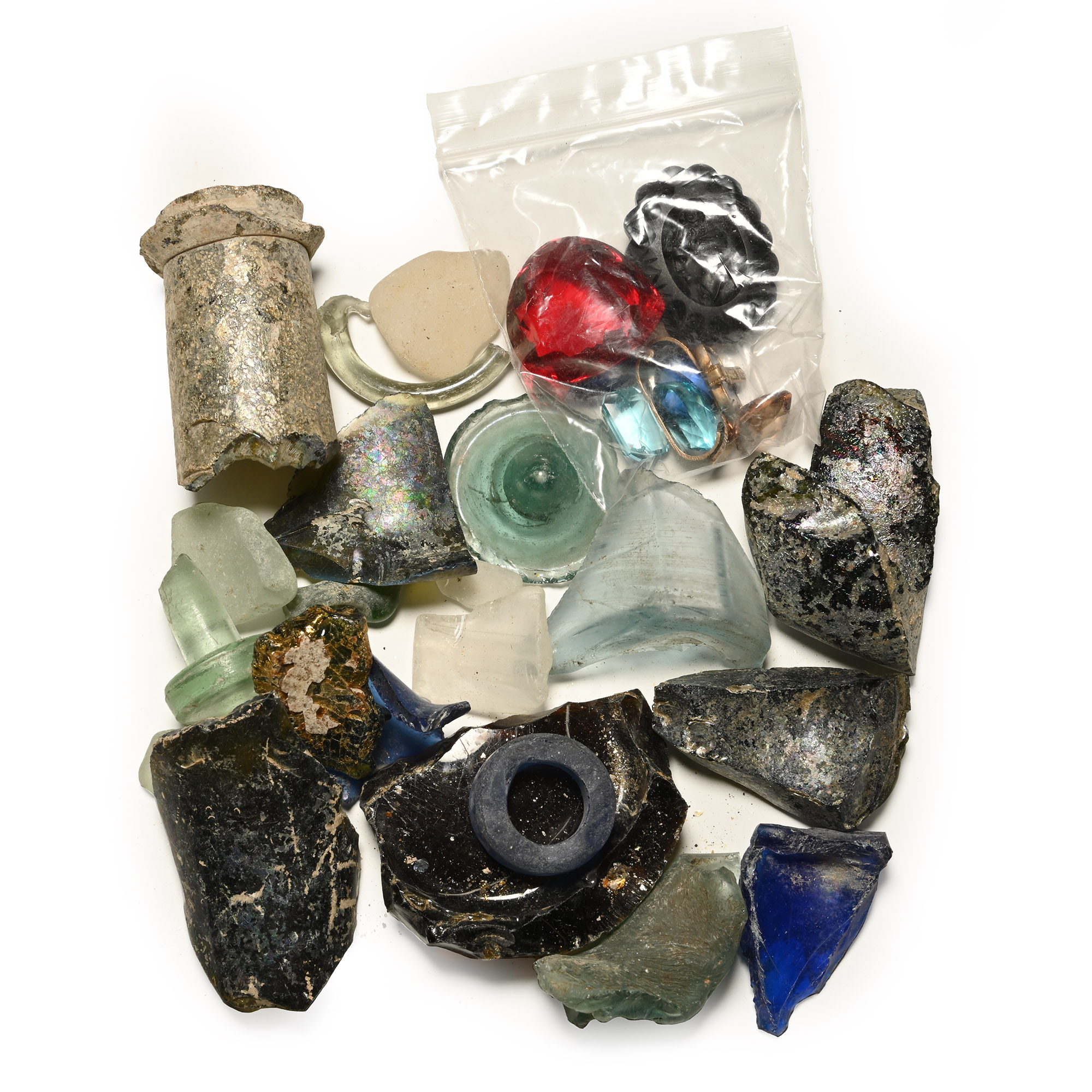
Tudor and Later Glass Fragments
16TH-20TH CENTURY A.D.
1/2 - 2 1/4 in. (422 grams total, 14-58 mm).
Mixed group including aqua, chocolate-brown, deep blue and other colours, some with iridescence; bottle-necks, pontil bases and other fragments, plus glass gems all 20th century. [28, No Reserve]
ProvenanceEx UK gallery, early 2000s.
Property of a Stockport, UK, collector.
This lot is accompanied by an illustrated lot declaration signed by the Head of the Antiquities Department, Dr Raffaele D’Amato.
TimeLine Auctions follows a vetting process to ensure the authenticity and legality of all items, reinforcing our commitment to integrity and responsible trading. Each antiquity, antique, and coin lot undergoes thorough examination by a vetting committee of at least ten external specialists, professional trade association members, scientists, and archaeologists: Our Vetting Process
AUCTIONS:
TimeLine is a leading auction house specialising in antiquities, ancient art, collectables, natural history, coins, medals, and books. Our auctions offer museums, collectors, historians, and enthusiasts the opportunity to acquire unique and historically significant pieces.
-
.jpg)
Hellenistic Style Silver Snake Decoration
20th century A.D. or earlierSold for (Inc. bp): £216
An unwound bracelet modelled in the round with finely detailed scale texture to the tapering body, head raised; after the antique. 170 grams, 15.5 cm
From a collection acquired on the UK art market from various auction houses and collections mostly before 2000. From an important Cambridgeshire estate; thence by descent. This lot is accompanied by an illustrated lot declaration signed by the Head of the Antiquities Department, Dr Raffaele D’Amato. -
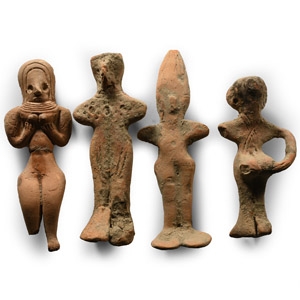
Western Asiatic Style Terracotta Figure Group
20th century A.D.Sold for (Inc. bp): £46
Including a crouching female with hands supporting her breasts, and other types. 177 grams total, 10-12.7 cm
Acquired 1980-2015. Ex Abelita family collection. This lot is accompanied by an illustrated lot declaration signed by the Head of the Antiquities Department, Dr Raffaele D’Amato. -
.jpg)
Tudor Period Gold 'DENIAL IS DEATH' Decorated Posy Ring
16th century A.D.Sold for (Inc. bp): £1,430
With reserved rosettes and pellets to the outer face; legend in seriffed capitals to the inner face 'DENIAL IS DEATH'. 1.22 grams, 16.80 mm overall, 15.43 mm internal diameter (approximate size British I 1/2 , USA 4 1/2, Europe 8.07, Japan 7)
From the collection of the famous author, writer and speaker, Gordon Bailey, Essex, UK; formed since 1968. This lot is accompanied by an illustrated lot declaration signed by the Head of the Antiquities Department, Dr Raffaele D’Amato.
