
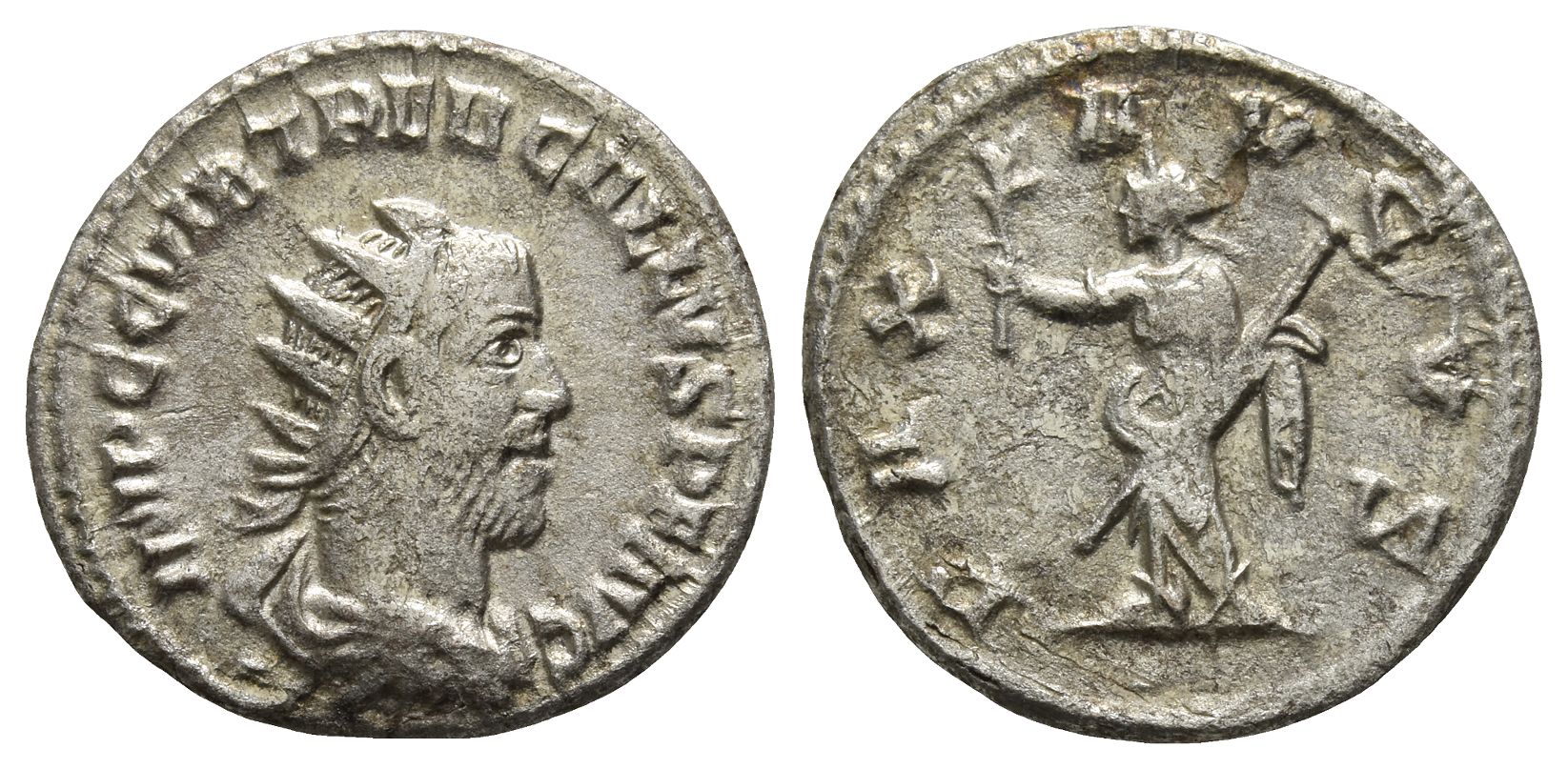
LOT 3221
Trebonianus Gallus AR Antoninianus. AD 251-253.
Antioch mint. IMP C C VIB TREB GALLVS P F AVG, radiate, draped and cuirassed bust to right; pellet beneath bust / PAX AVGVS, Pax standing facing, head to left, holding branch and transverse sceptre; [pellet?] in exergue. Cf. RIC IV 86. Near Very Fine.(3.43gr, 21mm, 5h.).
ProvenanceAcquired on the UK art market before 2000.
Property of an Essex, UK, gentleman.
TimeLine Auctions follows a vetting process to ensure the authenticity and legality of all items, reinforcing our commitment to integrity and responsible trading. Each antiquity, antique, and coin lot undergoes thorough examination by a vetting committee of at least ten external specialists, professional trade association members, scientists, and archaeologists: Our Vetting Process
AUCTIONS:
TimeLine is a leading auction house specialising in antiquities, ancient art, collectables, natural history, coins, medals, and books. Our auctions offer museums, collectors, historians, and enthusiasts the opportunity to acquire unique and historically significant pieces.
-
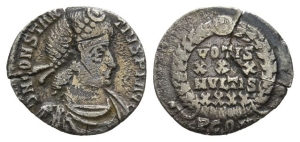
Constantius II AR Reduced Siliqua. AD 337-361.
Sold for (Inc. bp): £33
Arelate mint; struck AD 355-360. 1st officina. D N CONSTANTIVS P F AVG, pearl-diademed, draped and cuirassed bust to right / VOTIS XXX MVLTIS XXXX in four lines within wreath with jewel at apex; PCON in exergue. RIC VIII 261 and 291. 1.34gr, 16mm, 12h.
Near Very Fine.
From the private collection of Kenneth Machin (1936-2020). -
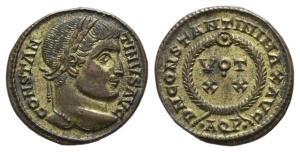
Constantine I BI Nummus. AD 307/310-337.
Sold for (Inc. bp): £26
Aquileia mint; struck AD 321. 1st officina. CONSTANTINVS AVG, laureate head to right / D N CONSTANTINI MAX AVG, laurel wreath with jewel at apex enclosing VOT • XX in three lines; •AQP• in exergue. RIC VII 85. 3.30gr, 19mm, 5h.
Near Extremely Fine.
Ex M.D. collection, Brussels. From the collection of a London antiquarian, formed since the 1980s. -
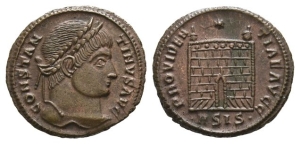
Constantine I BI Nummus. AD 307/310-337.
Sold for (Inc. bp): £33
Siscia mint; struck AD 326-327. 1st officina. CONSTANTINVS AVG, laureate head to right / PROVIDENTIAE AVGG, camp gate with no doors and two turrets, star above; •ASIS• in exergue. RIC VII 200. 2.97gr, 19mm, 1h.
Extremely Fine.
Ex M.D. collection, Brussels. From the collection of a London antiquarian, formed since the 1980s.
