
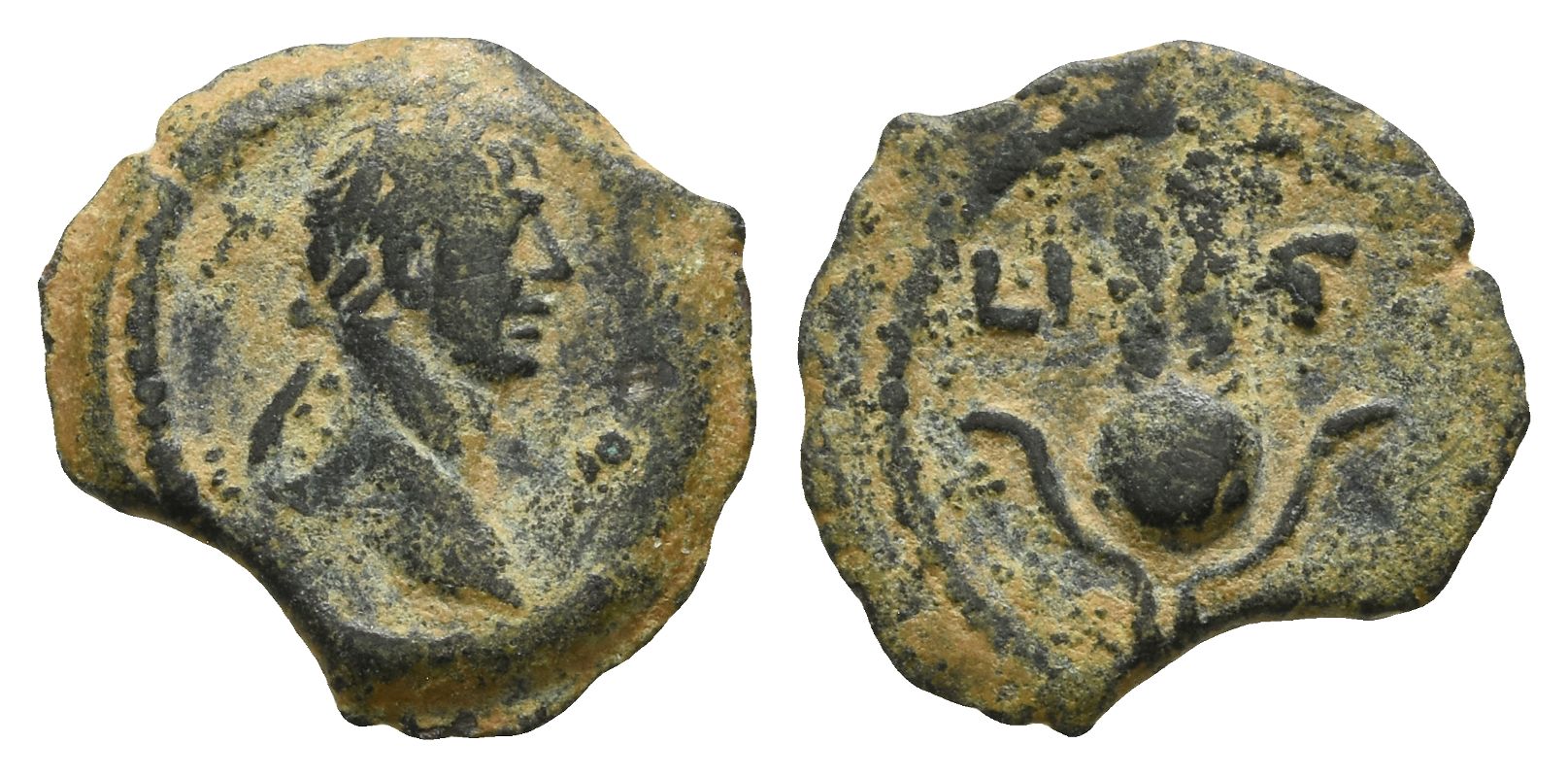
LOT 3513
Trajan AE Dichalkon of Alexandria, Egypt. Dated RY 16 (AD 112/3).
Laureate head to right / Headdress of Isis; L Ι-Ϛ (date) across fields. RPC III 4773; Dattari (Savio) 1097-8; Emmett 710. Very Fine.(1.11gr, 14mm, 12h.).
ProvenanceProperty of a North London, UK, gentleman.
TimeLine Auctions follows a vetting process to ensure the authenticity and legality of all items, reinforcing our commitment to integrity and responsible trading. Each antiquity, antique, and coin lot undergoes thorough examination by a vetting committee of at least ten external specialists, professional trade association members, scientists, and archaeologists: Our Vetting Process
AUCTIONS:
TimeLine is a leading auction house specialising in antiquities, ancient art, collectables, natural history, coins, medals, and books. Our auctions offer museums, collectors, historians, and enthusiasts the opportunity to acquire unique and historically significant pieces.
-
.jpg)
Diva Poppaea and Diva Claudia AE 3 Units of Caesarea Panias (Caesarea Philippi), Judaea. Struck under Nero, AD 65-68.
Estimate: £180 - 240 (+bp*)
Opening Bid: £90
DIVA POP-PAEA AVG, statue of Diva Poppaea seated to left within distyle temple set on high podium / [DIVA CLAVD] NER F, statue of Diva Claudia standing to left on basis within hexastyle temple set on high podium. RPC I 4846; Meshorer 354; Sofaer 87. 7.35gr, 19mm, 12h.
Near Very Fine.
From the collection of a gentleman, acquired on the London art market in the 1990s. -
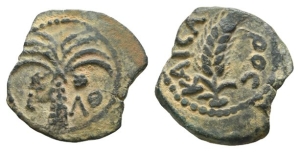
Judaea. Procurators, Marcus Ambibulus AE Prutah. Dated RY 39 of Augustus (8/9 CE). Jerusalem mint. In the name of Caesar (Augustus).
Sold for (Inc. bp): £46
Palm tree with dates; L ΛΘ (date) across fields / KAICA-POC, ear of grain curved to the right. RPC II 4955; Meshorer 313; Hendin 6358. 2.16gr, 16mm, 5h.
Very Fine.
London, UK, dealership, 1990s. -
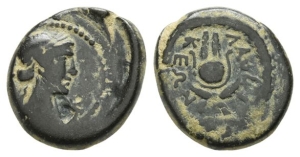
Phrygia, Laodicea ad Lycum AE 17mm. Time of Tiberius, circa AD 14-37. ΠΥΘΗΣ ΠΥΘΟΥ, (Pythes, son of Pythes), magistrate. Pseudo-autonomous issue.
Sold for (Inc. bp): £13
Laureate head of Apollo to right; [kithara] to left, monogram of ΠΥΘ to right / Headdress of Isis; ΛΑΟΔΙ-ΚΕΩΝ around. RPC I 2905; AMC 1399. 4.17gr, 17mm, 12h.
Near Very Fine.
Ex Münzzentrum Rheinland. Property of a Kent, UK, gentleman.
