
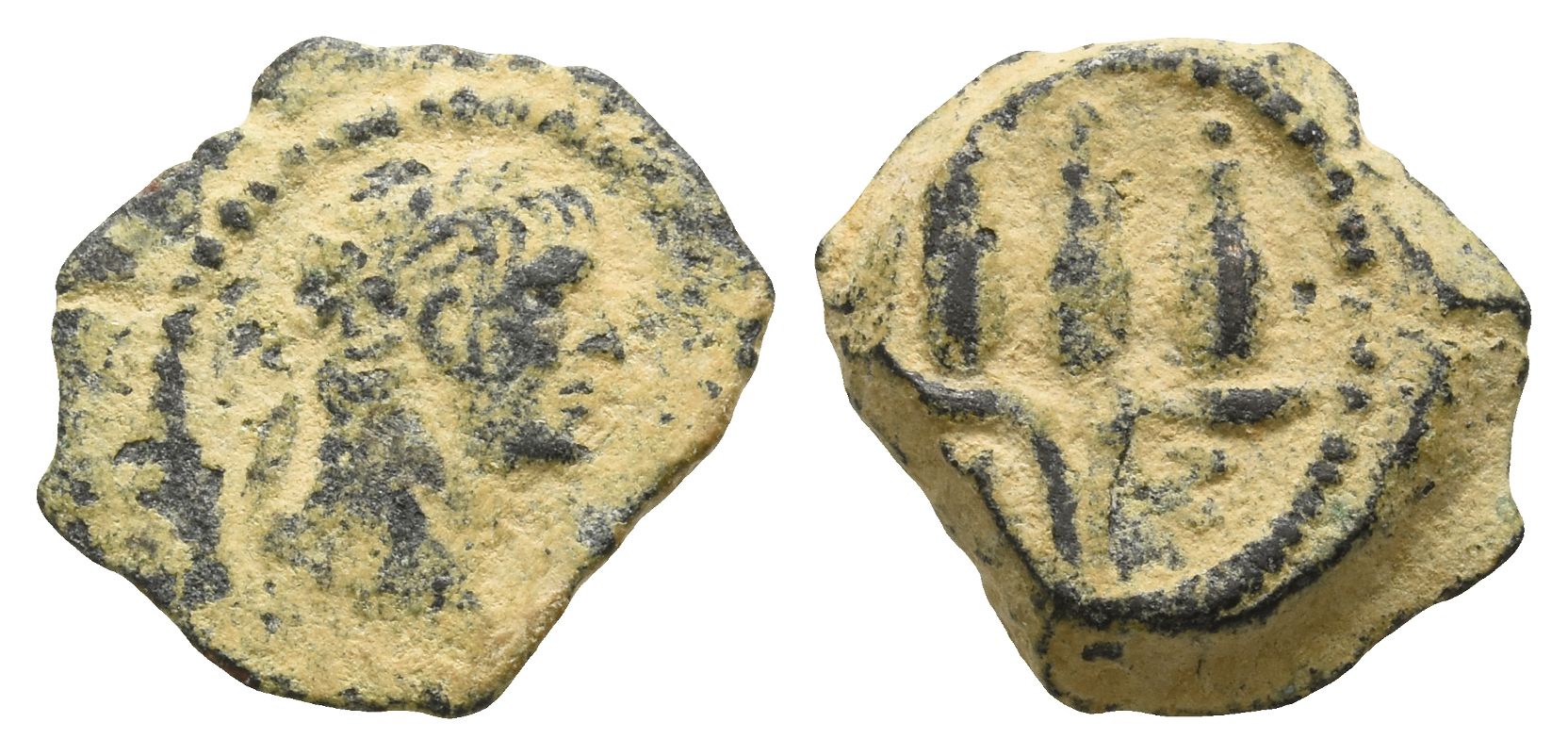
LOT 3512
Trajan AE Dichalkon of Alexandria, Egypt. Dated RY 17 (AD 113/4).
Laureate head to right / Hemhem crown, [L I]-Z (date) below. RPC III 4820; Dattari (Savio) 7221; Emmett 707.17. Very Fine.(2.03gr, 15mm, 12h.).
ProvenanceFrom the collection of a gentleman, acquired on the London art market in the 1990s.
FootnotesThe Hemhem crown was an ornate triple Atef with corkscrew sheep horns and usually two uraeus. The Egyptian word Hemhem means to shout, cry out, possibly indicating that the Hemhem crown represented a battle horn.
TimeLine Auctions follows a vetting process to ensure the authenticity and legality of all items, reinforcing our commitment to integrity and responsible trading. Each antiquity, antique, and coin lot undergoes thorough examination by a vetting committee of at least ten external specialists, professional trade association members, scientists, and archaeologists: Our Vetting Process
AUCTIONS:
TimeLine is a leading auction house specialising in antiquities, ancient art, collectables, natural history, coins, medals, and books. Our auctions offer museums, collectors, historians, and enthusiasts the opportunity to acquire unique and historically significant pieces.
-
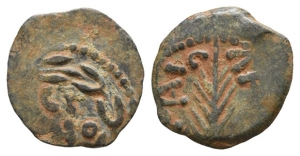
Judaea. Procurators, Porcius Festus AE Prutah. Dated RY 5 of Nero (58/9 CE). Jerusalem mint. In the name of Nero.
Sold for (Inc. bp): £39
NЄPധNOC in three lines within wreath / L Є KAIC-APOC, palm branch. RPC I, 4972; TJC 345; Hendin GBC 6, 6380; Hendin GBC 5, 1351. 1.50gr, 17mm, 10h.
Very Fine.
From the collection of a gentleman, acquired on the London art market in the 1990s. -
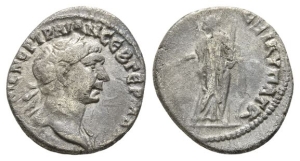
Trajan AR Drachm of Bostra(?), Arabia. Struck AD 112.
Sold for (Inc. bp): £65
[ΑVΤΟΚΡ Κ]ΑΙϹ ΝЄΡ ΤΡΑΙΑΝ ϹЄΒ ΓЄΡΜ ΔΑΚ, laureate bust to right, slight drapery on left shoulder / [ΔΗΜΑΡΧ] ЄΞ ΙϚ ΥΠΑΤ Ϛ, Arabia standing to left, holding branch in right hand and bundle of cinnamon sticks in left; behind, [camel standing to left]. Cf. RPC III 4073 (Arabian mint); Metcalf, Caesarea 15; Sydenham, Caesarea 184. 3.66gr, 19mm, 6h.
Near Very Fine.
From the collection of a gentleman, acquired on the London art market in the 1990s. -
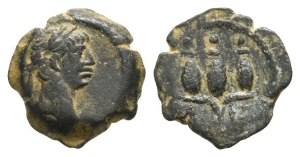
Trajan AE Dichalkon of Alexandria, Egypt. Dated RY 17(?) (AD 113/4).
Sold for (Inc. bp): £20
Laureate head to right / Hemhem crown, [L I-Z(?) (date)] below. Cf. RPC III 4820; cf. Dattari (Savio) 7221; cf. Emmett 707.17. 1.46gr, 13mm, 12h.
Very Fine.
From the collection of a gentleman, acquired on the London art market in the 1990s.
