
Loading, please wait...
LOT 1910
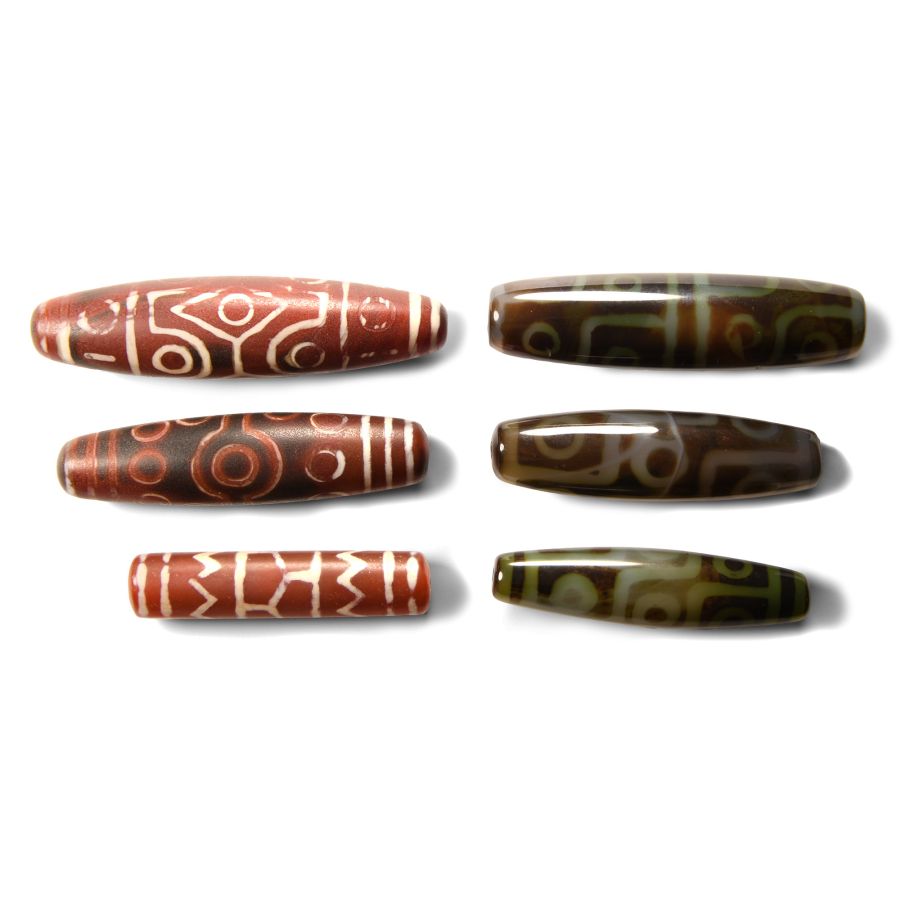
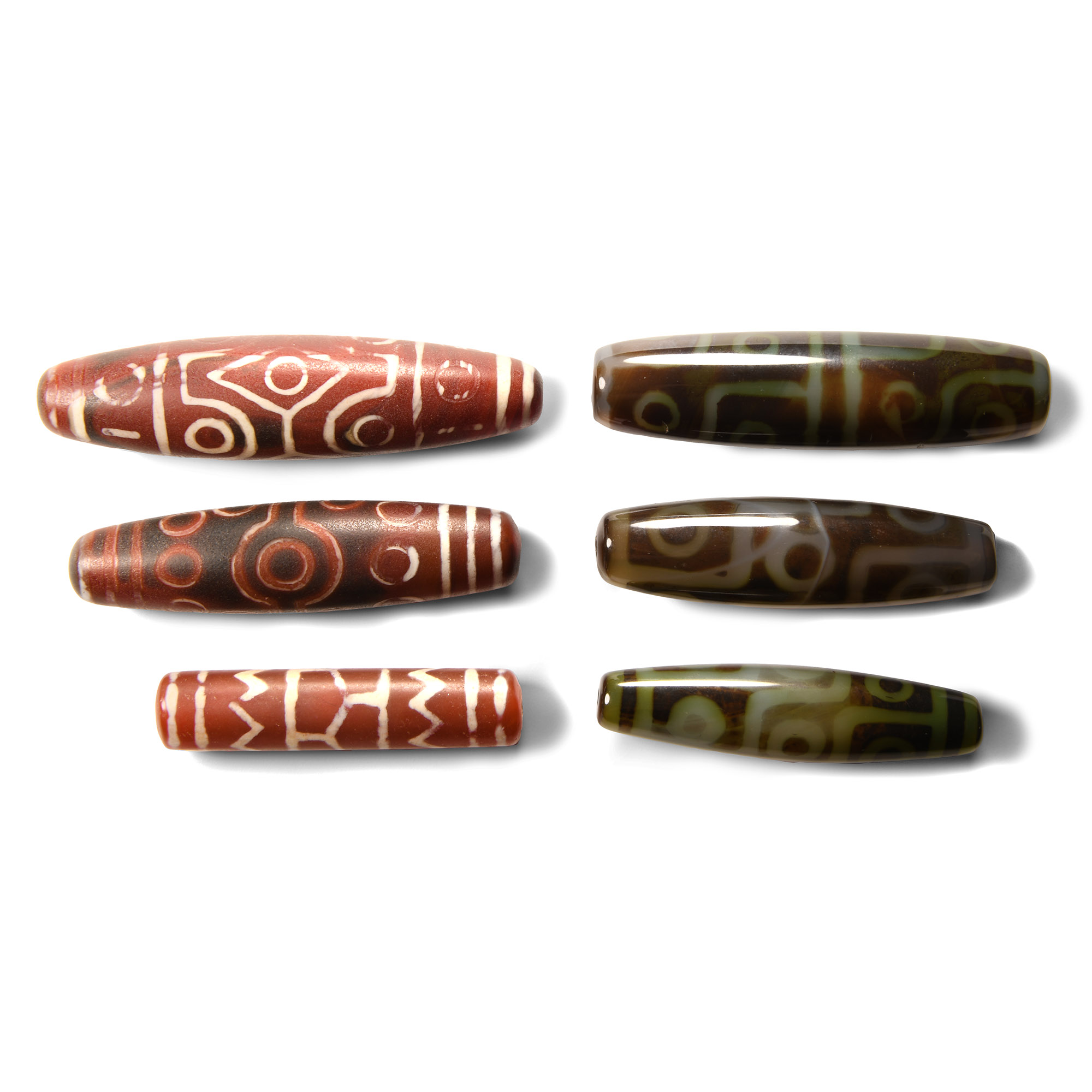
Tibetan Style Glass Eye Bead Group
20TH CENTURY A.D.
2 - 2 3/4 in. (135 grams total, 53-70 mm).
Comprising a group of six large tubular beads imitating traditional 'etched' agate Zi beads; each longitudinally pierced for stringing. [6, No Reserve]
ProvenanceUK gallery, early 2000s.
CONDITIONTimeLine Auctions follows a vetting process to ensure the authenticity and legality of all items, reinforcing our commitment to integrity and responsible trading. Each antiquity, antique, and coin lot undergoes thorough examination by a vetting committee of at least ten external specialists, professional trade association members, scientists, and archaeologists: Our Vetting Process
AUCTIONS:
TimeLine is a leading auction house specialising in antiquities, ancient art, collectables, natural history, coins, medals, and books. Our auctions offer museums, collectors, historians, and enthusiasts the opportunity to acquire unique and historically significant pieces.
-
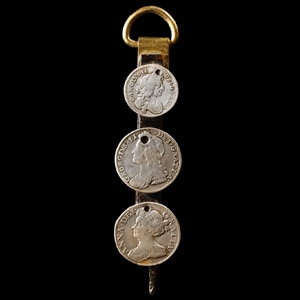
Post Medieval Brass Fitting with Coins
17th-18th century A.D.Sold for (Inc. bp): £39
Group of three silver coins mounted obverse-outwards on a horn shank with brass suspension ring: Charles II threepence; George II sixpence; Queen Anne sixpence; each coin pierced. 11.8 grams, 95 mm
Acquired 1960s-1990s. Late Alison Barker collection, a retired London barrister. -
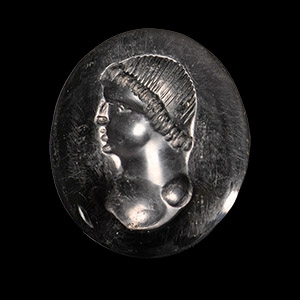
Intaglio Gemstone with Bust
20th century A.D. or earlierSold for (Inc. bp): £59
The biconvex obsidian cabochon with intaglio profile female bust of a matron with neatly dressed hair; accompanied by a museum-quality impression. 1.65 grams, 15 mm
Ex property of a Richmond gentleman; part of his family collection formed before 1980; thence by descent. -
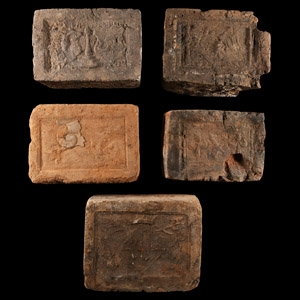
Elizabethan Period Ceramic Fire Brick Group
Circa 16th century A.D.Sold for (Inc. bp): £140
Each slightly differently sized and displaying designs in relief including heraldic shields, fleurs, a crowned lozenge and other worn motifs. 9 kg total, 12.7-14 cm
Acquired 1990s-early 2000s. East Anglian private collection.
These glazed stove or floor tiles are similar to the ones of the great hall and the Tudor kitchens at Hampton Court Palace, made of ceramic, with a glaze to make it hard wearing and washable. Not just the furnishings, but the palaces themselves were multi-coloured, with brick walls painted red, and exposed timbers in yellow, red, green and white.
