
Loading, please wait...
LOT 1800
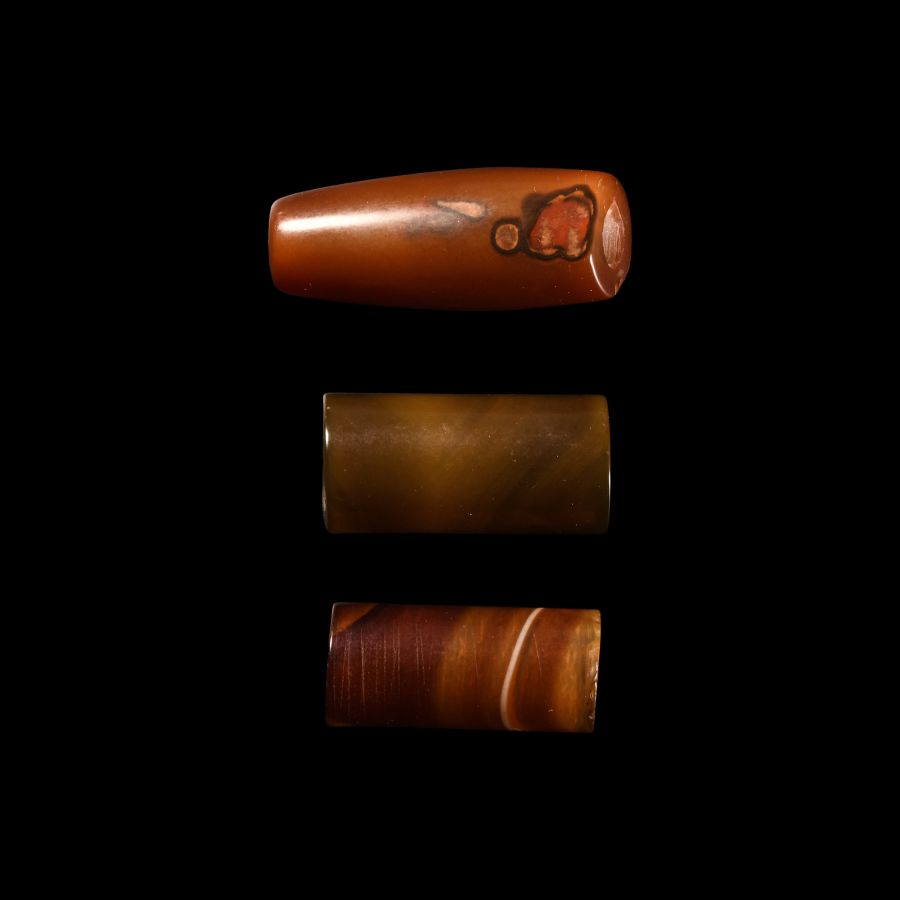
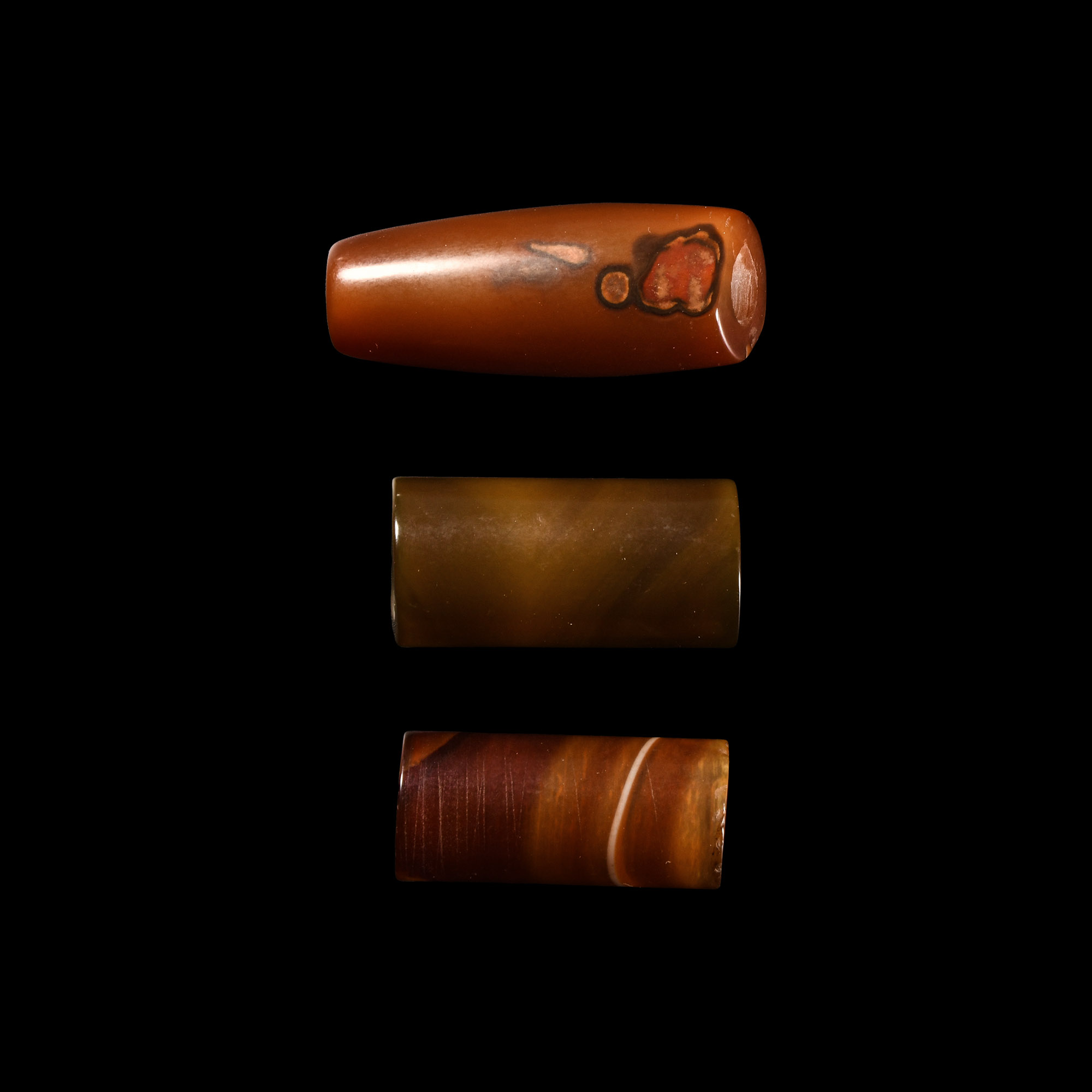
Tibetan Style Giant Carnelian Necklace Bead Group
20TH CENTURY A.D.
1 5/8 - 2 1/4 in. (87 grams total, 42-56 mm).
One green-coloured cylindrical bead, a slightly smaller cylindrical bead of banded agate, and a truncated biconical bead with mottled patch, asymmetrical and likely reworked. [3, No Reserve]
ProvenanceUK gallery, early 2000s.
CONDITIONTimeLine Auctions follows a vetting process to ensure the authenticity and legality of all items, reinforcing our commitment to integrity and responsible trading. Each antiquity, antique, and coin lot undergoes thorough examination by a vetting committee of at least ten external specialists, professional trade association members, scientists, and archaeologists: Our Vetting Process
AUCTIONS:
TimeLine is a leading auction house specialising in antiquities, ancient art, collectables, natural history, coins, medals, and books. Our auctions offer museums, collectors, historians, and enthusiasts the opportunity to acquire unique and historically significant pieces.
-
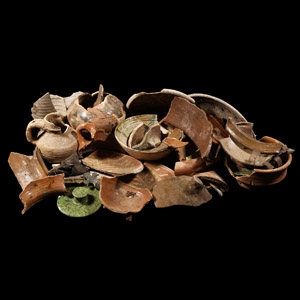
Post Medieval and Later Pottery Fragment Group
Circa 16th-19th century A.D.Sold for (Inc. bp): £13
Comprising vessel fragments from bowls, tankards, plates, jugs and others, including examples displaying decorative motifs and part of a leather shoe. 5.7 kg total, 2.5-22.5 cm
Acquired 1990s-early 2000s. East Anglian private collection. -
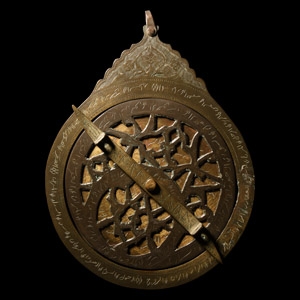
Brass Calligraphic Astrolabe
Late 20th century A.D.Sold for (Inc. bp): £286
Composed of three circular quadrants, the body surmounted with a shaped panel incised with a floral motif; suspension loop. 1.2 kg, 21 cm high
Fine condition.
Acquired on the UK art market, 2000s. Property of a Suffolk gentleman. -

North African Framed Qur'an Manuscript Leaf
Late 19th century A.D.Estimate: £80 - 100 (+bp*)
Opening Bid: £40
Written in Maghribi script with polychrome vocals and diacritics, red border framing the text; mounted in a reveal and a glazed wooden frame. 456 grams, 27.5 x 22.5 cm
Fine condition.
From Morocco, North Africa. Acquired on the UK art market, 1980s-1990s. The Woodbridge collection of Indo-Persian art.
Originally produced as part of a now disbound Qur'an produced in North Africa, likely in a provincial town. The origins of the script in which it is written date back to 7th century Kairouan, when the Kufic script developed in the East and the Maghribi script in North Africa, today used predominantly in Morocco, Tunisia and Algeria.
