
Loading, please wait...
LOT 1988
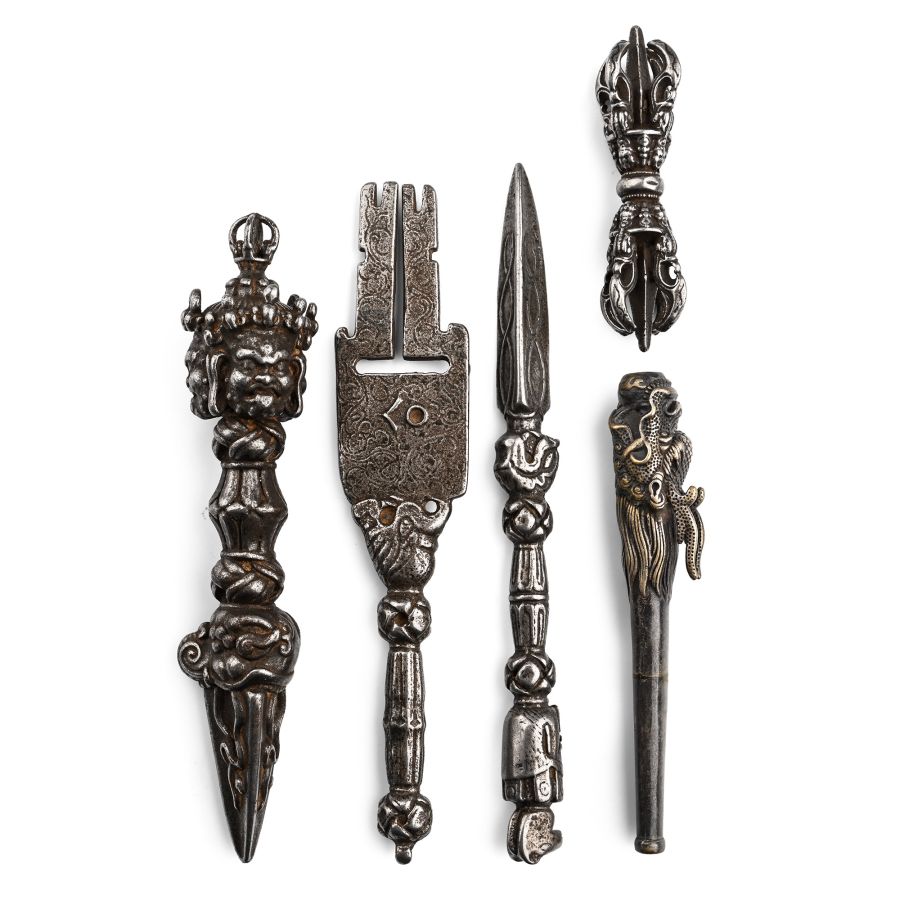
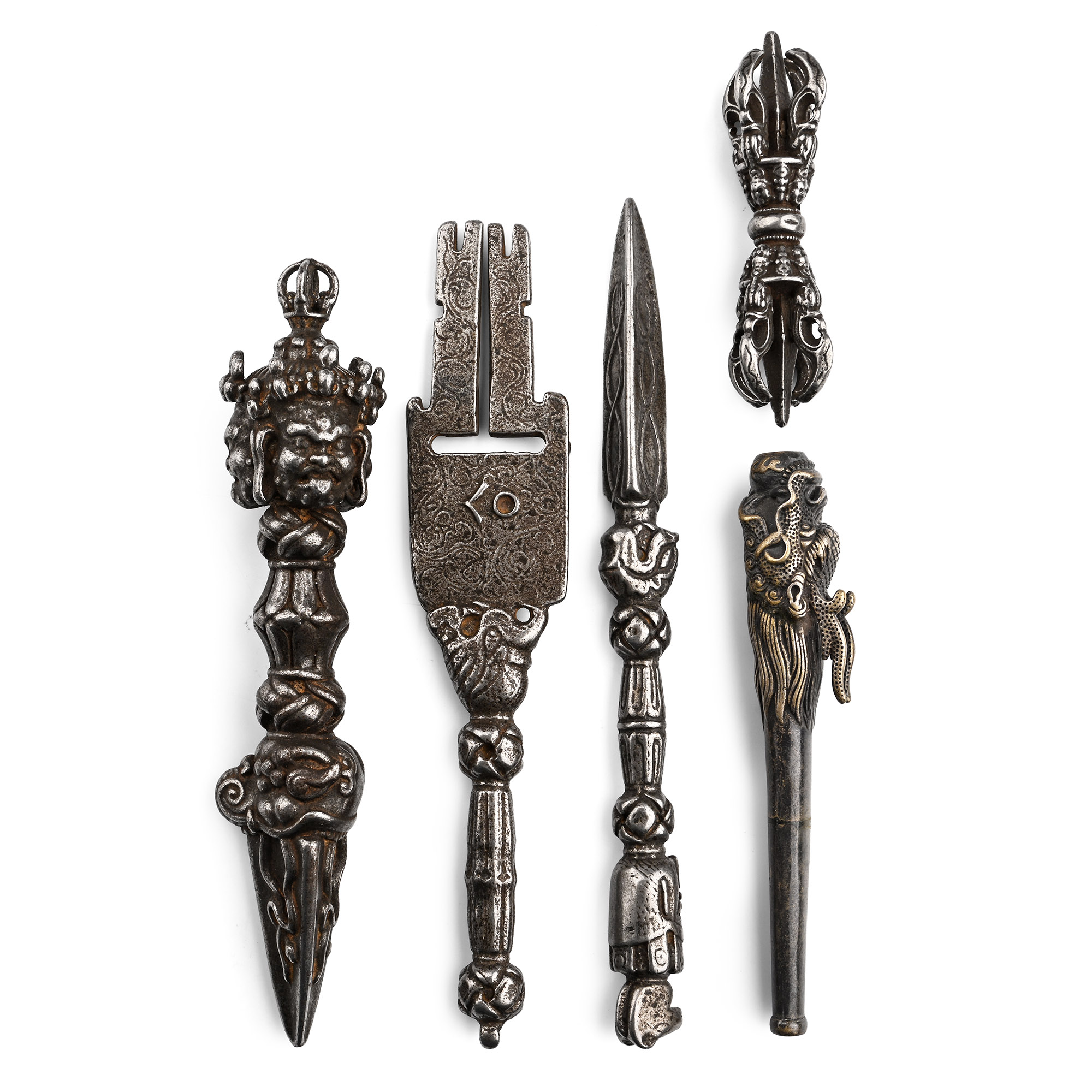
Tibetan Iron Ceremonial Buddhist Artefact Group
20TH CENTURY A.D.
3 - 6 3/8 in. (520 grams total, 7.6-16.2 cm).
Including a key with slotted bit and ribbed shank, vajra with bow to each end and other types. [5, No Reserve]
ProvenancePrivate collection, UK.
CONDITIONTimeLine Auctions follows a vetting process to ensure the authenticity and legality of all items, reinforcing our commitment to integrity and responsible trading. Each antiquity, antique, and coin lot undergoes thorough examination by a vetting committee of at least ten external specialists, professional trade association members, scientists, and archaeologists: Our Vetting Process
AUCTIONS:
TimeLine is a leading auction house specialising in antiquities, ancient art, collectables, natural history, coins, medals, and books. Our auctions offer museums, collectors, historians, and enthusiasts the opportunity to acquire unique and historically significant pieces.
-
.jpg)
Renaissance Gold Ring with Agate Cameo of the Presentation of Christ at Jerusalem
Italy, circa 1600 A.D.Estimate: £3,000 - 4,000 (+bp*)
Opening Bid: £1,500
Ellipsoid bezel with flange rim, inset cameo with a group of four adults holding an infant on a plinth; a rare subject for depiction. 8.91 grams, 24.68 mm overall, 19.41 x 17.44 mm internal diameter (approximate size British P 1/2, USA 7 3/4, Europe 16.86, Japan 16)
Private collection, Europe. Acquired on the English art market. This lot has been checked against the Interpol Database of stolen works of art and is accompanied by search certificate number no.13152-248333. -
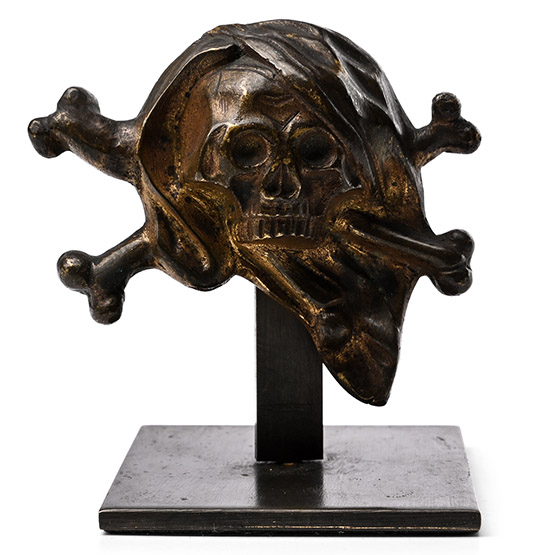
Post Medieval Bronze Vanitas Relief with Skull and Crossed Bones
Germany, 18th century A.D.Sold for (Inc. bp): £468
Comprising a human skull and crossed long bones; mounted on a custom-made display stand. 161 grams total, 66 mm high including stand
Private collection, Europe. Acquired on the English art market. -
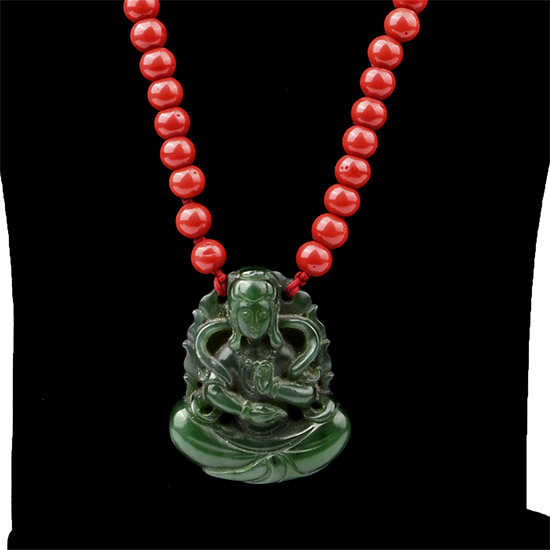
Tibetan Glass Prayer Bead Necklace with Jade Buddha Pendant
20th century A.D.Sold for (Inc. bp): £124
Restrung group of spherical coral-coloured beads with a figural pendant modelled in the half-round. 143 grams, 78 cm
Private collection, UK.
