
Loading, please wait...
LOT 2066
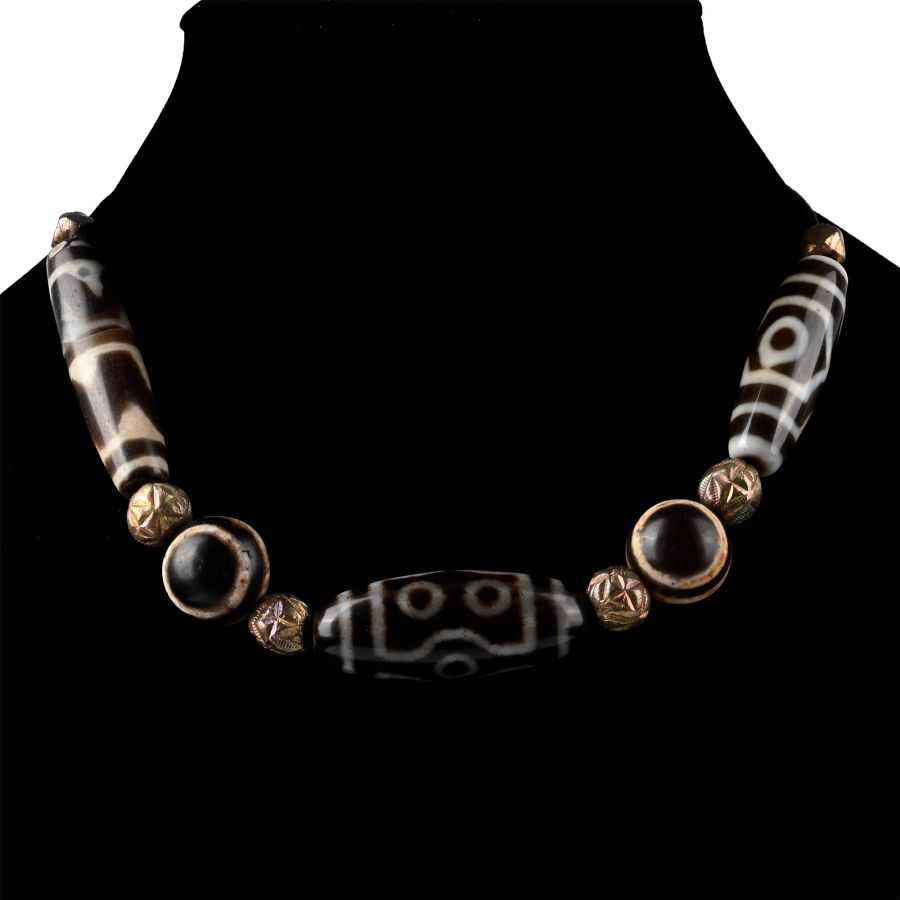
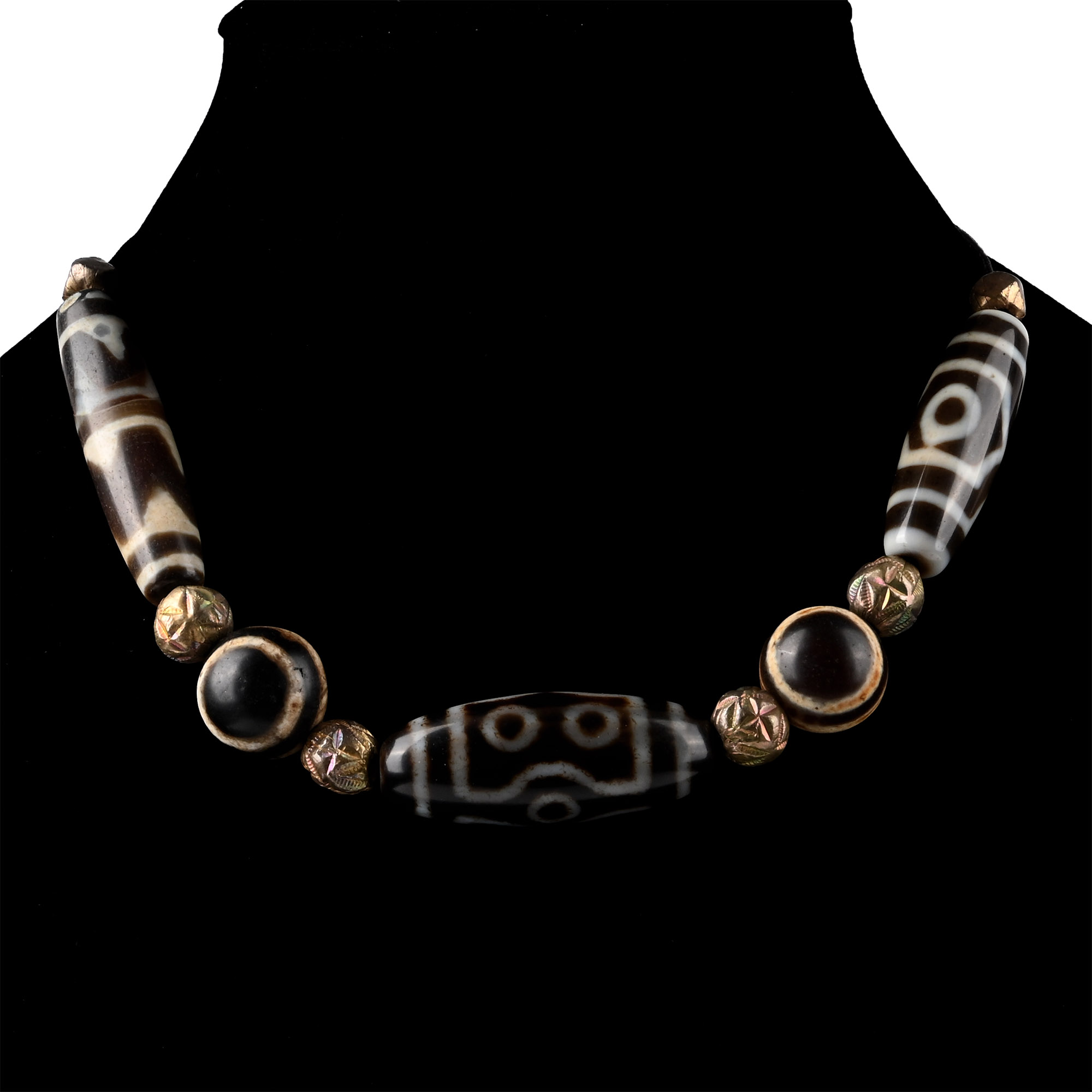
Tibetan Glass Necklace Prayer Bead Group
20TH CENTURY A.D.
31 1/2 in. (72 grams, 80 cm).
Including glass bicone and spherical beads zi banded and gilt spacer beads. [No Reserve]
ProvenancePrivate collection, UK.
CONDITIONTimeLine Auctions follows a vetting process to ensure the authenticity and legality of all items, reinforcing our commitment to integrity and responsible trading. Each antiquity, antique, and coin lot undergoes thorough examination by a vetting committee of at least ten external specialists, professional trade association members, scientists, and archaeologists: Our Vetting Process
AUCTIONS:
TimeLine is a leading auction house specialising in antiquities, ancient art, collectables, natural history, coins, medals, and books. Our auctions offer museums, collectors, historians, and enthusiasts the opportunity to acquire unique and historically significant pieces.
-
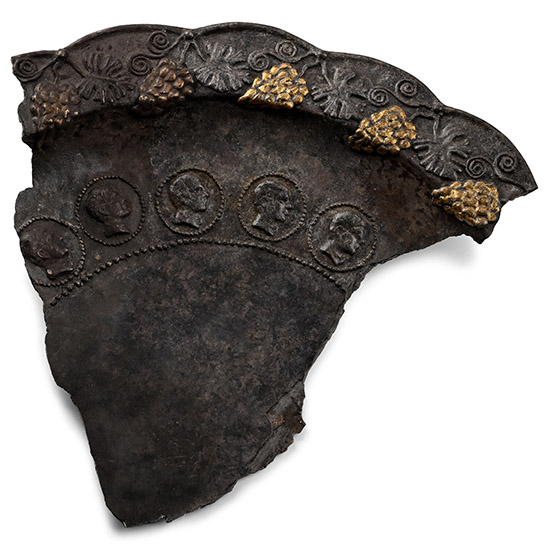
Bactrian Style Silver Dish Fragment with Hellenistic Portraits
20th century A.D.Sold for (Inc. bp): £98
Comprising a portion of the silver-coloured metal rim; rim with vine tendrils, leaves and bunches of grapes modelled in high-relief and extending into the bowl; base with a ring of right-facing male profile busts each within a pelletted hoop, and border of larger pellets below; underside abraded. 152 grams, 22.5 cm
From the London collection of the late Mr S.M., 1969-1999. -
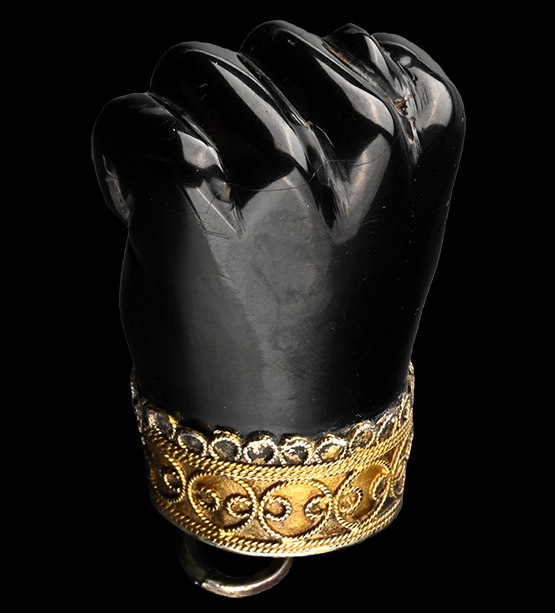
Silver-Gilt Mounted Jet 'Figa' Amulet
Spain, 17th century A.D.Estimate: £700 - 900 (+bp*)
Opening Bid: £350
Formed as a hand showing figa gesture, silver mount with applied twisted wires; attachment loop and ring to the top. 19.6 grams, 56 mm
Private collection, Europe. Acquired on the English art market.
Mano Fico, as protective amulets have been used since the ancient world, it was believed to protect from the evil eye and other dark and magical forces and to promote fertility. In ancient Rome, the fig sign, or mano fico, was made by the pater familias (father of the family) to ward off the evil spirits of the dead as a part of the Lemuria ritual. The ancient Greeks wore amulets of the gesture around the neck to protect from the evil eye, and also used the gesture in artwork. What they considered an overtly sexual gesture was expected to distract evil spirits from causing harm. The pendant would have been worn from a belt or from a chatelaine containing other protective talismans. This carving would have served as a token representing a person's pilgrimage to Santiago de Compostela, one of the very few places in which jet can be found and mined since at least the Middle Ages. -
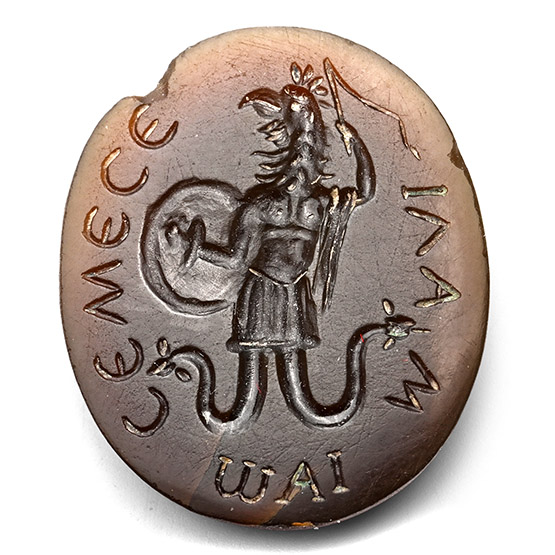
Post-Classical Agate Gnostic Gemstone with Anguiped
18th-19th century A.D. or earlierSold for (Inc. bp): £572
Incuse motif of serpent-legged rooster facing left holding a shield and solar whip; enigmatic agical inscriptions surrounding; supplied with a museum-quality impression. 3.41 grams, 23 mm
Collection of Mr and Mrs V.A., Monte Carlo, 1960s. Acquired on the European art market. Private collection, England.
