
Loading, please wait...
LOT 2293
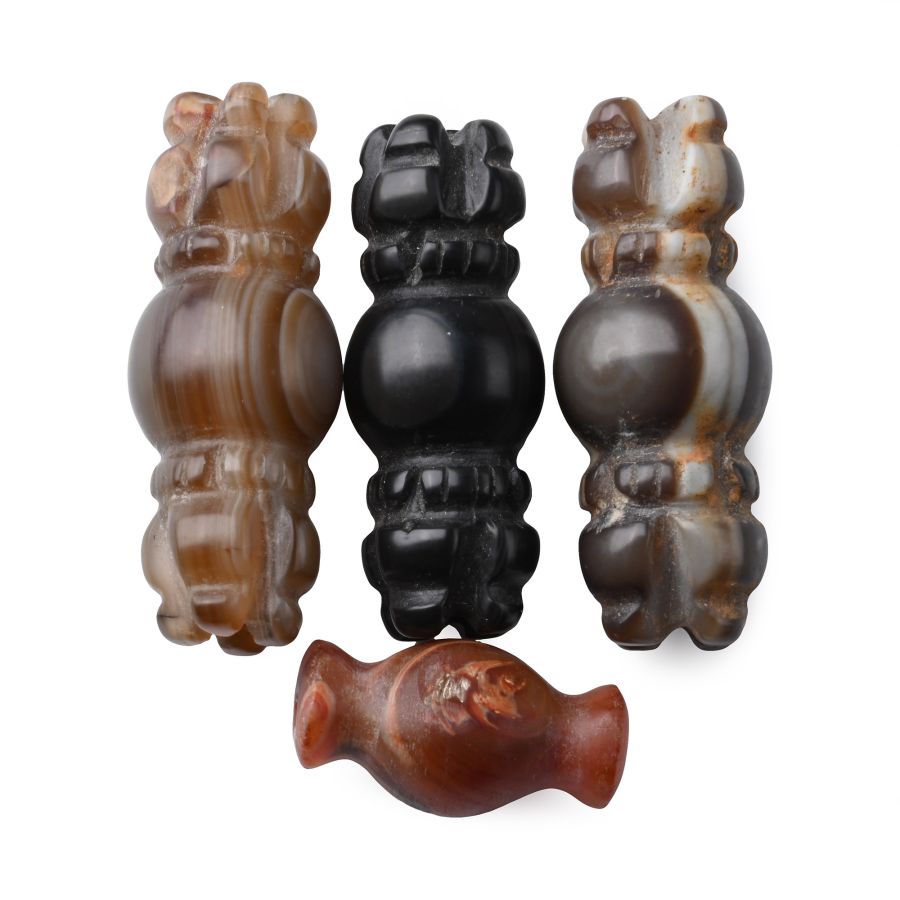
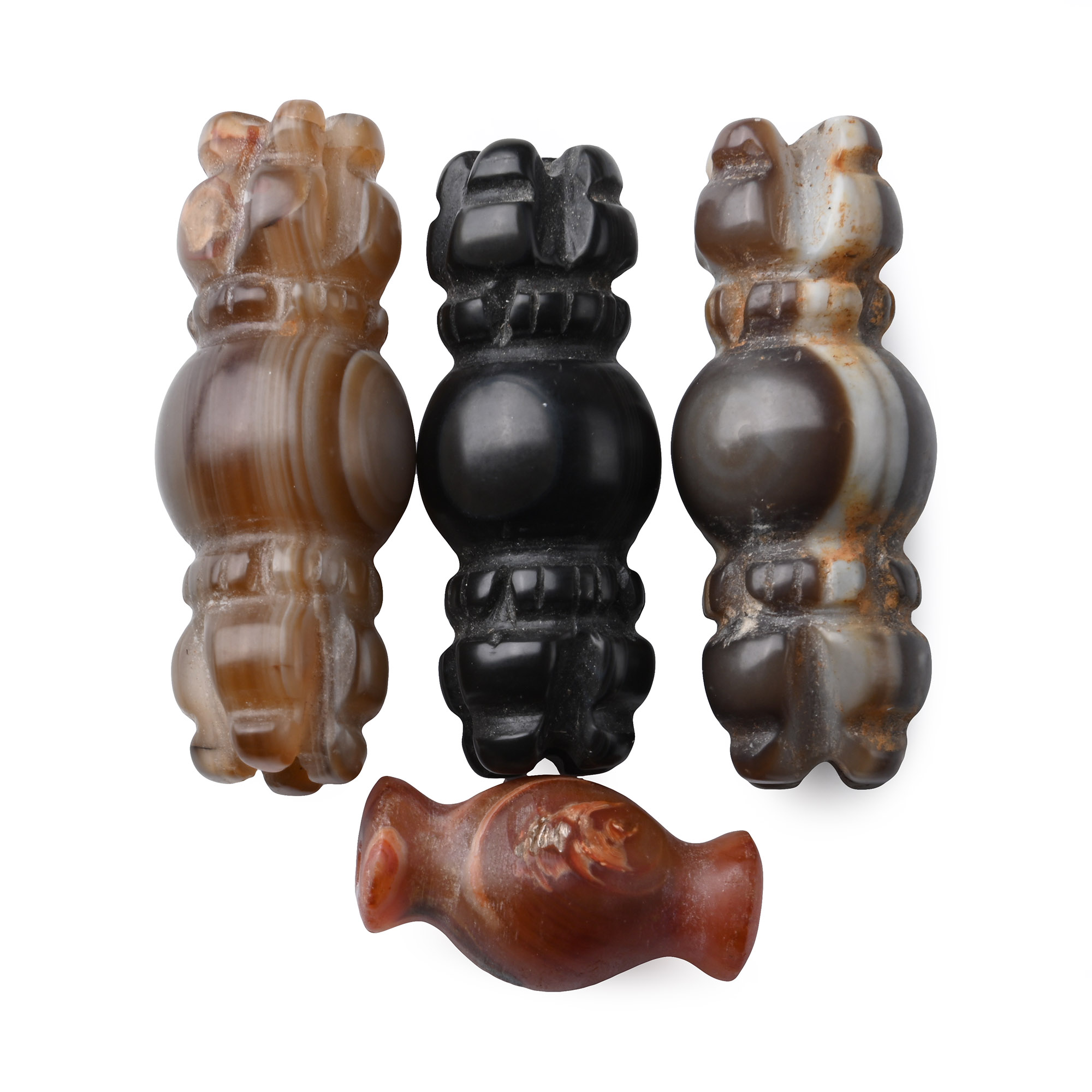
Tibetan Carved Agate Amuletic Bead Group
20TH CENTURY A.D. OR EARLIER
1 - 1 5/8 in. (39.15 grams total, 24-41 mm).
Comprising three agate beads formed as the vajra, and one red agate collared globular bead. [4, No Reserve]
ProvenanceEx UK gallery, early 2000s.
Property of a West Northamptonshire, UK, gentleman.
TimeLine Auctions follows a vetting process to ensure the authenticity and legality of all items, reinforcing our commitment to integrity and responsible trading. Each antiquity, antique, and coin lot undergoes thorough examination by a vetting committee of at least ten external specialists, professional trade association members, scientists, and archaeologists: Our Vetting Process
AUCTIONS:
TimeLine is a leading auction house specialising in antiquities, ancient art, collectables, natural history, coins, medals, and books. Our auctions offer museums, collectors, historians, and enthusiasts the opportunity to acquire unique and historically significant pieces.
-
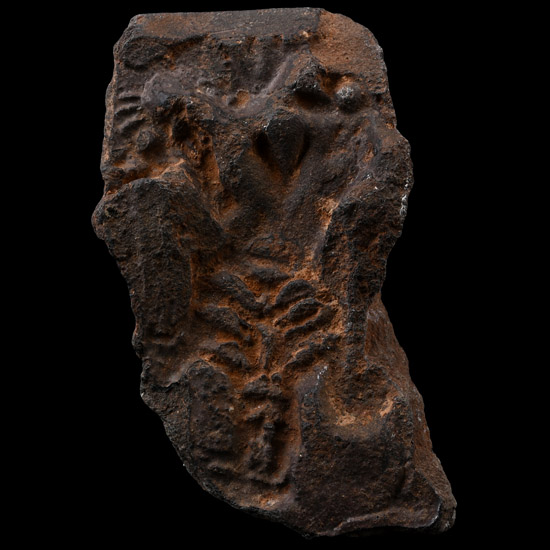
Post Medieval Pottery Sherd with Christ
Circa 16th-17th century A.D.Sold for (Inc. bp): £7
Rim fragment with high-relief Corpus Christi. 54 grams, 85.11 mm
From the private collection of a European gentleman (1942-2024), formed since the 1970s. -
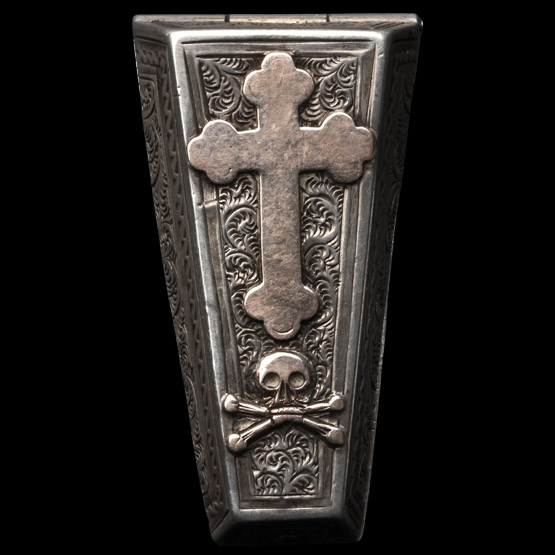
Victorian Silver Memento Mori Lidded Coffin-Shaped Casket with Skull and Crossed Bones
Late 19th-early 20th century A.D.Sold for (Inc. bp): £312
Trapezoidal in plan with hinged lid, panels of scrolled foliage within undulating borders to each face; applied rose-gold cross bottony to lid above a skull and crossed longbones; inside, glazed panel to accept a lock of hair (absent); pierced lug at foot aligning with hole in the lid to secure it. 21.9 grams, 45 mm
Previously from the house sale of a late English collector. Ex USA private collection, 1970s-1980s. -
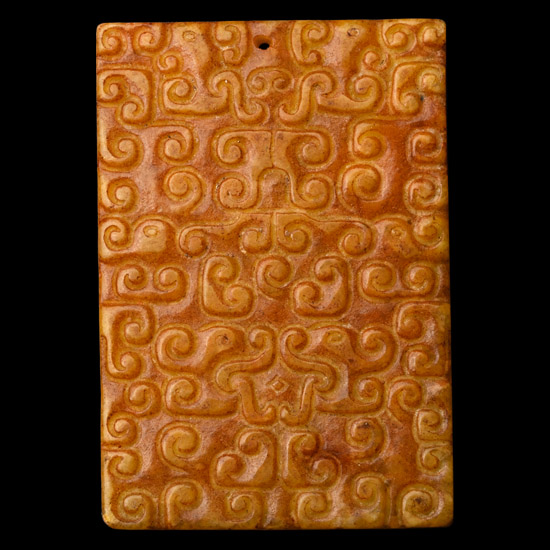
Chinese Amuletic Glass Pendant
20th century A.D.Sold for (Inc. bp): £13
A bifacial rectangular plaque pierced through the upper edge, both sides with densely arranged scroll motifs. 27.1 grams, 59 mm
Ex Paris gallery, France, 1990s. Property of a West Northamptonshire, UK, gentleman.
