
Loading, please wait...
LOT 1966
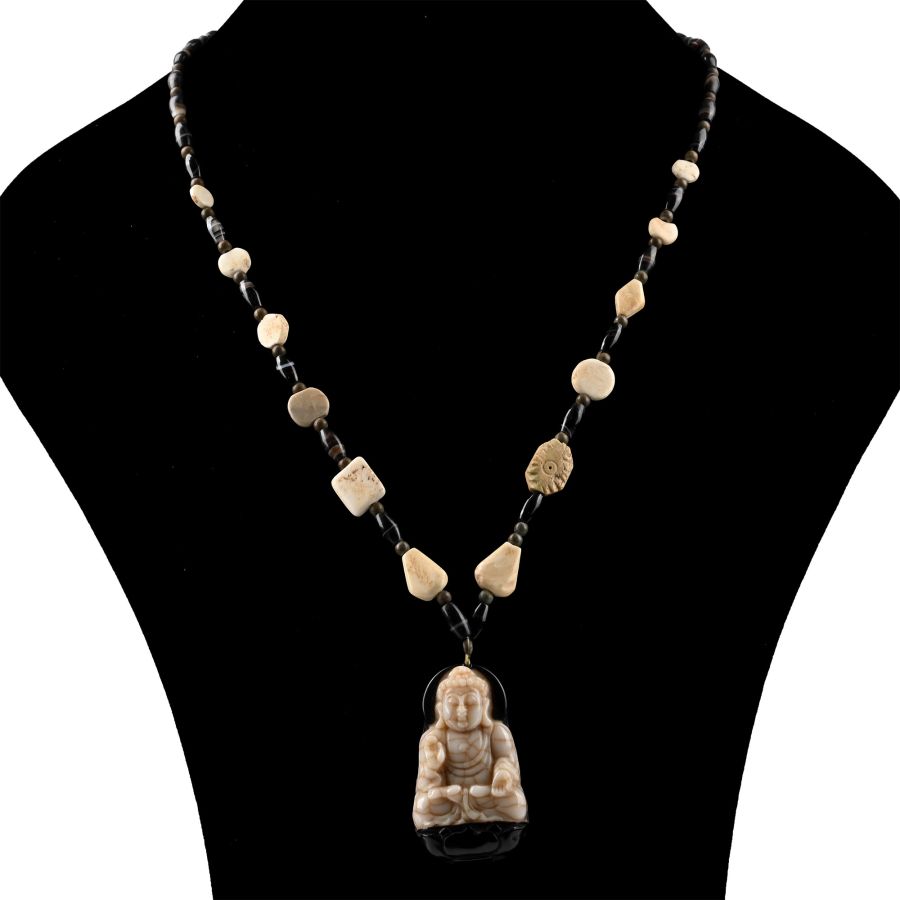
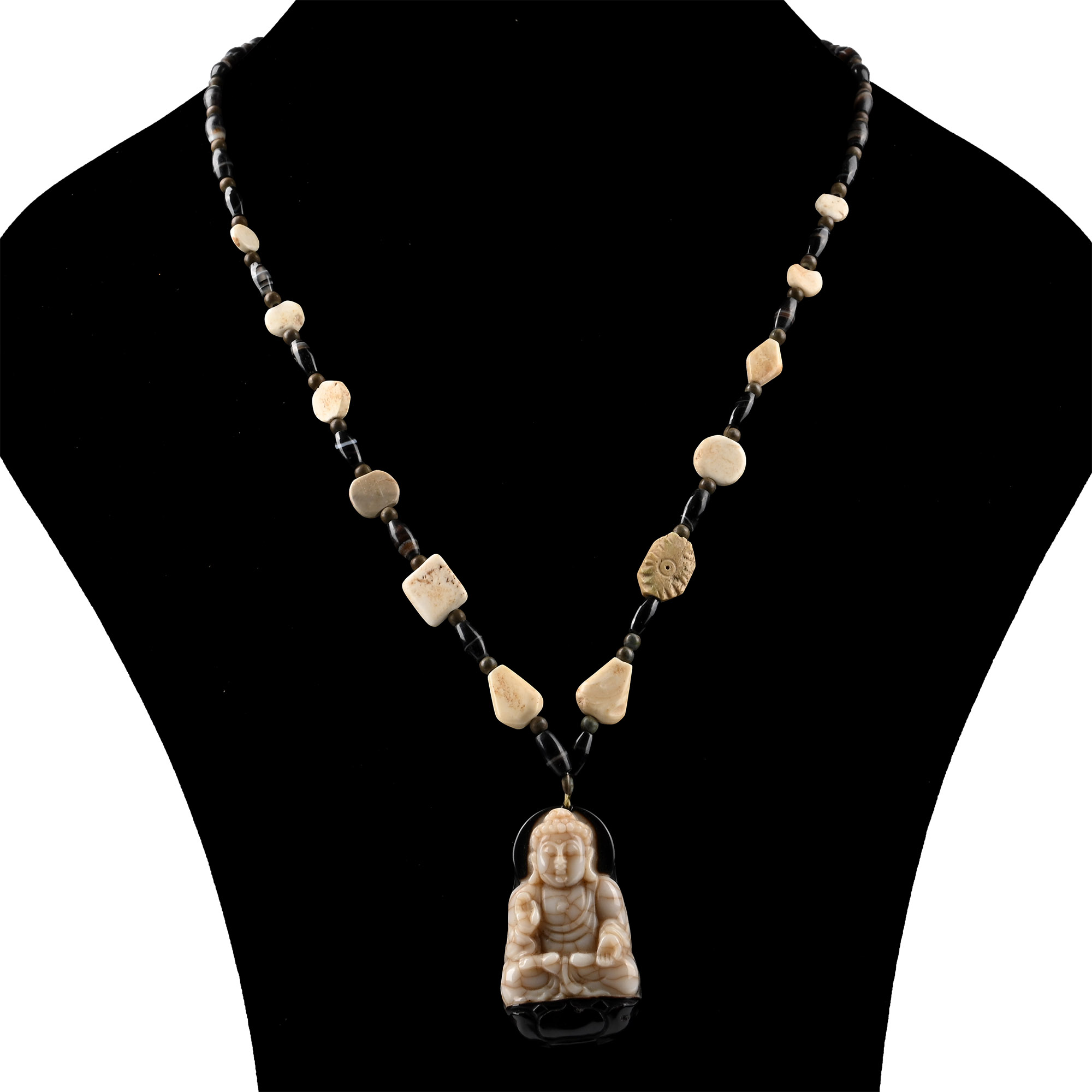
Tibetan Agate Prayer Bead Necklace with Glass Buddha Pendant
20TH CENTURY A.D.
24 3/8 in. (60.4 grams, 60.2 cm).
Restrung group of discoid, fusiform and other beads in banded agate, bone and other materials, with centrepiece pendant of seated Buddha on a dark stone backing. [No Reserve]
ProvenancePrivate collection, UK.
CONDITIONTimeLine Auctions follows a vetting process to ensure the authenticity and legality of all items, reinforcing our commitment to integrity and responsible trading. Each antiquity, antique, and coin lot undergoes thorough examination by a vetting committee of at least ten external specialists, professional trade association members, scientists, and archaeologists: Our Vetting Process
AUCTIONS:
TimeLine is a leading auction house specialising in antiquities, ancient art, collectables, natural history, coins, medals, and books. Our auctions offer museums, collectors, historians, and enthusiasts the opportunity to acquire unique and historically significant pieces.
LOT 1966
Tibetan Agate Prayer Bead Necklace with Glass Buddha Pendant
Sold for (Inc. bp): £59
-
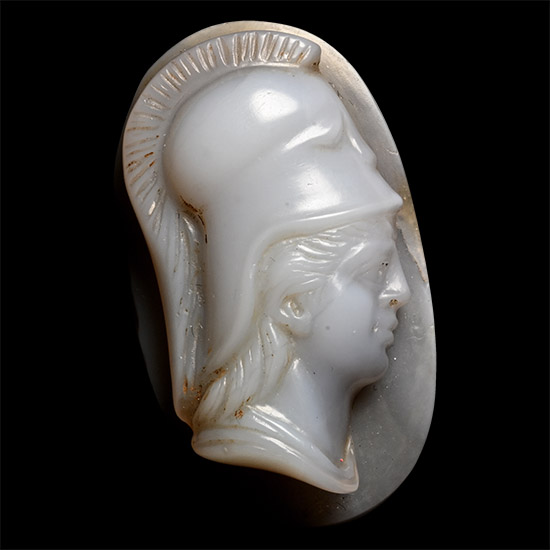
Post-Classical Agate Cameo with the Goddess Minerva
18th-19th century A.D.Estimate: £1,000 - 1,400 (+bp*)
Opening Bid: £500
Ellipsoid in plan with helmetted bust of Minerva; deep undercuts to the edges. 12.3 grams, 35 mm
with Hindmann, Chicago, 21 March 2023, no.221. Private collection, England. -

Bronze Grand Tour Statue of 'The Dying Gaul' from the Capitoline Museum
Italy, circa 1880 A.D.Sold for (Inc. bp): £1,040
Copy of a Greek sculpture (now lost) from the Hellenistic period (323-31 BC) thought to have been made in bronze; a young Galatian warrior, wounded in the chest by a sword blow and dying, half-lying with his face turned downwards; with typical features of the idealised Celtic warrior: the high cheekbones, the hairstyle with thick and long locks, and the moustache (mytax); resting on a discarded shield with short sword under his right hand, straps and two tubular war-horns. 4 kg, 32 cm
From the private collection of a S.W. London gentleman, acquired in the 1970s.
The Dying Gaul statue was rediscovered in Rome in the early 17th century, specifically in the 1620s, during excavations for the Villa Ludovisi. It was initially part of the Ludovisi collection and later acquired by Pope Clement XII for the Capitoline Museums. Except for a torque around the neck (a metal necklace typical of Celtic warriors), the figure is completely naked. It is possible to identify the figure tentatively as the ‘Trumpeter of Epigonos’ mentioned by Pliny (Natural History 34.88). -
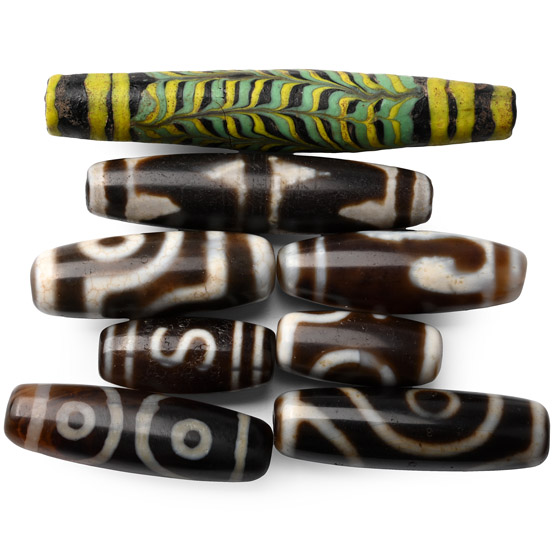
Tibetan and Other Glass Bead Collection
20th century A.D.Sold for (Inc. bp): £33
Including a glass fusiform bead with dragged trail detailing and seven tzi beads. 90 grams total, 26-76 mm
Private collection, UK.
