
Loading, please wait...
LOT 2209
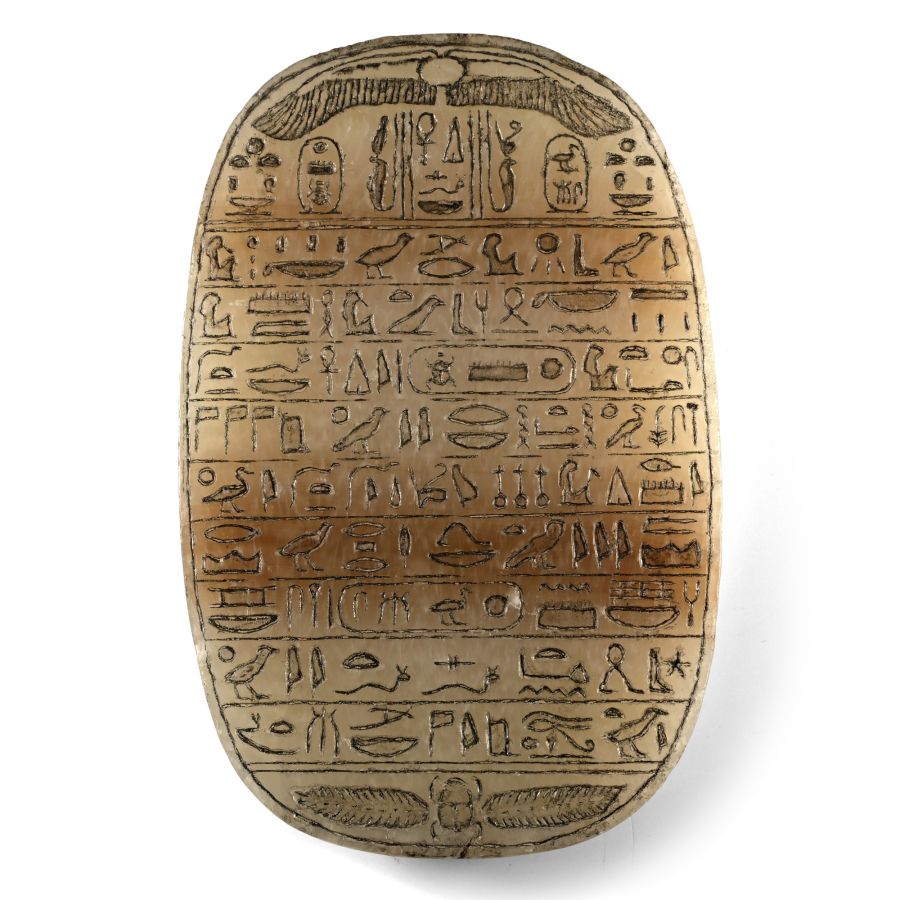
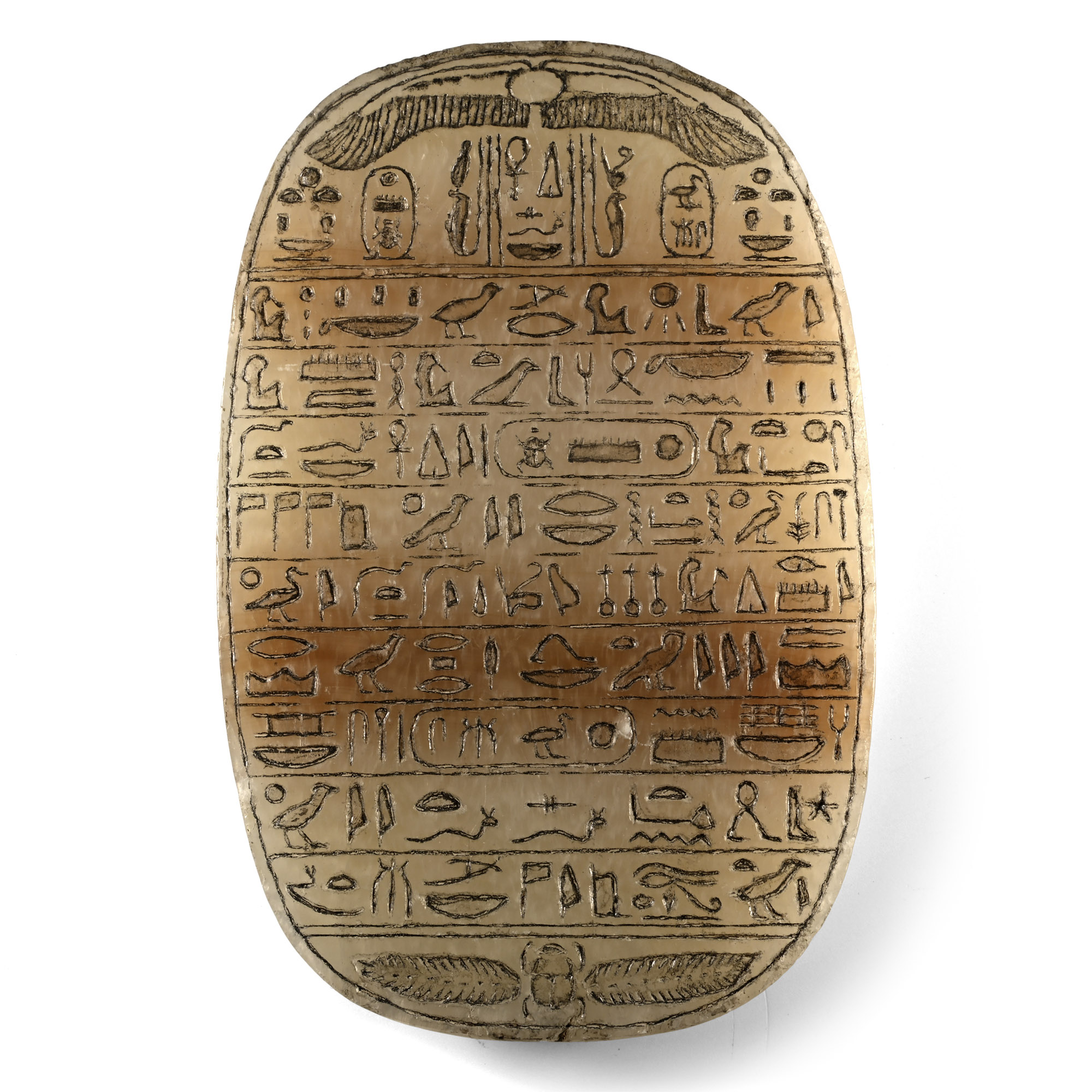
Thutmose III Grand Tour Scaraboid
19TH CENTURY AD.
6 1/4 in. (759 grams, 15.7 cm).
Plano-convex in section with flattened face; incised cartouches and ten lines of hieroglyphic inscription to the underside with winged scarab in base; collector's legend 'Tutmose III / 18 Dynasty 1500 BC / 121' to reverse. [No Reserve]
ProvenanceFrom a private, UK, collection in the 1980s.
Property of a London, UK, antiquarian.
This lot is accompanied by an illustrated lot declaration signed by the Head of the Antiquities Department, Dr Raffaele D’Amato.
TimeLine Auctions follows a vetting process to ensure the authenticity and legality of all items, reinforcing our commitment to integrity and responsible trading. Each antiquity, antique, and coin lot undergoes thorough examination by a vetting committee of at least ten external specialists, professional trade association members, scientists, and archaeologists: Our Vetting Process
AUCTIONS:
TimeLine is a leading auction house specialising in antiquities, ancient art, collectables, natural history, coins, medals, and books. Our auctions offer museums, collectors, historians, and enthusiasts the opportunity to acquire unique and historically significant pieces.
-
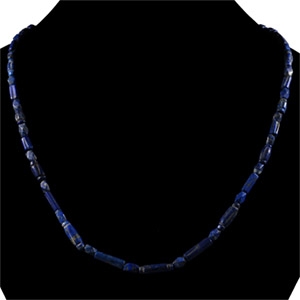
Bactrian Style Lapis Lazuli Bead Necklace String
20th century A.D.Sold for (Inc. bp): £39
Composed of alternating grooved and collared, tubular and multifacetted beads, central featured a larger collared bead; restrung. 28.3 grams, 48.5 cm
Ex London art market. Property of a North London, UK, gentleman. This lot is accompanied by an illustrated lot declaration signed by the Head of the Antiquities Department, Dr Raffaele D’Amato. -
.jpg)
Celtic Style Stone Head of a Deity
19th-20th century A.D.Sold for (Inc. bp): £221
Of irregular rounded profile with incised zigzag hairline, reserved almond-shaped eyes and vertical bar nose, incised left ear; mounted on a custom-made stand; after the antique. 3.25 kg total, 24.6 cm including stand
From a collection acquired on the UK art market from various auction houses and collections mostly before 2000. From an important Cambridgeshire estate; thence by descent. This lot is accompanied by an illustrated lot declaration signed by the Head of the Antiquities Department, Dr Raffaele D’Amato. -
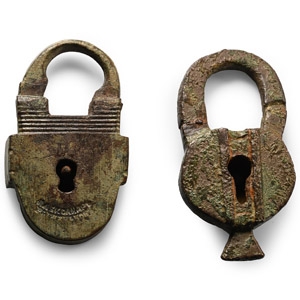
Post Medieval Bronze Padlock Group
16th-18th century A.D.Sold for (Inc. bp): £117
One with guide-rails to the keyhole and domed rear, one with transverse ribbing above. 56 grams total, 46-50 mm
Ex German art market, 2000s. Acquired from an EU collector living in London. From the collection of Surrey, UK, gentleman. This lot is accompanied by an illustrated lot declaration signed by the Head of the Antiquities Department, Dr Raffaele D’Amato.
