
Loading, please wait...
LOT 2184
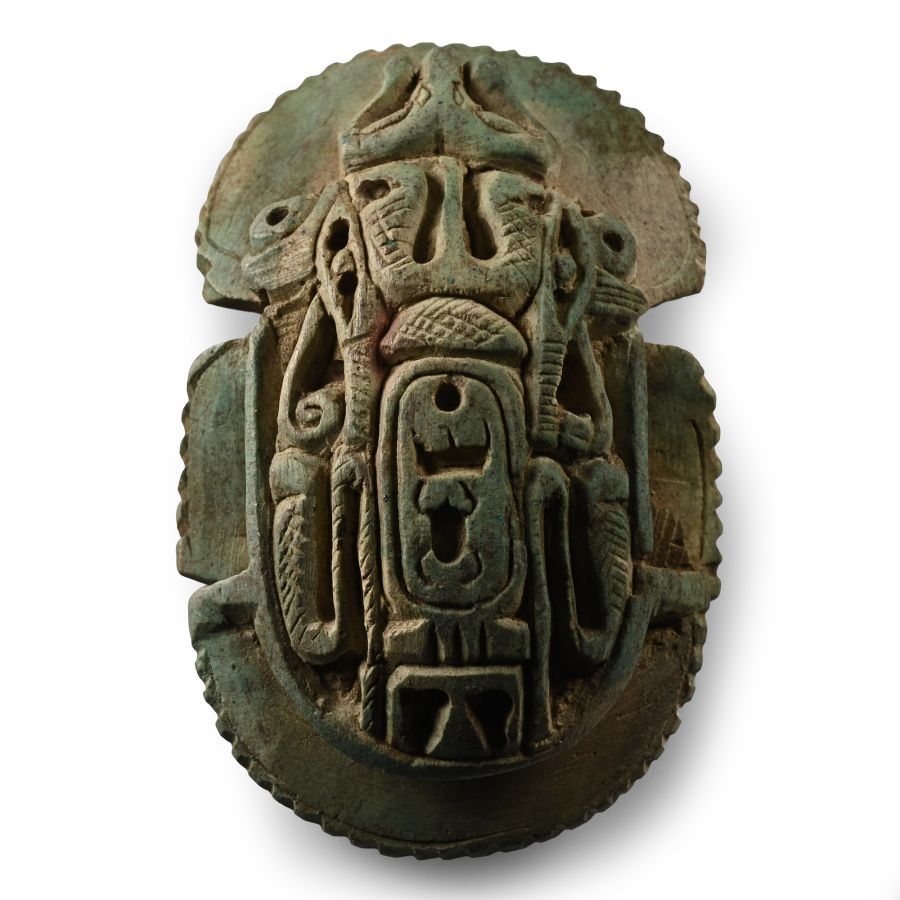
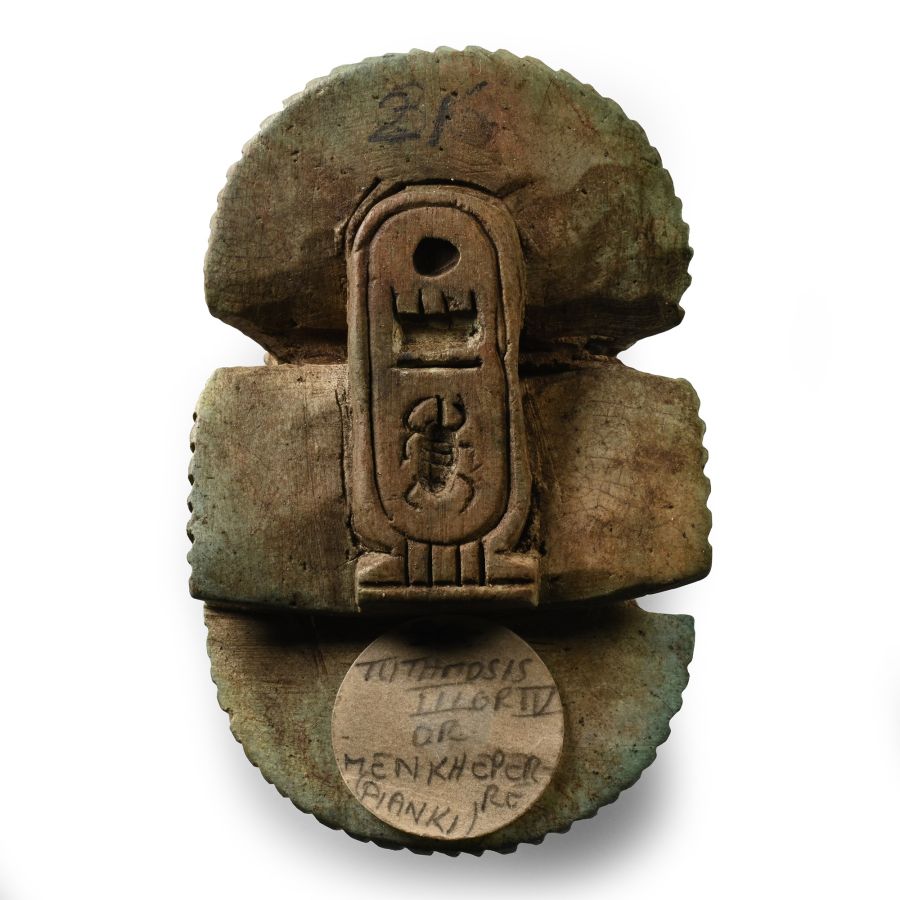
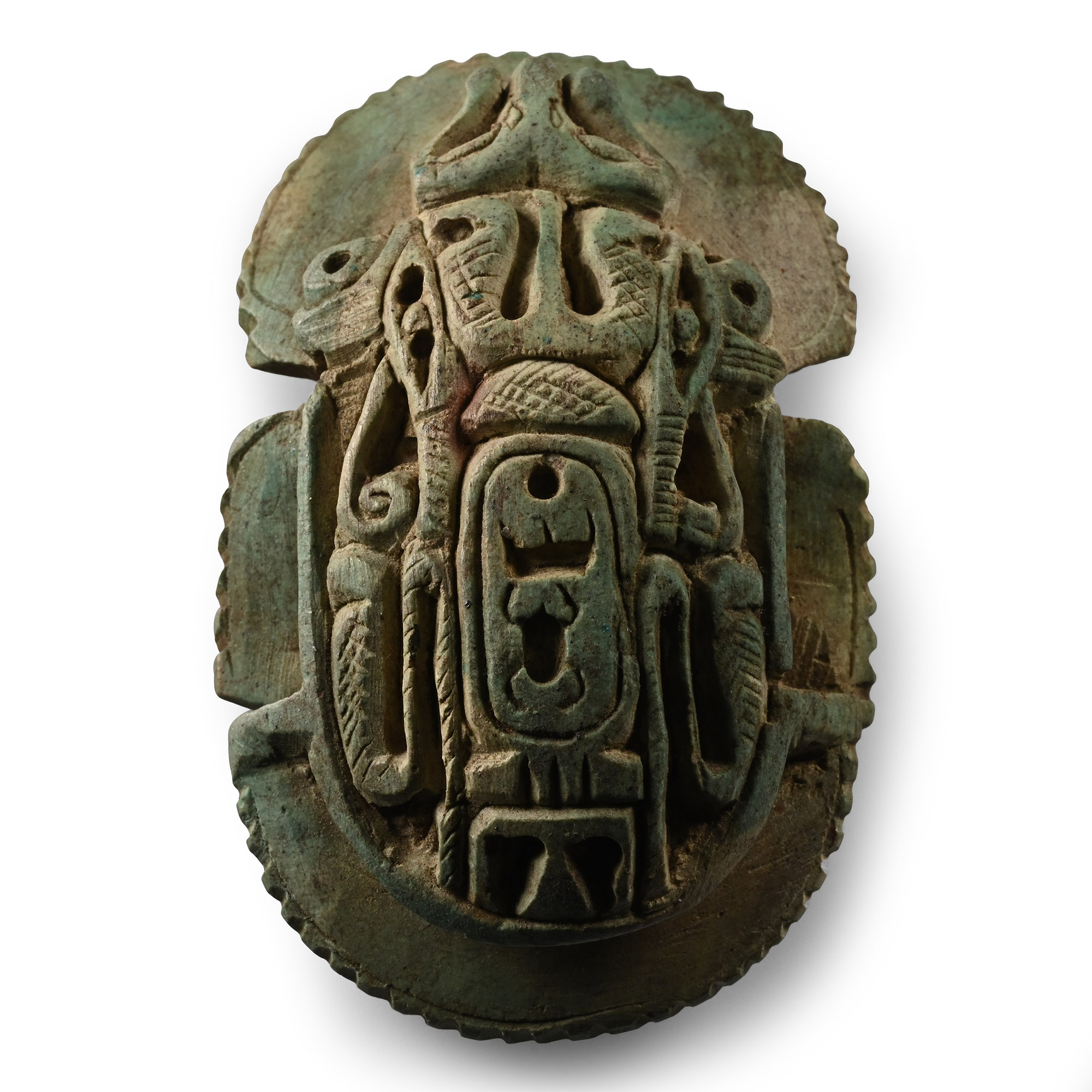
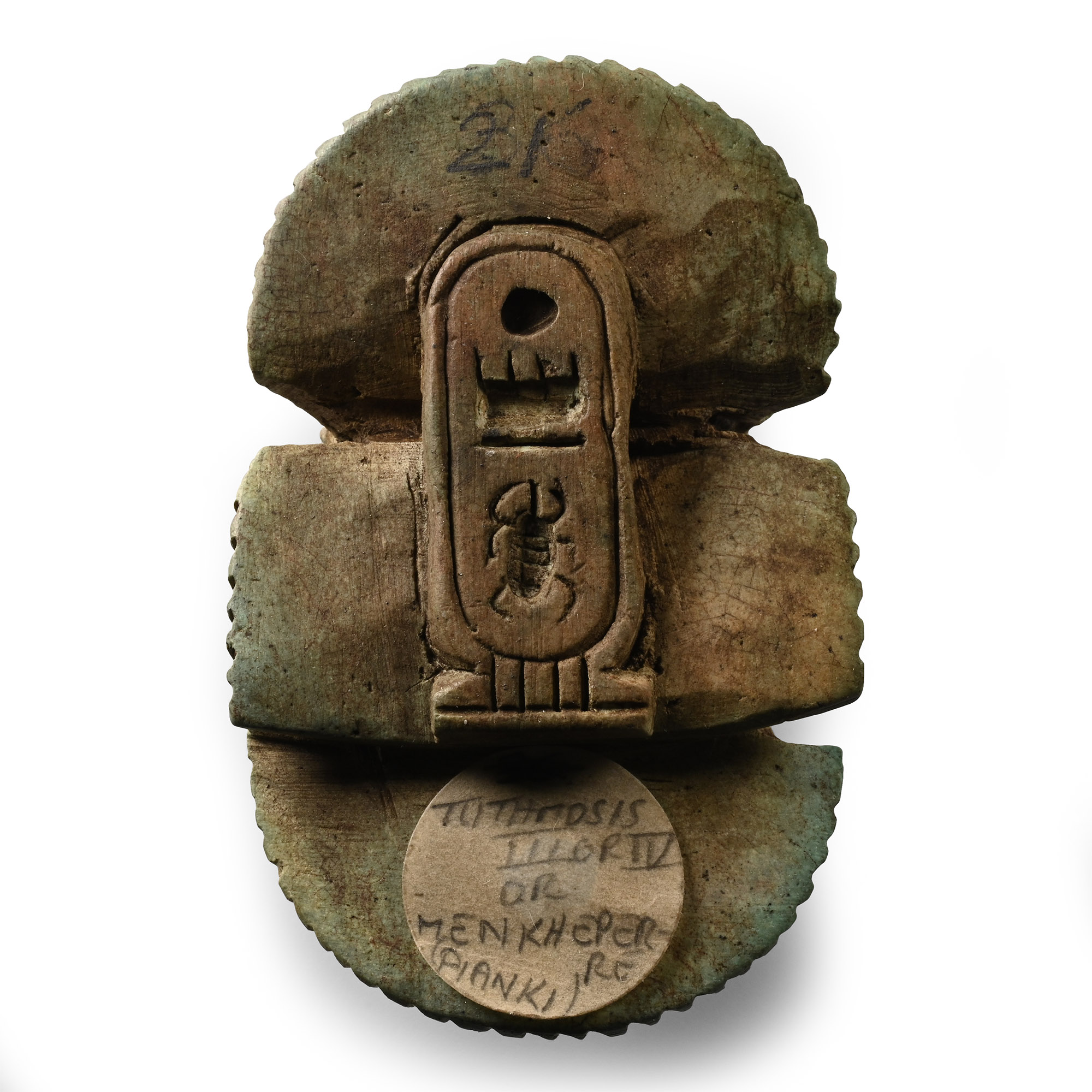
Thutmose III Grand Tour Scarab
19TH CENTURY AD.
2 5/8 in. (65 grams, 67 mm).
Faience moulded scarab with detailed carapace bearing a cartouche at the apex reading men-kheper-Re, the underside with the same cartouche and an old label 'Tuthmosis III or IV or Menkheper-Re (Pianki)'. [No Reserve]
ProvenanceFrom a private, UK, collection in the 1980s.
Property of a London, UK, antiquarian.
This lot is accompanied by an illustrated lot declaration signed by the Head of the Antiquities Department, Dr Raffaele D’Amato.
TimeLine Auctions follows a vetting process to ensure the authenticity and legality of all items, reinforcing our commitment to integrity and responsible trading. Each antiquity, antique, and coin lot undergoes thorough examination by a vetting committee of at least ten external specialists, professional trade association members, scientists, and archaeologists: Our Vetting Process
AUCTIONS:
TimeLine is a leading auction house specialising in antiquities, ancient art, collectables, natural history, coins, medals, and books. Our auctions offer museums, collectors, historians, and enthusiasts the opportunity to acquire unique and historically significant pieces.
-
.jpg)
Renaissance Stained Glass Panel of Saint Leodegar Accompanied by the Arms of Dukedom of Alemannien
Switzerland, Lucerne, circa 1520-1540 A.D.Sold for (Inc. bp): £2,600
Rectangular window glass in lead cames with painted image of St. Leodegar standing in a wooded landscape wearing his episcopal mitre and robes, heater shield at bottom; wooden frame; damaged, the glass elements conserved and available for restoration. 6 kg total, 97 cm high
Collection of Lord Sudeley, Toddington Manor, Gloucestershire. with Schweizer Glasmalereien Vorwiegend des XVI & XVII Jahrhunderts, Munich, Hugo Helbing, 4 October 1911, no.7. UK Trade, 2018. This lot has been checked against the Interpol Database of stolen works of art and is accompanied by a search certificate number no.12567-230649. This lot is accompanied by an illustrated lot declaration signed by the Head of the Antiquities Department, Dr Raffaele D’Amato.
Leodegar of Poitiers (c. 615 – October 2, 679 AD) was a Burgundian noblemen and Bishop of Autun, son of Saint Sigrada and brother of Saint Warinus. He was an opponent of Ebroin, the Frankish Mayor of the Palace of Neustria, who arranged for him to be blinded and have his tongue cut out. He was later made a martyr and canonised. Lord Sudeley's collection at Toddington Manor, Gloucestershire, was a treasure trove of Gothic Revival architecture, art, and history, reflecting his deep involvement in the manor's design with over 580 architectural drawings. His collection boasted exquisite 17th-century tapestries, heraldic stained glass, and historical artefacts that chronicled the family's lineage, including links to significant English historical events. Financial difficulties led to the dispersal of these items through auctions, yet the legacy of Toddington Manor endures as a testament to one of Britain's cultural and architectural gems. -
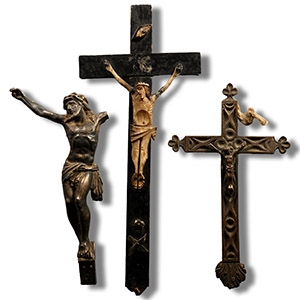
Cross and Corpus Group
18th-19th century A.D.Sold for (Inc. bp): £33
Comprising three Corpus Christi figures in bronze and bone, modelled in the round with arms outstretched, loin cloth to the thighs, feet placed (on two of them) on the supporting block; one without cross. 171 grams total, 12.6-19.5 cm
From the private collection of Victor Brox (1941-2023), formed in the 1980s-1990s. This lot is accompanied by an illustrated lot declaration signed by the Head of the Antiquities Department, Dr Raffaele D’Amato.
The artists, probably Italian, with extraordinary dedication and sensitivity, created images of a still living Christ, afflicted by suffering. They had paid great attention to detail, with particular care taken over the softly curled hair, tense musculature, and protruding ribs. -
.jpg)
Celtic Style Stone Head of a Deity
19th-20th century A.D.Sold for (Inc. bp): £221
Of irregular rounded profile with incised zigzag hairline, reserved almond-shaped eyes and vertical bar nose, incised left ear; mounted on a custom-made stand; after the antique. 3.25 kg total, 24.6 cm including stand
From a collection acquired on the UK art market from various auction houses and collections mostly before 2000. From an important Cambridgeshire estate; thence by descent. This lot is accompanied by an illustrated lot declaration signed by the Head of the Antiquities Department, Dr Raffaele D’Amato.
