
Loading, please wait...
LOT 0064
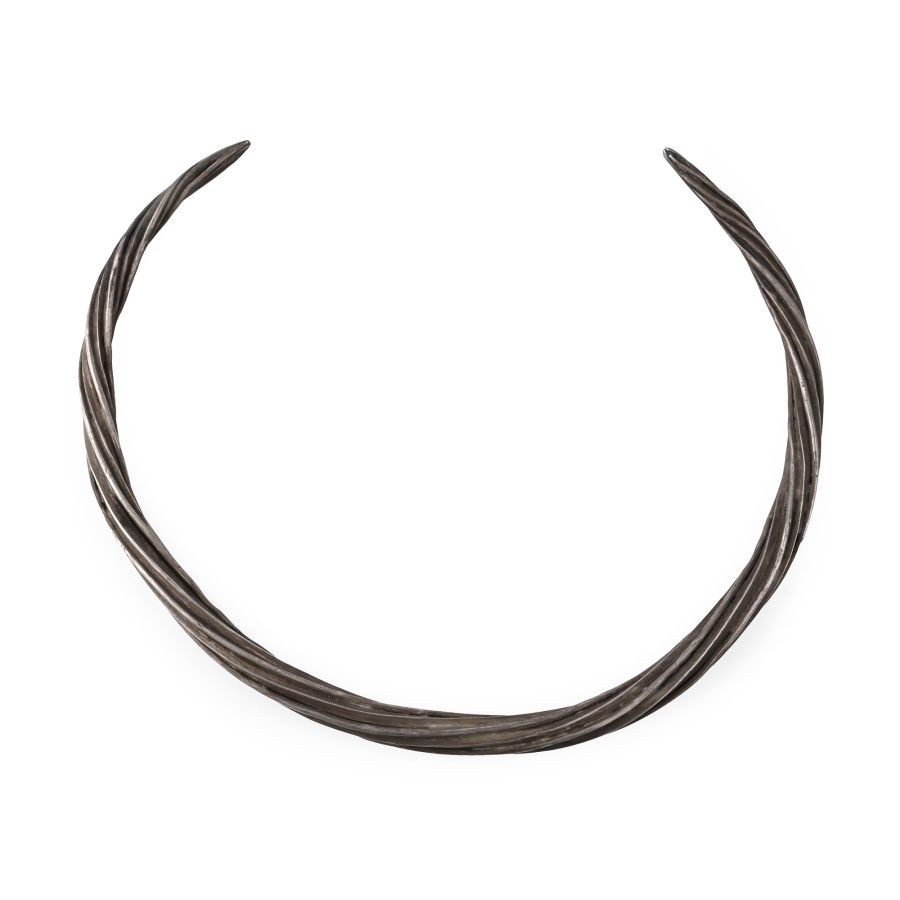
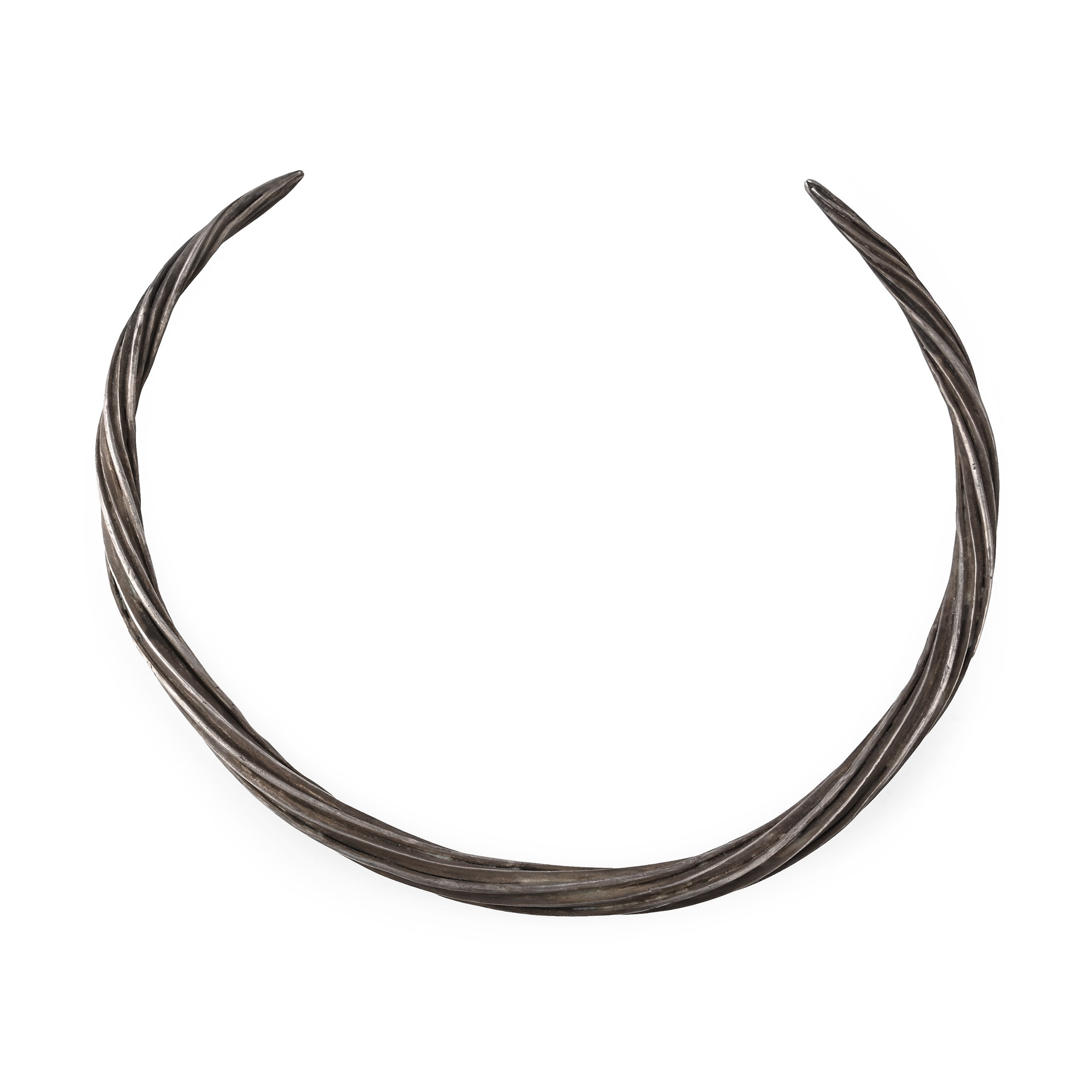
Thracian Silver Twisted Torc
5TH CENTURY B.C.
7 3/4 in. (221 grams, 19.7 cm).
Penannular torc twisted around its axis with tapering finials.
ProvenanceAcquired in the early 1970s.
Private collection, Suffolk.
See Hoddinott, R.F., The Thracians, London, 1981, for dicussion.
CONDITIONTimeLine Auctions follows a vetting process to ensure the authenticity and legality of all items, reinforcing our commitment to integrity and responsible trading. Each antiquity, antique, and coin lot undergoes thorough examination by a vetting committee of at least ten external specialists, professional trade association members, scientists, and archaeologists: Our Vetting Process
AUCTIONS:
TimeLine is a leading auction house specialising in antiquities, ancient art, collectables, natural history, coins, medals, and books. Our auctions offer museums, collectors, historians, and enthusiasts the opportunity to acquire unique and historically significant pieces.
-
.jpg)
'The Mildenberg' Greek Gold Bull's Head Pendant
Circa 4th century B.C.Estimate: £3,000 - 4,000 (+bp*)
Current Winning Bid: £2,000
Hollow-formed in sheet gold with finely modelled details and applied granulated wreath between its horns; attachment hole to the rear of the head. 3.05 grams, 21 mm
Christie's, London, 'A Peaceable Kingdom: The Leo Mildenberg Collection', 27 October 2004, no.102. This lot has been checked against the Interpol Database of stolen works of art and is accompanied by search certificate number no.13359- 259201.
In many Greek sanctuaries, large numbers of bull figures of different sizes have been found, which must be regarded as representatives of actual sacrificial offerings. Many of them come from the venerable Sanctuary of Zeus at Dodona, with whom the bull has a special relationship. -
.jpg)
Greek Red-Figure Bell Krater with Eros
Apulia, 4th century B.C.Sold for (Inc. bp): £5,460
With flared and carinated foot, broad stem, ovoid body, carinated shoulder, everted rim with lip, D-shaped antefixes and lateral pendant loop handles; band of ivy to the neck and meander to the lower edge, frieze with figural scenes: Side A - seated female with thyrsos pointing towards Eros with head turned regarding her, wings spread; Side B - seated female in tiered robe pointing towards standing Eros with wreath, objects in the field; by the Ascoli Satriano Painter; restored. 1.81 kg, 33.5 cm
Ex private collection, previously with Bonhams, Bond Street, London, UK. This lot has been checked against the Interpol Database of stolen works of art and is accompanied by search certificate number no.13353-259030.
Female heads and Eros figures are common features on the vases attributed to the Ascoli Satriano Painter. His real name is unknown, and he has been named after a northern Apulian town, where many of his vases have been found. -
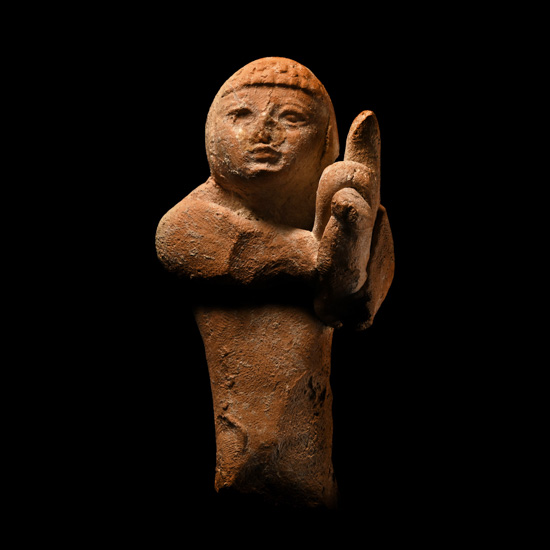
Greek Terracotta Citharode
6th-4th century B.C.Estimate: £1,200 - 1,700 (‡+bp*)
Opening Bid: £600
D-shaped in section with close-cut hairstyle, standing, holding a cithara supported on the left arm, strumming with the right hand. 62 grams, 86 mm
Ex Shlomo Moussaieff (1925-2015), Israel. European private collection. This lot has been checked against the Interpol Database of stolen works of art and is accompanied by search certificate number no.13107-246791.
The cithara was the instrument of the ‘virtuosi’, the principal concert instrument of the ancient Greeks. Its sound box was made of wood and was much bigger than that of the lyra. Strips of copper or horn were commonly incorporated into it, which resonated in sympathy with the strings, giving a great breath of sound.
