
LOT 3477
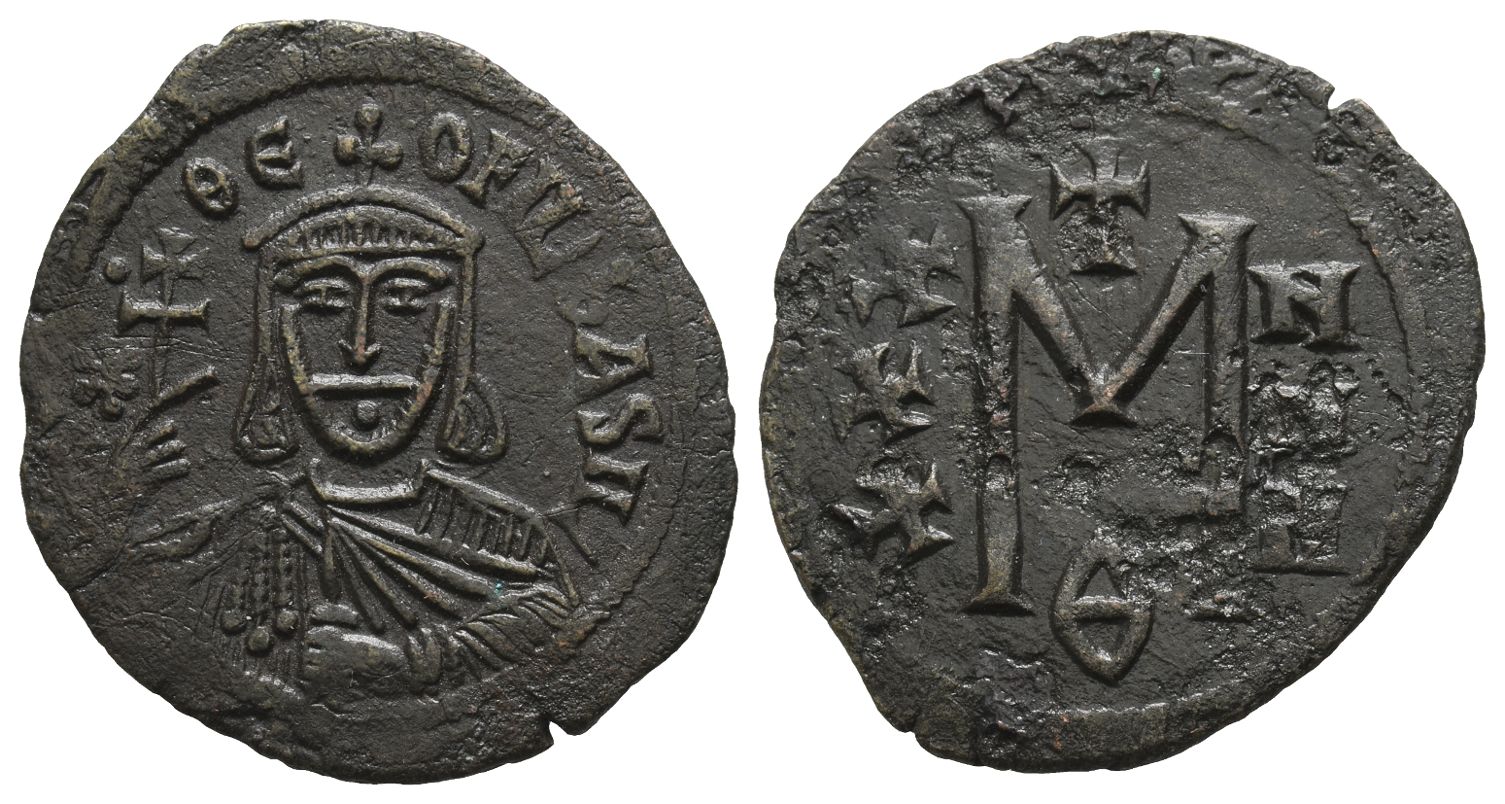
Theophilus AE 40 Nummi or Follis. AD 829-842.
Constantinopolis mint. ✱ • ΘЄOFIL' bASIL', half-length figure of Theophilus standing facing, wearing crown surmounted by cross, holding patriarchal cross in his right hand and akakia in his left / Large M between X X X and N N N; above, cross; below, Θ. DOC 13; SB 1666. Near Extremely Fine.(5.66gr, 30mm, 5h.).
ProvenanceFrom the collection of a London antiquarian, formed since the 1980s.
TimeLine Auctions follows a vetting process to ensure the authenticity and legality of all items, reinforcing our commitment to integrity and responsible trading. Each antiquity, antique, and coin lot undergoes thorough examination by a vetting committee of at least ten external specialists, professional trade association members, scientists, and archaeologists: Our Vetting Process
AUCTIONS:
TimeLine is a leading auction house specialising in antiquities, ancient art, collectables, natural history, coins, medals, and books. Our auctions offer museums, collectors, historians, and enthusiasts the opportunity to acquire unique and historically significant pieces.
-
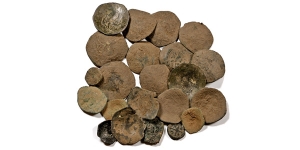
Group of Twenty-Two [22] Byzantine AE Coins. 6th-8th century AD.
Sold for (Inc. bp): £65
Various emperors. 64gr total.
Fine to Very Fine.
From an English collection formed before 2000. -
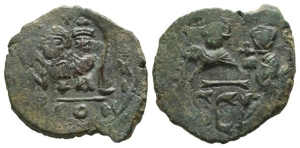
Heraclius AE 40 Nummi or Follis. AD 610-641.
Sold for (Inc. bp): £20
Syracuse(?) mint; struck circa AD 629-631. Countermark: crowned facing busts of Heraclius and Heraclius Constantine, cross above / Countermark: SCLs., bar above. Struck on a Heraclius and Heraclius Constantine Follis for Constantinople (RY 21). DOC 242; SB 883. 8.55gr, 28mm, 6h.
Very Fine.
From the collection of a London antiquarian, formed since the 1980s. -
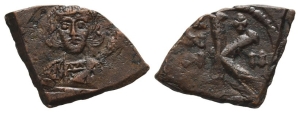
Tiberius III (Apsimar) AE 20 Nummi or Half Follis. AD 698-705.
Sold for (Inc. bp): £46
Constantinople mint. Dated RY 2 (AD 699/700). Crowned and cuirassed bust facing, holding spear / Large K; cross above, A N N O II (date) across field. SB 1368. 3.55gr, 26mm, 1h.
Very Fine. Struck on a triangular flan, most likely made by quartering a large follis of Constantine IV.
From the collection of a London antiquarian, formed since the 1980s.
